
Intel Stock Faces Mixed Valuation Signals Amid Strategic Moves
 Aime Summary
, suggesting potential overvaluation. However, , indicating it might be undervalued relative to sales. These conflicting signals highlight the complexity of valuing a company undergoing transformation.
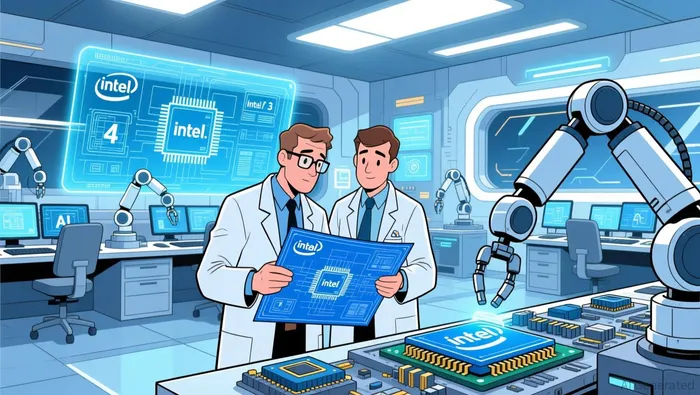
Intel's $14.2 billion acquisition of its Irish Fab 34 facility from Apollo Global Management demonstrates a commitment to vertical integration and control over advanced manufacturing. The facility produces chips using IntelINTC-- 4 and Intel 3 technologies and is crucial for next-generation processor development and AI applications.
Intel's collaboration with Elon Musk's Terafab project, alongside SpaceX, xAI, and Tesla, aims to develop ultra-high-performance chips for AI and robotics. This partnership positions Intel to scale production of 1 terawatt per year of compute power, signaling its growing relevance in the high-performance computing sector.
Investors in Intel (INTC) face a complex valuation landscape. On one hand, , according to Simply Wall St. On the other hand, , suggesting a potential undervaluation. These conflicting signals reflect the uncertainty surrounding Intel's execution, competition, and capital allocation strategies. For example, , according to Simply Wall St.
Is Intel Stock Overvalued or Undervalued Based on Key Metrics?
The valuation debate for Intel is further complicated by divergent market perceptions. The DCF model focuses on future cash flow projections and suggests the company is trading at a premium to its intrinsic value. In contrast, the P/S ratio offers a more favorable comparison with peers, . The disparity between these two valuation methods underscores the importance of investor assumptions about Intel's long-term performance. Optimists may believe the company is undervalued because it is undervaluing its future growth potential, while skeptics may argue the DCF model is more realistic given the challenges in its core markets. Regardless of the valuation method, one thing is clear: Intel's future depends heavily on its ability to execute its strategic initiatives and regain market share in the competitive semiconductor industry.
Why Did Intel Announce a $14.2 Billion Acquisition for Fab 34?
reflects a broader shift in the company's approach to manufacturing and capital allocation. Fab 34, located in Ireland, is a key production facility for Intel 4 and Intel 3 technologies, including the Core Ultra and Xeon processor lines. This acquisition is more than a financial transaction—it signals a stronger balance sheet and improved financial discipline under CEO . Intel has been aggressively restructuring its operations, including asset sales and cost-cutting measures, to improve its competitive position. This move also aligns with Intel's long-term strategy to regain control over its production chain and invest in advanced manufacturing nodes like Intel 18A. Analysts view the acquisition as a positive sign of corporate confidence and a commitment to self-sufficiency in chip production, which is essential for the next phase of AI and high-performance computing.
Is Intel Stock a Buy After Rallying With AI and Foundry News?
Despite recent volatility, Intel's stock has shown resilience, particularly after news of its involvement in the Terafab project and the Fab 34 acquisition according to Investing.com. , 2026, up 2.3% from the previous session. However, . While some analysts have raised their price targets for Intel, citing improved momentum in AI and foundry business, others remain cautious about the company's ability to regain market share from rivals like Advanced Micro Devices (AMD). , according to Investing.com. This highlights the competitive pressures Intel faces in the broader semiconductor industry. Investors should watch for further developments in the company's AI partnerships, manufacturing capabilities, and capital allocation decisions to better gauge its long-term trajectory.

Stay ahead of the market.
Get curated U.S. market news, insights and key dates delivered to your inbox.


AInvest
PRO
AInvest
PRO



Comments
No comments yet