
Intel Secures $10B Investment from US Government in Exchange for 10% Equity Stake
ByAinvest
Friday, Aug 22, 2025 3:26 pm ET2min read
INTC--
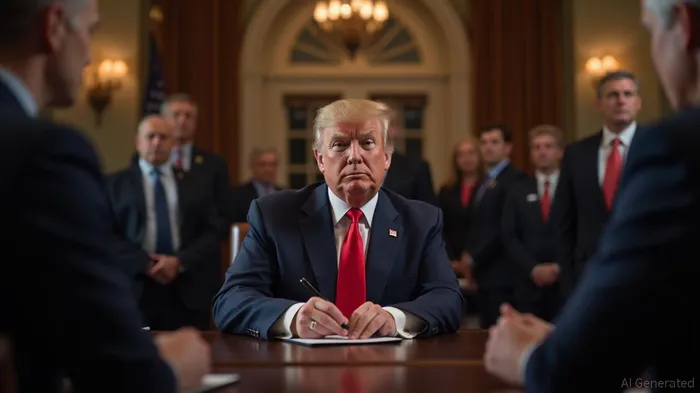
The deal, announced by President Donald Trump, involves converting some or all of Intel's $10.9 billion in CHIPS Act grants into equity. This would make the US government the chipmaker's top shareholder, with a stake valued at approximately $10.4 billion at Intel's current market value [1]. The move is part of a broader initiative by the US government to secure equity stakes in key semiconductor manufacturers, including Micron, Samsung, and Taiwan Semiconductor Manufacturing Co. (TSMC), in exchange for substantial grants to build factories in the United States [2].
Commerce Secretary Howard Lutnick is leading this initiative, which also involves the Treasury Secretary Scott Bessent. The plan expands on the administration's proposal to receive a 10% equity stake in Intel, a move that aims to prioritize national security and economic interests [1]. The US Commerce Department has already finalized subsidies totaling $4.75 billion for Samsung, $6.2 billion for Micron, and $6.6 billion for TSMC to expand semiconductor production in the US, but much of the $52.7 billion in CHIPS Act funding remains undispersed [1].
The equity stake in Intel comes as the company struggles to compete in the artificial intelligence boom and lags global rivals in advanced chipmaking. The US backing could provide Intel with more breathing room to revive its loss-making foundry business and solidify its position in the domestic semiconductor industry.
The deal remains uncertain, with no confirmation that the White House has approached Intel or other firms directly. However, the prospect of government ownership comes as Intel's shares initially welcomed the news of possible US support, driving shares up nearly 9% on Aug. 14. Shares fell 3% Monday on the Bloomberg report, then jumped more than 5% in overnight trading after SoftBank announced a $2 billion investment, which would make it Intel's fifth-largest shareholder [2].
The initiative highlights the U.S. government's commitment to bolstering its domestic semiconductor industry and ensuring national security in the face of global competition. While the specific details of the equity stakes are yet to be determined, this move represents an unprecedented shift in U.S. influence over major corporations, raising questions about the potential impact on corporate decision-making and the balance between government oversight and private enterprise [1].
References:
[1] Reuters. (2025, Aug 19). U.S. wants company equity in exchange for billions of dollars of CHIPS Act grants. Retrieved from https://www.reuters.com/legal/government/trump-eyes-us-government-stakes-other-chip-makers-that-received-chips-act-funds-2025-08-19/
[2] Yahoo Finance. (2025, Aug 14). Trump administration weighs 10% stake in Intel. Retrieved from https://finance.yahoo.com/news/trump-administration-weighs-10-stake-203119908.html
MU--
TSM--
Intel has agreed to a deal with the US government for a 10% equity stake, according to President Donald Trump. The deal could give Intel more breathing room to revive its loss-making foundry business, analysts say. The US backing follows a $2-billion capital injection from SoftBank Group and marks an unprecedented approach to national security by the Trump administration.
In a significant move that underscores the Trump administration's push for stronger domestic manufacturing, Intel (INTC) has agreed to a deal with the US government for a 10% equity stake. This agreement, which comes on the heels of a $2-billion capital injection from SoftBank Group, aims to bolster Intel's foundry business and align with the administration's national security goals.The deal, announced by President Donald Trump, involves converting some or all of Intel's $10.9 billion in CHIPS Act grants into equity. This would make the US government the chipmaker's top shareholder, with a stake valued at approximately $10.4 billion at Intel's current market value [1]. The move is part of a broader initiative by the US government to secure equity stakes in key semiconductor manufacturers, including Micron, Samsung, and Taiwan Semiconductor Manufacturing Co. (TSMC), in exchange for substantial grants to build factories in the United States [2].
Commerce Secretary Howard Lutnick is leading this initiative, which also involves the Treasury Secretary Scott Bessent. The plan expands on the administration's proposal to receive a 10% equity stake in Intel, a move that aims to prioritize national security and economic interests [1]. The US Commerce Department has already finalized subsidies totaling $4.75 billion for Samsung, $6.2 billion for Micron, and $6.6 billion for TSMC to expand semiconductor production in the US, but much of the $52.7 billion in CHIPS Act funding remains undispersed [1].
The equity stake in Intel comes as the company struggles to compete in the artificial intelligence boom and lags global rivals in advanced chipmaking. The US backing could provide Intel with more breathing room to revive its loss-making foundry business and solidify its position in the domestic semiconductor industry.
The deal remains uncertain, with no confirmation that the White House has approached Intel or other firms directly. However, the prospect of government ownership comes as Intel's shares initially welcomed the news of possible US support, driving shares up nearly 9% on Aug. 14. Shares fell 3% Monday on the Bloomberg report, then jumped more than 5% in overnight trading after SoftBank announced a $2 billion investment, which would make it Intel's fifth-largest shareholder [2].
The initiative highlights the U.S. government's commitment to bolstering its domestic semiconductor industry and ensuring national security in the face of global competition. While the specific details of the equity stakes are yet to be determined, this move represents an unprecedented shift in U.S. influence over major corporations, raising questions about the potential impact on corporate decision-making and the balance between government oversight and private enterprise [1].
References:
[1] Reuters. (2025, Aug 19). U.S. wants company equity in exchange for billions of dollars of CHIPS Act grants. Retrieved from https://www.reuters.com/legal/government/trump-eyes-us-government-stakes-other-chip-makers-that-received-chips-act-funds-2025-08-19/
[2] Yahoo Finance. (2025, Aug 14). Trump administration weighs 10% stake in Intel. Retrieved from https://finance.yahoo.com/news/trump-administration-weighs-10-stake-203119908.html
Stay ahead of the market.
Get curated U.S. market news, insights and key dates delivered to your inbox.
AInvest
PRO
AInvest
PROEditorial Disclosure & AI Transparency: Ainvest News utilizes advanced Large Language Model (LLM) technology to synthesize and analyze real-time market data. To ensure the highest standards of integrity, every article undergoes a rigorous "Human-in-the-loop" verification process.
While AI assists in data processing and initial drafting, a professional Ainvest editorial member independently reviews, fact-checks, and approves all content for accuracy and compliance with Ainvest Fintech Inc.’s editorial standards. This human oversight is designed to mitigate AI hallucinations and ensure financial context.
Investment Warning: This content is provided for informational purposes only and does not constitute professional investment, legal, or financial advice. Markets involve inherent risks. Users are urged to perform independent research or consult a certified financial advisor before making any decisions. Ainvest Fintech Inc. disclaims all liability for actions taken based on this information. Found an error?Report an Issue




Comments
No comments yet