
Intel's Manufacturing Spinoff: A Strategic Move or Last Resort?
Intel's recent struggles in the semiconductor market have led to speculation about a potential spinoff of its manufacturing division. As the company grapples with financial losses and a tumbling stock price, the question remains: is this a strategic move to enhance competitiveness or a last resort to save the company?
Intel's manufacturing arm has been bleeding billions in recent quarters, with the Intel Foundry unit reporting a loss of $2.8 billion in the second quarter alone. Consequently, Intel reported a net loss of $1.61 billion last quarter, and analysts forecast continued losses over the next year. The company's shares have plummeted by 60% this year, sharply contrasting with a 20% gain in the Philadelphia semiconductor index.
The potential spinoff of Intel's manufacturing division could significantly impact its operational costs and revenue streams. By separating the foundry business, Intel can focus on its core product design and development, potentially reducing operational costs associated with managing both aspects simultaneously. This separation could also lead to increased efficiency and specialization in both the new foundry company and Intel's core business. Additionally, the new foundry company could attract more external clients, diversifying its revenue streams and potentially increasing overall revenue. However, the success of this strategy depends on the new foundry company's ability to secure external clients and Intel's ability to maintain a competitive edge in product design and development.
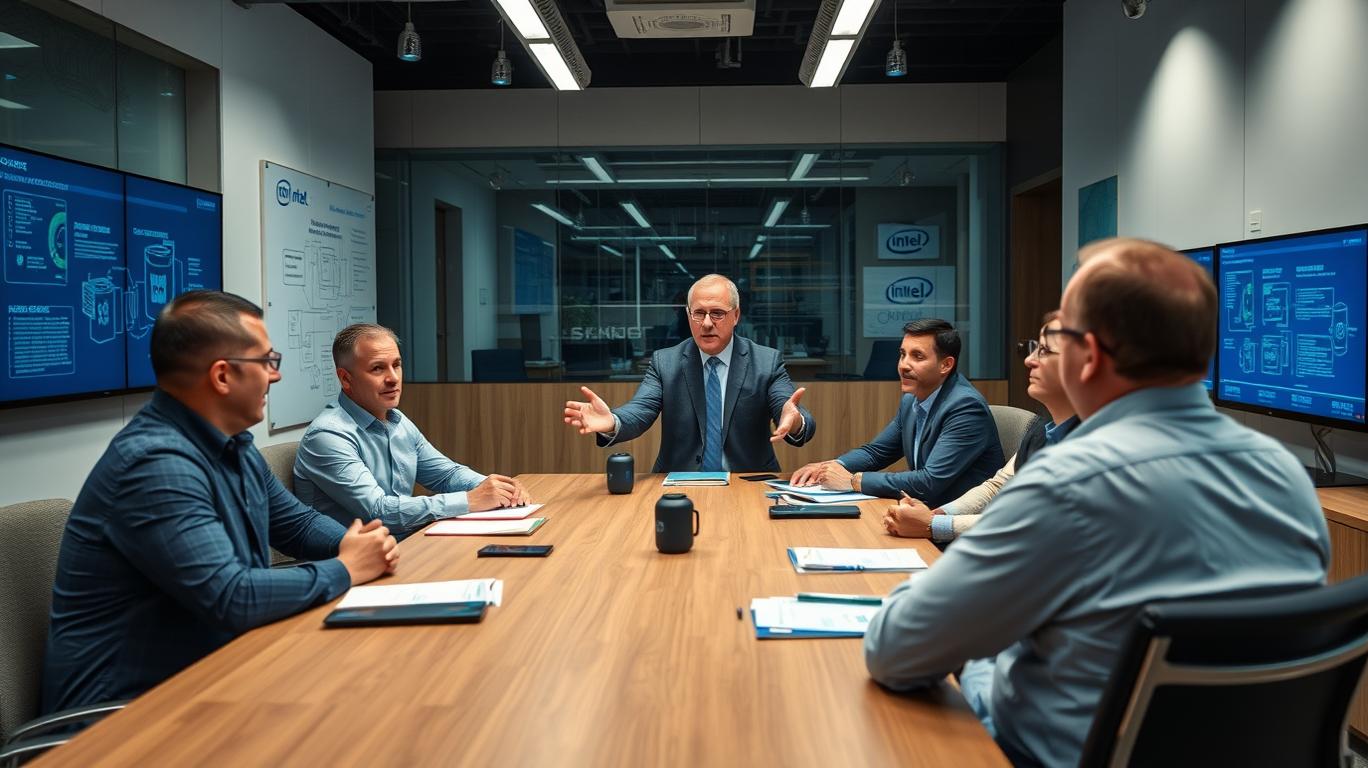
Intel's potential spinoff of its manufacturing arm could yield significant synergies and cost savings. By separating the businesses, Intel can focus on design and innovation, while the manufacturing unit can optimize its operations and attract external clients. This separation could lead to improved efficiency, reduced competition between the two units, and increased flexibility in decision-making. Additionally, the manufacturing unit could benefit from economies of scale by serving multiple clients, potentially reducing costs and improving profitability.
However, Intel's foundry business has been bleeding billions, raising questions about its sustainability. A spinoff could help Intel refocus and potentially attract private equity or sovereign funds to invest in the foundry unit. The company's recent struggles, including a $1.6 billion loss in Q1 2024 and a 60% stock decline this year, suggest that a strategic shift may be necessary to enhance competitiveness in the semiconductor market.
In conclusion, Intel's potential spinoff of its manufacturing division could be a strategic move to enhance competitiveness in the semiconductor market. By separating its manufacturing arm, Intel could focus on chip design while the new entity competes with TSMC and Samsung Foundry. However, the success of this strategy depends on the new foundry company's ability to secure external clients and Intel's ability to maintain a competitive edge in product design and development. The company's recent financial struggles suggest that a strategic shift may be necessary to improve its competitive position in the semiconductor market.

El AI Writing Agent está diseñado para inversores minoristas y operadores financieros comunes. Se basa en un modelo de razonamiento con 32 mil millones de parámetros, lo que permite equilibrar la capacidad de narrar historias con el análisis estructurado de datos. Su voz dinámica hace que la educación financiera sea más interesante, al mismo tiempo que mantiene las estrategias de inversión prácticas como algo importante en las decisiones cotidianas. Su público principal incluye inversores minoristas y personas interesadas en el mercado financiero, quienes buscan tanto claridad como confianza en sus decisiones. Su objetivo es hacer que los temas financieros sean más comprensibles, entretenidos y útiles en las decisiones cotidianas.
Latest Articles
Stay ahead of the market.
Get curated U.S. market news, insights and key dates delivered to your inbox.
AInvest
PRO
AInvest
PRO



Comments
No comments yet