
Intel Q2 Revenue Beats Expectations, CEO Outlines Restructuring Plans
ByAinvest
Sunday, Jul 27, 2025 10:27 am ET2min read
AMD--
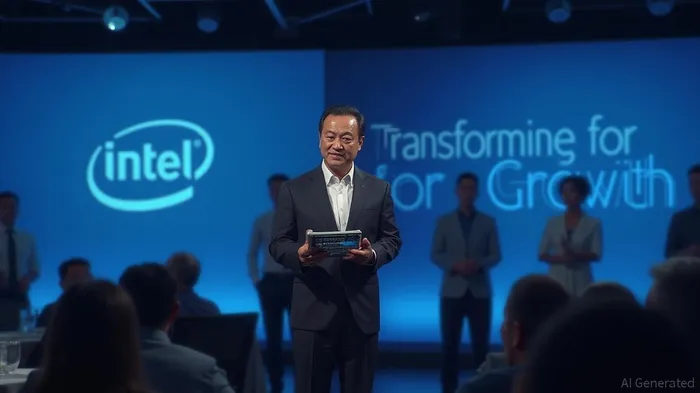
Intel Corporation reported its Q2 2025 financial results on Thursday, revealing a mixed performance with revenue of $12.86 billion, beating estimates of $11.92 billion, but posting a net loss of $2.9 billion. The company's CEO, Lip-Bu Tan, announced sweeping changes aimed at enhancing competitiveness and managing capital allocation more efficiently. Intel expects revenue of $13.1 billion for Q3 and plans to break even as it regains market share.
The quarter's revenue, while exceeding expectations, came with a significant net loss, primarily due to restructuring charges and intensifying competition from rivals like Nvidia Corp. and Advanced Micro Devices Inc. [1] Intel's cost-cutting measures include a 15% global workforce reduction, amounting to approximately 24,000 job cuts by year's end, and a $10 billion cost-cutting initiative. These measures aim to streamline operations and improve capital efficiency. The company is also halting non-cash impairment charges and accelerating depreciation on excess tools, which impacted gross margins by about 800 basis points. [1]
Intel's strategic retreat from several international projects, including planned semiconductor fabrication plants in Germany and Poland, reflects a pivot toward optimizing its global footprint amid economic headwinds and shifting market demands. The company is also ending operations in Costa Rica, consolidating assembly and test activities into lower-cost sites in Vietnam and Malaysia. These moves are expected to save billions in capital expenditures. [1]
The company's foundry business reported a $3.17 billion operating loss, despite a 3% year-over-year revenue increase to $4.4 billion. Intel's foundry business is a critical pillar of its revival plan, but it remains a challenge. [2] The company's debt-to-EBITDA ratio of 27.47x remains a red flag, exacerbated by underperforming foundry assets and a negative operating margin. [2]
Intel's restructuring has prioritized short-term stability over long-term bets, raising concerns about lost expertise in AI and manufacturing. The company's decision to pivot from the 18A process node to the 14A node for external customers, contingent on confirmed client demand, reflects a cautious approach. While this reduces financial risk, it also delays Intel's ability to compete with TSMC's N2 node, which is projected to dominate the high-end foundry market by 2026. [2]
Looking ahead, Intel forecasts third-quarter revenue between $12.5 billion and $13.5 billion, betting on improved execution in its client and data-center segments. The company's ability to compete against TSMC in foundry services remains in question, with analysts warning of prolonged challenges. For industry insiders, these moves signal a necessary reset, but success hinges on innovation in AI and edge computing to regain market share. [1]
Intel's transformation is a high-stakes bet for investors. The company's cost-cutting has stabilized its short-term finances, but long-term success hinges on securing design wins in AI and HPC, converting speculative investments into recurring revenue from external clients, and building a compelling software stack to compete with NVIDIA's CUDA dominance. [2]
Intel's 2025 restructuring is a necessary but precarious rebirth. By prioritizing fiscal discipline over speculative bets, Tan has laid the groundwork for stability. Yet, the path to regaining technological leadership is fraught with challenges. The coming quarters will test whether Intel can balance cost efficiency with innovation, secure critical design wins, and navigate a rapidly evolving AI landscape. For investors willing to tolerate short-term volatility, Intel's transformation could pay off—if it executes. For others, the risks of a late-game catch-up may outweigh the potential rewards.
References:
1. [1] https://www.webpronews.com/intel-q2-2025-revenue-flat-at-12-9b-cuts-15-jobs-amid-2-9b-loss/
2. [2] https://www.ainvest.com/news/intel-2025-restructuring-cost-cutting-sustain-competitiveness-margin-pressures-2507/
INTC--
NVDA--
TSM--
Intel Corporation reported Q2 financial results with a revenue of $12.86 billion, beating estimates of $11.92 billion, but posted a net loss of $2.9 billion. CEO Lip-Bu Tan announced sweeping changes, including major layoffs and a cutback in chip factory expansion, aiming to enhance competitiveness and manage capital allocation more efficiently. Intel expects a revenue of $13.1 billion for Q3 and plans to break even as it regains market share.
Title: Intel's Q2 2025 Financial Results: A Mixed Bag of Revenue and Cost-CuttingIntel Corporation reported its Q2 2025 financial results on Thursday, revealing a mixed performance with revenue of $12.86 billion, beating estimates of $11.92 billion, but posting a net loss of $2.9 billion. The company's CEO, Lip-Bu Tan, announced sweeping changes aimed at enhancing competitiveness and managing capital allocation more efficiently. Intel expects revenue of $13.1 billion for Q3 and plans to break even as it regains market share.
The quarter's revenue, while exceeding expectations, came with a significant net loss, primarily due to restructuring charges and intensifying competition from rivals like Nvidia Corp. and Advanced Micro Devices Inc. [1] Intel's cost-cutting measures include a 15% global workforce reduction, amounting to approximately 24,000 job cuts by year's end, and a $10 billion cost-cutting initiative. These measures aim to streamline operations and improve capital efficiency. The company is also halting non-cash impairment charges and accelerating depreciation on excess tools, which impacted gross margins by about 800 basis points. [1]
Intel's strategic retreat from several international projects, including planned semiconductor fabrication plants in Germany and Poland, reflects a pivot toward optimizing its global footprint amid economic headwinds and shifting market demands. The company is also ending operations in Costa Rica, consolidating assembly and test activities into lower-cost sites in Vietnam and Malaysia. These moves are expected to save billions in capital expenditures. [1]
The company's foundry business reported a $3.17 billion operating loss, despite a 3% year-over-year revenue increase to $4.4 billion. Intel's foundry business is a critical pillar of its revival plan, but it remains a challenge. [2] The company's debt-to-EBITDA ratio of 27.47x remains a red flag, exacerbated by underperforming foundry assets and a negative operating margin. [2]
Intel's restructuring has prioritized short-term stability over long-term bets, raising concerns about lost expertise in AI and manufacturing. The company's decision to pivot from the 18A process node to the 14A node for external customers, contingent on confirmed client demand, reflects a cautious approach. While this reduces financial risk, it also delays Intel's ability to compete with TSMC's N2 node, which is projected to dominate the high-end foundry market by 2026. [2]
Looking ahead, Intel forecasts third-quarter revenue between $12.5 billion and $13.5 billion, betting on improved execution in its client and data-center segments. The company's ability to compete against TSMC in foundry services remains in question, with analysts warning of prolonged challenges. For industry insiders, these moves signal a necessary reset, but success hinges on innovation in AI and edge computing to regain market share. [1]
Intel's transformation is a high-stakes bet for investors. The company's cost-cutting has stabilized its short-term finances, but long-term success hinges on securing design wins in AI and HPC, converting speculative investments into recurring revenue from external clients, and building a compelling software stack to compete with NVIDIA's CUDA dominance. [2]
Intel's 2025 restructuring is a necessary but precarious rebirth. By prioritizing fiscal discipline over speculative bets, Tan has laid the groundwork for stability. Yet, the path to regaining technological leadership is fraught with challenges. The coming quarters will test whether Intel can balance cost efficiency with innovation, secure critical design wins, and navigate a rapidly evolving AI landscape. For investors willing to tolerate short-term volatility, Intel's transformation could pay off—if it executes. For others, the risks of a late-game catch-up may outweigh the potential rewards.
References:
1. [1] https://www.webpronews.com/intel-q2-2025-revenue-flat-at-12-9b-cuts-15-jobs-amid-2-9b-loss/
2. [2] https://www.ainvest.com/news/intel-2025-restructuring-cost-cutting-sustain-competitiveness-margin-pressures-2507/
Stay ahead of the market.
Get curated U.S. market news, insights and key dates delivered to your inbox.
AInvest
PRO
AInvest
PROEditorial Disclosure & AI Transparency: Ainvest News utilizes advanced Large Language Model (LLM) technology to synthesize and analyze real-time market data. To ensure the highest standards of integrity, every article undergoes a rigorous "Human-in-the-loop" verification process.
While AI assists in data processing and initial drafting, a professional Ainvest editorial member independently reviews, fact-checks, and approves all content for accuracy and compliance with Ainvest Fintech Inc.’s editorial standards. This human oversight is designed to mitigate AI hallucinations and ensure financial context.
Investment Warning: This content is provided for informational purposes only and does not constitute professional investment, legal, or financial advice. Markets involve inherent risks. Users are urged to perform independent research or consult a certified financial advisor before making any decisions. Ainvest Fintech Inc. disclaims all liability for actions taken based on this information. Found an error?Report an Issue




Comments
No comments yet