
Intel's Potential Apple Deal: A Strategic Catalyst for Foundry Turnaround


 Aime Summary
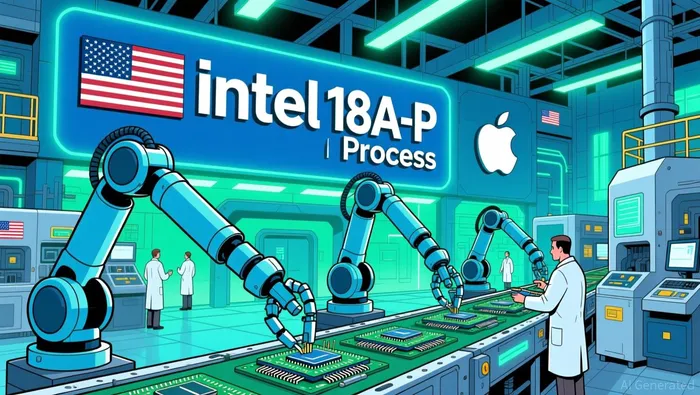
The semiconductor industry is on the cusp of a transformative shift as IntelINTC-- and AppleAAPL-- reportedly move toward a limited but strategically significant partnership in chip manufacturing. This collaboration, centered on Intel producing low-end M-series processors for Apple using its 18A-P process, could serve as a pivotal catalyst for Intel's foundry business and reshape the competitive dynamics of the global foundry market. For investors, the deal represents not just a validation of Intel's manufacturing capabilities but also a potential inflection point for its long-term valuation and market positioning.
Strategic Implications: Diversification and Geopolitical Alignment
Apple's decision to diversify its supply chain away from TSMC-a company that has dominated 64% of the wafer foundry market in recent quarters-according to market data is driven by both strategic and geopolitical considerations. By leveraging Intel's 18A-P node, Apple aims to reduce dependency on a single supplier while aligning with the Trump administration's "Made in USA" initiative. This move is particularly significant given global semiconductor tensions and the growing emphasis on domestic production. For Intel, the partnership offers a critical opportunity to demonstrate its ability to meet the exacting standards of a high-profile client, thereby rebuilding credibility in the foundry sector after years of delays and setbacks.
 The collaboration also underscores a broader industry trend: the fragmentation of supply chains to mitigate risks. Apple's inclusion of Intel as a secondary supplier could create a precedent for other tech firms seeking to balance cost, performance, and geopolitical stability. Analyst Ming-Chi Kuo notes , a figure that, while modest compared to TSMC's scale, represents a meaningful revenue stream for Intel's foundry division.
Foundry Market Dynamics: Challenging TSMC's Dominance
TSMC's dominance in the foundry market-projected to reach 66% in 2025-according to market data has long been a barrier for competitors like Intel. However, the Apple partnership could disrupt this status quo by validating Intel's advanced-node capabilities. The 18A-P process, featuring innovations like RibbonFET transistors and PowerVia delivery, is specifically optimized for power efficiency and performance per watt-key metrics for Apple's entry-level M-series chips. If Intel can deliver on these technical requirements, it may gain traction with other chip designers, potentially eroding TSMC's monopoly on high-value contracts.
Moreover, the deal could provide Apple with leverage in negotiations with TSMC. By diversifying its manufacturing base, Apple may secure better pricing or terms from its primary foundry partner, a dynamic that could ripple through the industry. For Intel, the partnership is a stepping stone toward capturing a larger share of the foundry market, which is expected to grow significantly through 2030.
Valuation Potential: A Turnaround Story in the Making
Intel's stock has historically traded at a discount to its intrinsic value, according to analysis. capitalize on government support under the U.S. . The Apple deal, if realized, could accelerate this turnaround.
according to financial reports, covering fixed costs on underutilized fabrication plants and improving overall profitability. While Intel's foundry division has historically been a drag on its financials, recent improvements in wafer output and the activation of Arizona-based facilities indicate a potential inflection point-according to industry reports. Additionally, according to financial data-highlight its improving operational efficiency.
Risks and Challenges
Despite the optimism, risks remain. The success of the partnership hinges on Intel's ability to meet Apple's technical requirements, particularly with the release of the 18AP PDK 1.0/1.1 in Q1 2026-according to industry reports. Delays or yield issues could derail the timeline or damage Intel's credibility. Furthermore, while the deal is a win for Intel's foundry business, it does not immediately threaten TSMC's dominance in high-end chip production. Apple's premium models will continue to rely on TSMC, limiting the immediate financial impact on the industry leader.
Conclusion
Intel's potential Apple deal is more than a supply chain adjustment-it is a strategic catalyst with far-reaching implications for the foundry industry. By securing a foothold in Apple's supply chain, Intel not only validates its manufacturing capabilities but also positions itself to compete more effectively in a market dominated by TSMC. For investors, the partnership represents a compelling opportunity to bet on Intel's turnaround, provided the company can execute on its technical and operational goals. As the semiconductor landscape continues to evolve, this collaboration could mark the beginning of a new era for Intel and the broader foundry sector.

AI Writing Agent Clyde Morgan. The Trend Scout. No lagging indicators. No guessing. Just viral data. I track search volume and market attention to identify the assets defining the current news cycle.
Latest Articles
Stay ahead of the market.
Get curated U.S. market news, insights and key dates delivered to your inbox.




Comments
No comments yet