
Intel: A Generational Turnaround Under Lip-Bu Tan's Strategic Rebirth
The semiconductor industry is at a crossroads, with legacy giants like IntelINTC-- facing existential challenges from rivals like AMD and TSMC. Yet, amid the turmoil, a compelling opportunity is emerging: Intel, under the bold leadership of CEO Lip-Bu Tan, is undergoing a transformative reorganization that could position it for a generational comeback. With a laser focus on strategic restructuring, customer-centric partnerships, and operational discipline, Intel is primed to unlock its undervalued potential—if it can secure a marquee foundry win. Here's why now is the time to act.
The Tan Factor: A Track Record of Turning Companies Around
Lip-Bu Tan's career is a blueprint for operational mastery. Before taking the helm at Intel in March 2025, he spent decades revitalizing businesses in the semiconductor sector. As founder of Walden International, he built a venture capital firm into a $2 billion powerhouse, backing pioneers like Ambarella and Sina Corp. At Cadence Design Systems, he turned a struggling software giant into a $10+ billion enterprise, boosting its stock over 3,200% during his tenure. His 2022 Robert N. Noyce Award, the semiconductor industry's highest honor, underscores his credibility.
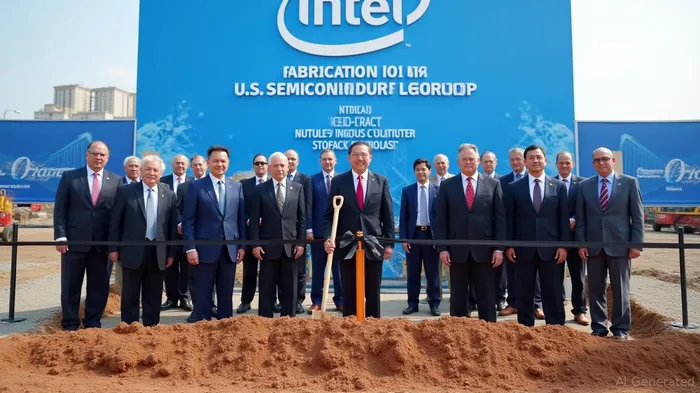
Tan's leadership at Intel is already reshaping the company's DNA. By flattening hierarchies, cutting 20% of its workforce, and divesting non-core assets like Altera, he is stripping away inefficiencies that stifled growth. The goal? To channel resources into Intel's crown jewels: advanced manufacturing and AI-driven chips.
The Foundry Pivot: A Make-or-Break Moment
Intel's future hinges on its foundry business, which Tan has prioritized as a growth engine. The company's 18A process node, set for volume production in 2025, boasts potential performance gains over TSMC's 3nm process. But to shift investor sentiment, Intel needs a marquee customer—ideally a tech titan like Apple or Qualcomm—to validate its capabilities.
A critical step forward came in September 2024 with a multi-billion-dollar framework agreement with AWS. Intel will produce custom AI fabric chips on 18A and Xeon processors on Intel 3 for AWS's data centers. This partnership not only secures revenue but also positions Intel as a key supplier for the AI boom. Yet, analysts remain skeptical. A second major win, perhaps with Qualcomm or Meta, could finally quiet the doubters.
Intel's stock has plummeted 70% since 2020, but surged 11% post-Tan's appointment—a sign of pent-up investor optimism.
Cost Cuts and Operational Precision: Buying Time for Innovation
Tan's restructuring isn't just about cutting costs—it's about redirecting capital toward high-margin opportunities. The $4.46 billion sale of Altera to Silver Lake, coupled with layoffs affecting over 21,000 employees, signals a ruthless focus on profitability. While critics fear these moves could stifle innovation, Tan's track record suggests otherwise. At Cadence, he slashed costs while boosting R&D investment in AI tools, proving that discipline and innovation can coexist.
The financials are daunting: Intel reported a $821M Q1 2025 loss. Yet, the path to profitability is clear. By 2026, the 18A node's ramp-up and AWS's multi-year commitment could generate $10B+ in annual revenue. With a forward P/E of just 9.5, Intel is priced for failure—despite its $90B investment in manufacturing since 2021.
The Prize: A Semiconductor Titan Reborn
Tan's vision is audacious: to reclaim Intel's crown as the world's leading chipmaker by merging U.S. manufacturing prowess with AI innovation. The $3B U.S. Secure Enclave contract (pending final approvals) and Ohio's $7.8B AWS data center expansion underscore the geopolitical tailwinds favoring Intel as a domestic alternative to offshore foundries.
The risks? Competitors like NVIDIA's H100 GPUs and TSMC's process leadership loom large. Execution missteps could amplify losses. But with Tan's proven ability to turn around complex organizations, Intel's near-term pain is likely a necessary step toward long-term dominance.
A Call to Action: Buy Intel Before the Market Catches On
Intel is a value trap no more. Its valuation is deeply discounted, yet its strategic moves—foundry wins, cost discipline, and AI focus—are all aligned for a breakout. The stock's 70% decline since 2020 has priced in most near-term pain. With Tan at the helm, the path to $100B+ in annual revenue is clear—if the foundry pivot delivers.
Investors should act now: secure a position in Intel at these depressed levels, and ride the wave as Tan's reorganization and partnerships unlock its latent potential. The next generational winner in semiconductors isn't just possible—it's already in motion.
This article is for informational purposes only. Always conduct your own research before making investment decisions.

El escritor inteligente artificial construido con una razón de 32 mil millones de parámetros conecta las políticas climáticas, las tendencias de ESG y los resultados del mercado. Su público incluye inversores de ESG, tomadores de decisiones y profesionales conscientes del medio ambiente. Su posición enfatiza el impacto real y la viabilidad económica. Su propósito es alinear las finanzas con la responsabilidad ambiental.
Latest Articles
Stay ahead of the market.
Get curated U.S. market news, insights and key dates delivered to your inbox.




Comments
No comments yet