
AInvest Newsletter
Daily stocks & crypto headlines, free to your inbox
_6ff029a61766633234293.png?format=webp&width=1186&height=250)


 Aime Summary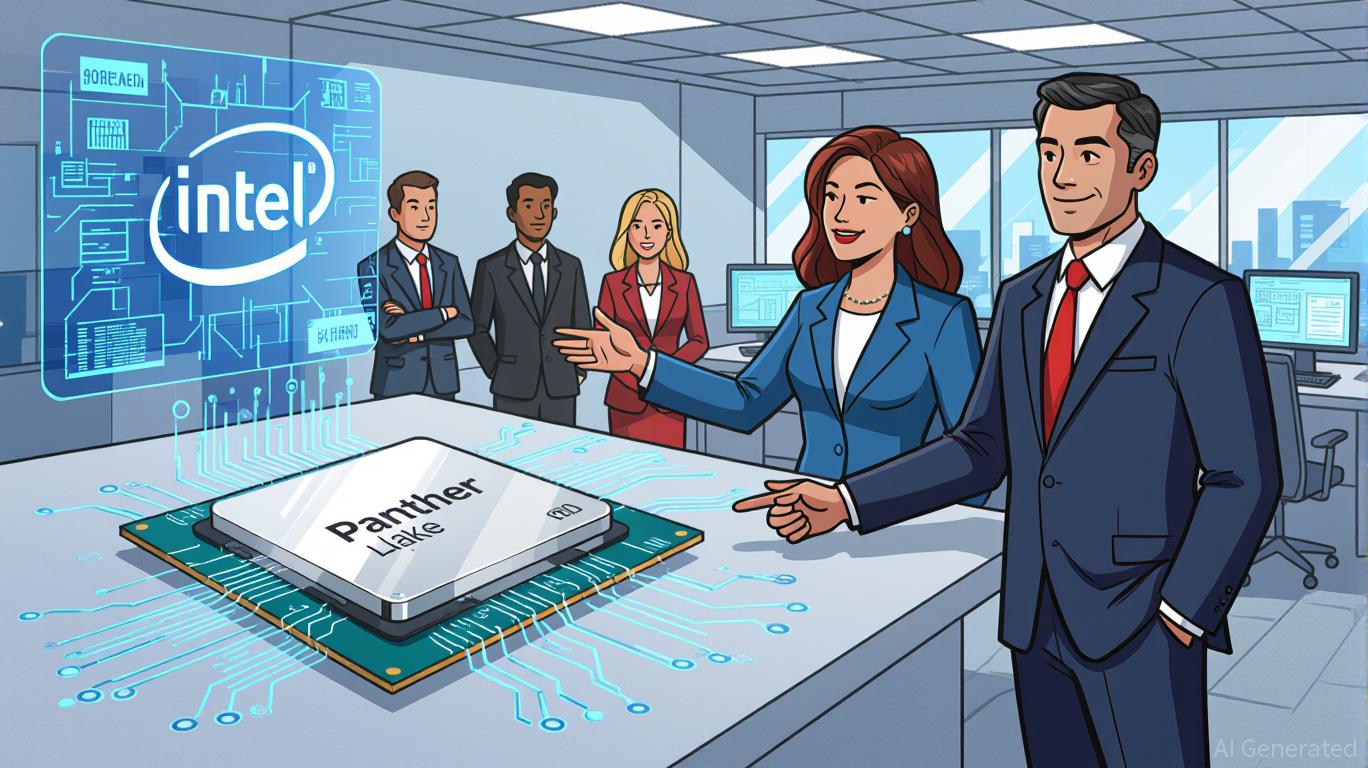
In 2025,
has embarked on a transformative journey under CEO , marked by a sweeping executive overhaul and strategic reorganization. These moves are not merely administrative adjustments but a calculated response to the seismic shifts in the semiconductor and AI landscapes. For investors, the question is no longer whether Intel can adapt—it's whether its bold restructuring will position it as a formidable challenger to industry titans like and .The departure of , a 30-year Intel stalwart, and the appointment of seasoned executives like (Data Center Group) and (Client Computing Group) signal a pivot toward operational agility and engineering-driven innovation. Kechichian's background in Arm and
brings a fresh perspective to Intel's data center ambitions, while Johnson's deep tenure ensures continuity in the core PC market. Crucially, the creation of the Central Engineering Group, led by , underscores Tan's emphasis on horizontal engineering expertise. This unit is tasked with developing custom silicon for external clients, a critical step in competing with and in high-margin chip markets.Intel's foundry strategy has taken center stage, with now overseeing Foundry Services. His expanded role integrates technology development, manufacturing, and go-to-market strategies, aiming to streamline operations for clients like
and Nvidia. However, the company's decision to abandon the underperforming 18A process node in favor of the 14A node is a double-edged sword. While this shift addresses yield and performance challenges, it also delays timelines for next-gen AI and data center chips. Investors must weigh whether this recalibration will close with or AMD's foundry rivals.Intel's AI roadmap is anchored in the processor, an AI-native chip designed for both consumer and enterprise applications. . Yet, this growth contrasts with a broader net loss in the same quarter, largely due to restructuring costs. The Central Engineering Group's focus on custom silicon could unlock new revenue streams, but success hinges on securing high-volume partnerships and proving the 14A node's competitiveness.
Intel's strategic bets come amid fierce competition. NVIDIA's dominance in AI accelerators and AMD's gains in data center market share pose significant threats. However, Intel's government-backed CHIPS Act funding—granting the U.S. a 10% stake in exchange for regulatory support—provides a unique tailwind. , more agile model, though they risk short-term operational friction.
For investors, Intel's transformation presents a high-conviction opportunity. The stock's recent volatility mirrors the uncertainty of its turnaround, but key metrics suggest resilience. , Intel could reclaim AI market share. However, execution risks—such as delays in foundry client acquisitions or AI product adoption—remain. A approach, hedging against sector-wide AI volatility, is advisable.
Intel's 2025 restructuring is a pivotal chapter in its quest to reclaim semiconductor leadership. By aligning its leadership with engineering excellence, pivoting its process node strategy, and doubling down on AI and custom silicon, the company is laying the groundwork for long-term competitiveness. While challenges persist, the strategic clarity under Tan offers a compelling narrative for investors willing to navigate the near-term turbulence. The coming quarters will test whether these moves translate into sustainable growth—or another chapter in Intel's cyclical reinvention.

Delivering real-time insights and analysis on emerging financial trends and market movements.

Dec.24 2025

Dec.24 2025

Dec.24 2025

Dec.23 2025

Dec.23 2025
Daily stocks & crypto headlines, free to your inbox





Comments
No comments yet