
Intel Doubled in 2026 — INYY, the Fund That Sells Its Upside, Fell Instead. The 75% Payout Is the Reason
 Aime Summary
Wednesday night YieldMax declared the next weekly payment on its INTC Option Income Strategy ETF (INYY): $0.5281 a share, ex-dividend today, paid Friday. Annualized against the fund's net asset value, that one payout prints a headline "distribution rate" of 75.44%. A $2 check a month, every month, from a single ticker — on paper it looks like a machine for printing income.

Now stack two charts over the same stretch. IntelINTC-- itself is up roughly 188% in 2026 and trades near $106. INYYINYY--, the fund built specifically to harvest Intel, sits near $39 — down about 24% this year, per the market feed, before the weekly checks you'd also have pocketed. Same underlying stock, two curves pointed in opposite directions. That is not a data glitch. It is the strategy working exactly as designed, and it is the whole story of that fat dividend.
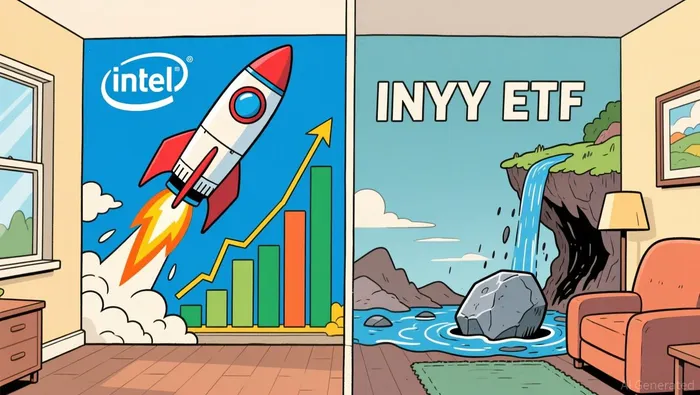
A 75% rate with a 2.6% core
The distribution rate deserves a skeptical look before anyone reads it as a 75% annual return.
INYY pays weekly, and the amount moves with what it collected that week. Last week's payment was $0.5497; this week's is $0.5281. That is normal for the fund, not a cut. The "75.44%" figure is reached by taking one week's payment, annualizing it, and dividing by the fund's net asset value: $0.5281 times 52 weeks is about $27.46 a year against a share price in the mid-$30s. It is a forward-looking, one-week snapshot — not an earnings yield on a business.
Push past the headline and the fund's own materials put that number in perspective: its 30-day SEC yield — the estimate of the portfolio's net investment income, excluding the option income that drives the big number — is just 2.57%. The rest of the payment is premium collected from selling options, plus to some degree the fund's own capital being handed back (return of capital). Distributions are variable and not guaranteed. What the reader keeps is real cash; what it represents is not a corporate earnings stream.
Intel's rally is INYY's ceiling
The reason the two charts divorce comes down to one mechanism. INYY is not a fund that owns Intel and pays the gains out. It runs a synthetic covered call on INTCINTC-- — buying an Intel call and selling a higher-strike call, collateralized by cash and Treasuries — and it distributes essentially everything it collects. The prospectus states it plainly: returns of Intel are capped at 7% in any given month.
That cap is the entire trade. Right now it is extremely generous for the check: Intel's options are pricing roughly 63% implied volatility, and call buyers are the active side of the tape, so the call spreads INYY sells are expensive and the weekly premiums are fat. High volatility is exactly what feeds a 75% headline rate. But it is the same volatility that makes the ceiling pinch — and there is no third side to the trade. Sell a call, the stock of course doubles, and the fund keeps only a sliver of the move before the sold call caps it.
The neutral analyst's model of the fund's participation makes the cost concrete: with Intel's price sitting in that band, roughly 16% of a move above the low-$90s flows through to shareholders while the stock runs; only when Intel presses well above $110 do bought-back calls let the fund re-engage with the full move. Treat those participation percentages as an estimate, not a promise — but the direction is exactly what the 7% cap says. The higher Intel goes, the more the fund's own shareholders have surrendered most of the gain to fund the weekly check.
Where the fund's own chart sits
INYY has its own technical problem. It sits below its 50-day line near $41 and well off its 52-week high near $60, having broken down to a low around $34 before a sharp five-day bounce of roughly 10%. That bounce toward $41 is real but it is a recovery inside a downtrend, not a new uptrend — and as long as Intel keeps running into the sold calls, the fund has no organic way to climb with it. The price action and the dividend are the same phenomenon seen from opposite sides of the trade.
The decision for anyone drawn in by the yield is not whether $0.5281 is real next week. It is. It is whether giving away nearly all of the upside in the year's biggest winner is a fair price to pay for it. If you believe Intel's run continues, a covered call is a tax on that belief, and the check is the tuition. If you are genuinely neutral on Intel, the fund is a way to get paid for being right that the drama fades — and wrong that it rips. That is the honest trade. A 75%-looking check on a stock that doubled while the fund fell is not free yield; it is the market paying you the wrong side of a rocket.

Stay ahead of the market.
Get curated U.S. market news, insights and key dates delivered to your inbox.


AInvest
PRO
AInvest
PRO




Comments
No comments yet