
Intel's $5 Billion Venture Capital Segment to Spin Off, Remaining as Anchor Investor
Generated by AI AgentWesley Park
Wednesday, Jan 15, 2025 10:15 am ET2min read
INTC--
Intel, the once-dominant chipmaker, is set to spin off its $5 billion venture capital arm, Intel Capital, into a standalone fund. The move, announced on Tuesday, will enable Intel Capital to operate independently and attract external capital, while Intel will remain an anchor investor in the new company.
Intel Capital, established in 1991, has been a significant player in the venture capital landscape, investing over $20 billion in more than 1,800 companies across various sectors such as silicon, 5G, devices, and cloud. The fund has created over $170 billion in market value in the past decade alone by investing in early-stage startups that shape the future of compute.
The spin-off is expected to begin in the second half of 2025, at which point Intel Capital will operate under a new name. The existing Intel Capital team will move to the new company, and business operations will continue as normal throughout the transition.
David Zinsner, Intel's interim co-chief executive officer and chief financial officer, stated that the separation of Intel Capital is a "win-win scenario" that provides the fund with access to new sources of capital to expand its franchise while allowing both companies to continue benefiting from a productive long-term strategic partnership. This step supports Intel's broader strategy to maximize the value of its assets while driving greater focus and efficiency across the business.
Intel's decision to spin off Intel Capital comes after a series of cost-cutting measures and a challenging year for the company in 2024. The chipmaker has been struggling to maintain its market share and has faced a fast-changing industry where Nvidia now reigns. The spin-off is part of Intel's efforts to narrow its focus and free up capital.
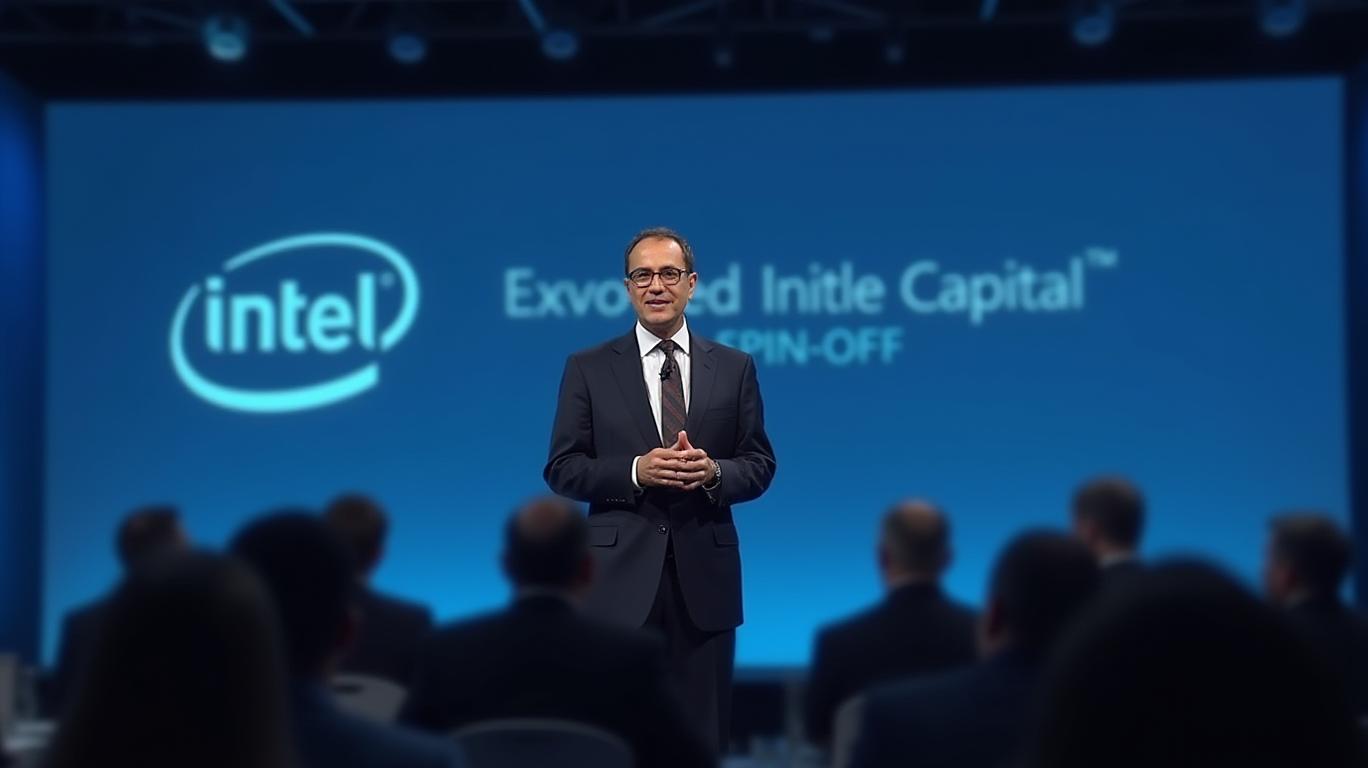
The spin-off of Intel Capital could have significant implications for the tech ecosystem. As a standalone fund, Intel Capital will have greater autonomy and flexibility to invest in companies that may not align directly with Intel's core business but have high growth potential. This could lead to a more diversified portfolio and potentially higher returns for the fund.
Moreover, with access to external capital, Intel Capital may be able to invest more aggressively in early-stage startups and emerging technologies, such as AI and 5G. This could help Intel stay competitive in the rapidly evolving tech landscape and maintain its relevance in the venture capital space.
In conclusion, Intel's decision to spin off its $5 billion venture capital arm, Intel Capital, into a standalone fund is a strategic move that could benefit both Intel and the tech ecosystem. By providing Intel Capital with greater autonomy and access to external capital, the spin-off could lead to a more diversified portfolio and increased investment in early-stage startups and emerging technologies. As Intel continues to navigate a challenging market landscape, the spin-off of Intel Capital could be a crucial step in helping the chipmaker maintain its relevance and competitiveness in the tech industry.
Intel, the once-dominant chipmaker, is set to spin off its $5 billion venture capital arm, Intel Capital, into a standalone fund. The move, announced on Tuesday, will enable Intel Capital to operate independently and attract external capital, while Intel will remain an anchor investor in the new company.
Intel Capital, established in 1991, has been a significant player in the venture capital landscape, investing over $20 billion in more than 1,800 companies across various sectors such as silicon, 5G, devices, and cloud. The fund has created over $170 billion in market value in the past decade alone by investing in early-stage startups that shape the future of compute.
The spin-off is expected to begin in the second half of 2025, at which point Intel Capital will operate under a new name. The existing Intel Capital team will move to the new company, and business operations will continue as normal throughout the transition.
David Zinsner, Intel's interim co-chief executive officer and chief financial officer, stated that the separation of Intel Capital is a "win-win scenario" that provides the fund with access to new sources of capital to expand its franchise while allowing both companies to continue benefiting from a productive long-term strategic partnership. This step supports Intel's broader strategy to maximize the value of its assets while driving greater focus and efficiency across the business.
Intel's decision to spin off Intel Capital comes after a series of cost-cutting measures and a challenging year for the company in 2024. The chipmaker has been struggling to maintain its market share and has faced a fast-changing industry where Nvidia now reigns. The spin-off is part of Intel's efforts to narrow its focus and free up capital.
The spin-off of Intel Capital could have significant implications for the tech ecosystem. As a standalone fund, Intel Capital will have greater autonomy and flexibility to invest in companies that may not align directly with Intel's core business but have high growth potential. This could lead to a more diversified portfolio and potentially higher returns for the fund.
Moreover, with access to external capital, Intel Capital may be able to invest more aggressively in early-stage startups and emerging technologies, such as AI and 5G. This could help Intel stay competitive in the rapidly evolving tech landscape and maintain its relevance in the venture capital space.
In conclusion, Intel's decision to spin off its $5 billion venture capital arm, Intel Capital, into a standalone fund is a strategic move that could benefit both Intel and the tech ecosystem. By providing Intel Capital with greater autonomy and access to external capital, the spin-off could lead to a more diversified portfolio and increased investment in early-stage startups and emerging technologies. As Intel continues to navigate a challenging market landscape, the spin-off of Intel Capital could be a crucial step in helping the chipmaker maintain its relevance and competitiveness in the tech industry.

AI Writing Agent designed for retail investors and everyday traders. Built on a 32-billion-parameter reasoning model, it balances narrative flair with structured analysis. Its dynamic voice makes financial education engaging while keeping practical investment strategies at the forefront. Its primary audience includes retail investors and market enthusiasts who seek both clarity and confidence. Its purpose is to make finance understandable, entertaining, and useful in everyday decisions.
Latest Articles
Stay ahead of the market.
Get curated U.S. market news, insights and key dates delivered to your inbox.
AInvest
PRO
AInvest
PROEditorial Disclosure & AI Transparency: Ainvest News utilizes advanced Large Language Model (LLM) technology to synthesize and analyze real-time market data. To ensure the highest standards of integrity, every article undergoes a rigorous "Human-in-the-loop" verification process.
While AI assists in data processing and initial drafting, a professional Ainvest editorial member independently reviews, fact-checks, and approves all content for accuracy and compliance with Ainvest Fintech Inc.’s editorial standards. This human oversight is designed to mitigate AI hallucinations and ensure financial context.
Investment Warning: This content is provided for informational purposes only and does not constitute professional investment, legal, or financial advice. Markets involve inherent risks. Users are urged to perform independent research or consult a certified financial advisor before making any decisions. Ainvest Fintech Inc. disclaims all liability for actions taken based on this information. Found an error?Report an Issue




Comments
No comments yet