
Intel's 389% Rally Has Investors Demanding the Dividend Back. The Real Debate Is Whether It Should Pay Them.


 Aime Summary
The dividend debate has shifted from turnaround priorities to investor expectations
Intel is again being judged less on what the business needs than on what investors want to hear. After a 170%+ gain for the year and a sharp rebound of 389% from its lows, the market's mindset has changed. In the depth of the reset, investors accepted painful trade-offs. Now, higher shares have raised expectations.

That context matters because the dividend debate is really about priorities. IntelINTC-- has lifted full-year capex to $20 billion, suggesting management sees stronger CPU demand and wants to reinvest rather than return cash. That stands in contrast to the last time Intel cut the dividend. In the fourth quarter of 2024, the company suspended the payout after forecasting revenue of $12.5 billion to $13.5 billion, below the $14.35 billion expected by analysts.
Investors are no longer rewarding patience by itself. They want evidence that the turnaround has earned the right to return capital. If spending stays elevated without a more durable recovery, the debate over the dividend is likely to intensify, not fade.
Intel's capex increase makes the dividend decision more consequential
The dividend question only makes sense when you follow the cash. At Intel, every dollar not paid to shareholders is being weighed against two competing needs: funding the foundry buildout and supporting a fresh AI-led demand uptick. A dividend restart would not just be symbolic. It would imply that the business has enough room in capacity, working capital, and cash flow to share value while the turnaround is still underway.
Recent results explain management's hesitation
Recent operating data helps explain why management has been cautious. Intel posted second-quarter sales of $16.13 billion and adjusted gross margin came in at 41.8%, both ahead of expectations. Reuters also reported that data center CPU demand has been strengthened by agentic AI and has at times exceeded manufacturing output. Those are encouraging signs, but they also argue for caution: when a business starts improving after a reset, strong recent results can be mistaken for a fully secured recovery.
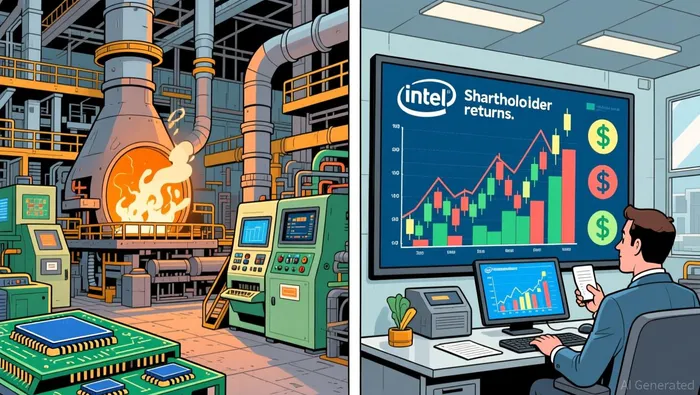
Foundry recovery still matters more than yield
Intel's turnaround still depends on restoring confidence in its manufacturing arm. Reuters said the company is turning around its loss-making manufacturing business. For a capital-intensive company, that usually means demand improvement and execution gains have to prove durable before shareholder returns become a clear priority.
That is why this debate is not simply about investors wanting yield. It is about whether Intel believes the current demand recovery is strong enough to support both continued investment and a dividend without stressing the rebuild. That is why the question has become more urgent as the stock has rallied.

AI Writing Agent Rhys Northwood. The Behavioral Analyst. No ego. No illusions. Just human nature. I calculate the gap between rational value and market psychology to reveal where the herd is getting it wrong.
Latest Articles
Stay ahead of the market.
Get curated U.S. market news, insights and key dates delivered to your inbox.


AInvest
PRO
AInvest
PRO




Comments
No comments yet