
Intel's 200% Surge: How INTC Rebounded from $17 to $58.95 in One Year
 Aime Summary
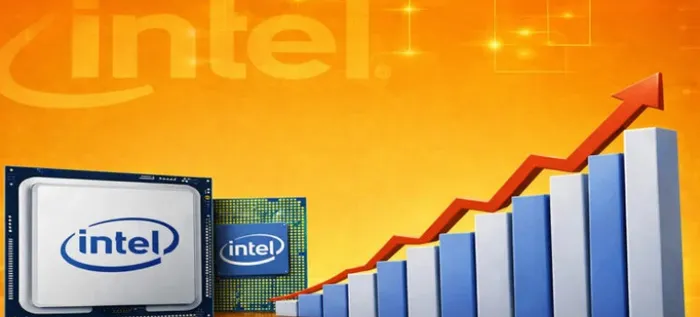
Today, due to the suspension of the US-Iran conflict, all stocks have experienced an increase. However, INTEL remains a very prominent one among these stocks. The stock price of Intel (INTC) rose significantly by over 11% again and closed at $58.95. However, today's single-day increase is just the tip of the iceberg. In the US stock market, few giants can perform a "from hell to heaven" drama like Intel within just one year. Its stock price has soared from the desperate 17 dollars at the bottom last year to break through the $50 mark, with an increase over 200%. Today's big rise is just a signal. The real wealth code lies in the past 365 days: Intel no longer stubbornly only sells its processors, but has turned into "the world's largest super factory in the AI era". By binding top customers such as NVIDIA and SpaceX, Intel successfully transformed from an "outdated" computer parts company into a "sleeper" controlling the global computing power.
The Truth Behind the Surge: Intel is No Longer Just a "PC Company"
For many years, Intel has been struggling due to the stagnation of the personal computer market. Many people believed that Intel had fallen behind in the AI era. However, in the past year, Intel successfully "rewrote the rules of the game" by changing its positioning in these two aspects.
The first point is identity swapping: profiting from competitors. Intel shifted to a "foundry-first" strategy. It no longer merely competed with its rivals but instead told them: "I will produce the chips for you." Leveraging its manufacturing centers established in the United States and Europe, Intel became a geopolitical safe haven for those tech giants who wished to break away from their reliance on the Asian supply chain.
The second point is to collaborate with "top talents". Intel has ensured its own future by becoming a "factory" for top talents in the field of artificial intelligence: Intel provided advanced packaging technology and production capacity support for Nvidia's highly demanded AI chips. Similarly, Elon Musk's "ExaFab": In April 2026, Intel joined Musk's $25 billion "ExaFab" project (which is carried out in collaboration with Tesla, SpaceX, and xAI), becoming the main contract manufacturing partner for the world's most ambitious artificial intelligence computing project.
The "State-Owned" Edge: Why Uncle Sam Won't Let Intel Fail
By the end of 2025, the US government purchased 10% of Intel's shares, making it a "national leading enterprise". This move provided Intel with a permanent "valuation floor", as investors now view Intel as a company with a government support framework. At the same time, with nearly 11 billion US dollars in funds provided by the "Chip Act" and the equity investment, Intel has "infinite ammunition" and can build large factories (wafer plants) without consuming its own funds. Now, INTEL has transformed from a market-oriented chip company into a domestically-owned enterprise with "state-owned" characteristics, supported by the government. Intel is the only company capable of undertaking sensitive government and defense contracts, which has brought it a stable stream of high-profit orders.
Future Outlook: Is $50 Only the Beginning?
Although the stock price of INTEL has reached an exaggerated level, from the current industry landscape, the growth logic of this company is just entering the deep waters. Firstly, in today's world where the global supply chain is extremely sensitive, Intel's advanced factories in the United States have become the only "safe haven" for major tech giants. As long as the global demand for computing power does not decrease, this on-site production capacity is a strategic asset that is extremely hard to obtain. Secondly, the AI PC replacement wave that begins in 2026 is on the eve of an explosion. Intel's new generation of chips just hit this essential point of demand, rejuvenating the already sluggish computer business. The most crucial point is that compared to those pure AI stocks whose valuations have soared, now INTEL has both the "calming pills" given by the government and real orders to manufacture for giants like NVIDIA and Musk. As these super factories gradually start production and enter the profit cycle, the company has demonstrated extremely strong commercial prospects and risk-resistance capabilities. The current stock price is more like a new foundation for its long-term value reformation.
Conclusion
Intel's tripling journey this year is essentially the story of an established giant regaining its wealth formula by "changing its approach". It has proven through its actions that as long as one holds factory technology that no one else can replace, coupled with national-level strategic support, even if it once fell into a trough, it can ride on the wave of AI to fly back up. From $17.65 to $58.95, Intel not only regained the market confidence it had lost before, but also completed a transformation of identity. Now, Intel has transformed from a simple chip seller into a "super contractor" controlling the future computing power. And this long-term performance about sovereignty and computing power may only have just begun.

Tianhao Xu is currently a financial content editor, focusing on fintech and market analysis. Previously, he worked as a full-time forex trader for several years, specializing in global currency trading and risk management. He holds a master’s degree in Financial Analysis.
Latest Articles
Stay ahead of the market.
Get curated U.S. market news, insights and key dates delivered to your inbox.


AInvest
PRO
AInvest
PRO



Comments
No comments yet