
Intel's $2 Billion Investment from Softbank Could Boost Market Cap to $200 Billion by 2030
ByAinvest
Thursday, Aug 28, 2025 2:53 pm ET1min read
ARM--
Softbank's investment is part of a broader trend of increased interest in Intel from both private and public sectors. The U.S. government has also taken a 9.9% stake in Intel, valued at $8.9 billion, as part of its broader effort to bolster Intel's financial health and foundry business [2]. This investment, which is described as "passive," means Intel will maintain control over its operations, but the government has a five-year warrant to acquire an additional 5% of Intel's stock if the company sells more than 49% of its foundry business.
The investment from Softbank and the government's stake in Intel speak to the rising interest in the company and a possible path back to a $200 billion market cap for the chipmaker. However, Intel's struggles over the past decades have left it trading at a market cap that it first reached in 1997. Its stock has fallen so far that it trades at a price-to-book ratio of 1.1, a level implying that the company as a going concern is only worth slightly more than its liquidation value [1].
The question for investors is how all of this interest will actually affect Intel stock. Intel's current valuation provides a potential opportunity for growth, but until it can demonstrate its ability to leverage its Softbank partnership and government funding into a competitive foundry business, investors should probably limit their exposure to levels they feel are appropriate for speculative positions.
References:
[1] https://www.fool.com/investing/2025/08/27/prediction-intel-worth-200-billion-2030-investment/
[2] https://www.ainvest.com/news/trump-hints-investment-deals-intel-stake-2508/
INTC--
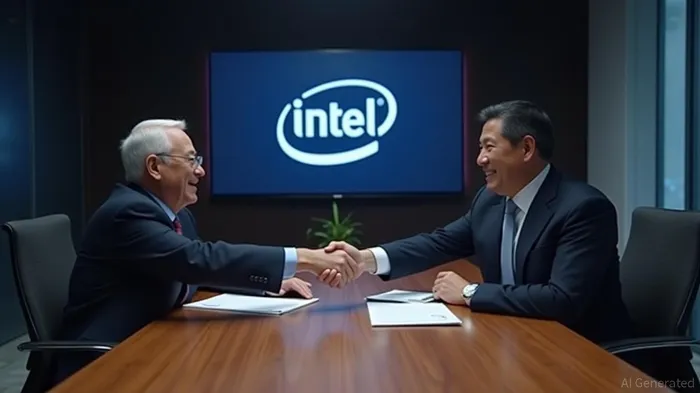
Intel's $2 billion investment from Softbank could help the company recover and reach a $200 billion market cap by 2030. Softbank's majority stake in Arm Holdings, a chip-design firm, could give Intel a critical partner in its attempt to regain technical lead in chipmaking. Intel's current valuation is barely above its book value, providing a potential opportunity for growth.
Intel (INTC) has received a significant boost with a $2 billion investment from Softbank, which could help the chipmaker recover and potentially reach a $200 billion market cap by 2030. This investment comes at a critical time for Intel, which has been struggling to regain its technical lead in chipmaking and has seen its market cap decline to $107 billion. The investment from Softbank, which owns a 90% stake in Arm Holdings, a chip-design firm, could provide Intel with a critical partner in its attempt to regain its competitive edge.Softbank's investment is part of a broader trend of increased interest in Intel from both private and public sectors. The U.S. government has also taken a 9.9% stake in Intel, valued at $8.9 billion, as part of its broader effort to bolster Intel's financial health and foundry business [2]. This investment, which is described as "passive," means Intel will maintain control over its operations, but the government has a five-year warrant to acquire an additional 5% of Intel's stock if the company sells more than 49% of its foundry business.
The investment from Softbank and the government's stake in Intel speak to the rising interest in the company and a possible path back to a $200 billion market cap for the chipmaker. However, Intel's struggles over the past decades have left it trading at a market cap that it first reached in 1997. Its stock has fallen so far that it trades at a price-to-book ratio of 1.1, a level implying that the company as a going concern is only worth slightly more than its liquidation value [1].
The question for investors is how all of this interest will actually affect Intel stock. Intel's current valuation provides a potential opportunity for growth, but until it can demonstrate its ability to leverage its Softbank partnership and government funding into a competitive foundry business, investors should probably limit their exposure to levels they feel are appropriate for speculative positions.
References:
[1] https://www.fool.com/investing/2025/08/27/prediction-intel-worth-200-billion-2030-investment/
[2] https://www.ainvest.com/news/trump-hints-investment-deals-intel-stake-2508/
Stay ahead of the market.
Get curated U.S. market news, insights and key dates delivered to your inbox.
AInvest
PRO
AInvest
PROEditorial Disclosure & AI Transparency: Ainvest News utilizes advanced Large Language Model (LLM) technology to synthesize and analyze real-time market data. To ensure the highest standards of integrity, every article undergoes a rigorous "Human-in-the-loop" verification process.
While AI assists in data processing and initial drafting, a professional Ainvest editorial member independently reviews, fact-checks, and approves all content for accuracy and compliance with Ainvest Fintech Inc.’s editorial standards. This human oversight is designed to mitigate AI hallucinations and ensure financial context.
Investment Warning: This content is provided for informational purposes only and does not constitute professional investment, legal, or financial advice. Markets involve inherent risks. Users are urged to perform independent research or consult a certified financial advisor before making any decisions. Ainvest Fintech Inc. disclaims all liability for actions taken based on this information. Found an error?Report an Issue


ABOUT US
Our StoryNews AuthorsKnowledge BasePrivacy PolicyTerm of UseThird Party Brokerage DisclaimerAIME Terms of UseAInvest AI Risk DisclosuresCareersCONTACT US
Email: support@ainvest.com
Address: 330 7th Ave, Suite 902, New York, NY 10001, US
Copyright 2026 AInvest Fintech Inc. All rights reserved.


Comments
No comments yet