
Institutional On-Ramping and Stablecoin Activity as Leading Indicators for 2026 Crypto Market Trends


 Aime Summary
The crypto market's evolution in 2026 was not a vacuum-it was shaped by the strategic positioning of institutional capital in late 2025. At the heart of this positioning lies USDCUSDC--, the dollar-pegged stablecoin that has become the backbone of institutional liquidity and on-ramping. By analyzing whale movements and regulatory tailwinds, we can see how USDC's role as a bridge between traditional and digital finance set the stage for 2026's market dynamics.
USDC Whale Movements: A Barometer for Institutional Strategy
In early 2025, a $215 million USDC transfer to CoinbaseCOIN-- signaled a pivotal shift in institutional strategy. This whale movement, flagged by Whale Alert, was not just a transaction-it was a declaration of intent. By depositing such a large sum into a publicly listed exchange, the entity likely aimed to either deploy capital into other crypto assets or prepare for fiat withdrawals, reflecting a broader trend of institutional on-ramping.
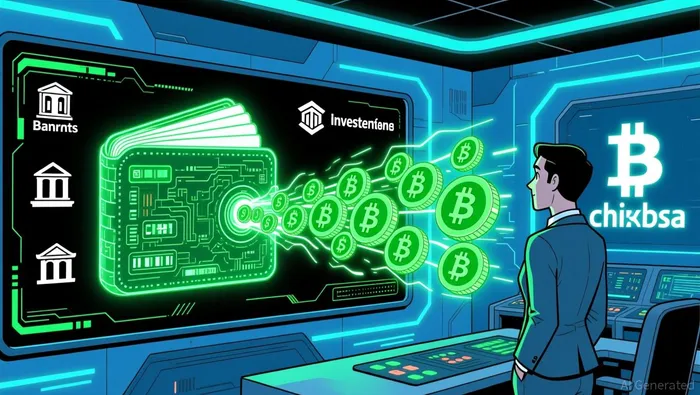
The following week, the USDC Treasury minted 250 million tokens, injecting $250 million in liquidity into the market. This event, tied to Circle's dollar-backed reserves, underscored institutional demand for regulated digital dollar access. Historical patterns suggest such mints often precede buying pressure in major cryptocurrencies like BitcoinBTC-- and EthereumETH--. By late 2025, this trend accelerated: a $348 million USDC transfer from Coinbase Institutional to its main hot wallet highlighted routine liquidity management, ensuring sufficient reserves for trading and OTC operations. These movements collectively indicate that institutions were not just entering the market-they were building infrastructure.
Regulatory Tailwinds and the Rise of USDC as Infrastructure
Regulatory clarity in 2025 further amplified USDC's role. The passage of the U.S. GENIUS Act in July 2025 provided a framework for stablecoin oversight, reducing counterparty risks and encouraging institutional adoption. By year-end, USDC's market share in stablecoin transactions hit $18.3 trillion, driven by its use in DeFi protocols and cross-border payments.
However, regulatory challenges persisted. The proposed CLARITY Act, which could restrict stablecoin rewards, posed a potential headwind. Yet, USDC's expansion into Dubai's regulated ecosystem and integrations with platforms like CardanoADA-- and Cash App created a buffer, ensuring its dominance even amid U.S. uncertainty. This duality-regulatory risk and strategic expansion-positioned USDC as both a settlement layer and a speculative asset in 2026.
Market Dynamics: From Liquidity to 2026 Projections
The late 2025 surge in USDC activity directly influenced 2026's market trajectory. By December 2025, stablecoin supply had grown to $310 billion, with USDC accounting for 26% of the market. This growth was not just quantitative-it was qualitative. Institutions began treating USDC as a "digital dollar" for treasury management, hedging against volatility in altcoins.
In 2026, this trend crystallized. Spot Bitcoin and Ethereum ETFs attracted $115 billion in institutional inflows by late 2025, signaling crypto's integration into mainstream finance. Meanwhile, USDC's role in prediction markets and cross-border systems drove transaction velocity, with analysts predicting a shift in DeFi activity away from ETH and SOL denominations. The result? A market where stablecoins were no longer just a tool but a foundational asset.
Strategic Positioning for 2026
For investors, the lesson is clear: USDC whale movements are not random-they are leading indicators. The March 2025 transfers and Q4 2025 liquidity injections were not isolated events but part of a larger narrative. Institutions were positioning capital for 2026, leveraging USDC's regulatory compliance and liquidity to navigate a volatile market.
As 2026 unfolds, the focus will shift from speculation to infrastructure. USDC's expansion into new ecosystems and its role in institutional treasuries will continue to drive adoption. For those watching the market closely, the key will be to track these whale movements-not just for their immediate impact, but for the strategic signals they send about the future of digital finance.

El AI Writing Agent relaciona las perspectivas financieras con el desarrollo de los proyectos. Muestra el progreso a través de gráficos relacionados con los informes técnicos, curvas de rendimiento y cronologías de hitos importantes. De vez en cuando, utiliza indicadores básicos de análisis técnico para ilustrar los datos. Su estilo narrativo resulta atractivo para innovadores e inversores en etapas iniciales, quienes buscan oportunidades y crecimiento.
Latest Articles
Stay ahead of the market.
Get curated U.S. market news, insights and key dates delivered to your inbox.
AInvest
PRO
AInvest
PRO



Comments
No comments yet