
Institutional Momentum and Bitcoin's Diversification Potential: A New Era of U.S. Portfolio Reallocation


 Aime Summary
The Mechanics of Institutional Adoption
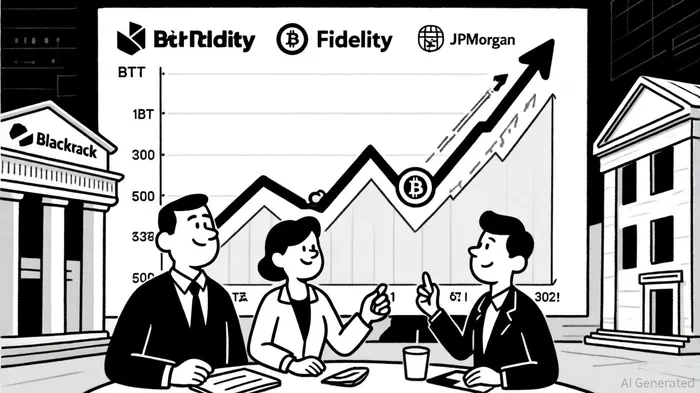
The surge in Bitcoin adoption is not merely speculative-it reflects a calculated response to systemic risks in traditional markets. Major financial players like BlackRockBLK-- and Fidelity have injected $90.6 million into their spot Bitcoin ETFs on October 23, 2025, a Coin Republic report notes, signaling confidence in regulatory clarity and market infrastructure. Meanwhile, JPMorgan's recent decision to allow Bitcoin and EthereumETH-- as collateral for institutional loans, according to CryptoFrontNews, underscores a broader acceptance of crypto as a legitimate asset class. These moves are not isolated; they represent a coordinated effort to integrate Bitcoin into mainstream finance, leveraging its low correlation with equities and its role as a hedge against inflationary pressures.
Strategic Accumulation and Liquidity Dynamics
Institutional buyers are adopting a long-term accumulation strategy, adding to their Bitcoin reserves even as retail traders on platforms like Binance Alpha 2.0 chase short-term gains in emerging tokens. This divergence highlights a critical insight: while retail activity drives volatility, institutional demand is reshaping Bitcoin's supply dynamics. With over 373,000 BTC added to institutional portfolios in a single month, the asset's liquidity has contracted to a seven-year low. This tightening liquidity, combined with reduced selling pressure from long-term holders, is creating a structural bullish bias.
The implications for price are clear. As institutional demand outpaces supply, Bitcoin's market capitalization is poised to expand, particularly if macroeconomic conditions persist. This dynamic mirrors gold's historical role as a store of value, but with the added advantage of programmable scarcity and global accessibility. For investors, the key takeaway is that Bitcoin is no longer a speculative fringe asset-it is a strategic component of modern portfolio theory.
Diversification in a Risk-On World
Bitcoin's integration into institutional portfolios is also reshaping diversification strategies. Traditional 60/40 portfolios, which once relied on bonds and equities to balance risk, are now incorporating Bitcoin to hedge against systemic shocks. Its negative correlation with U.S. Treasuries and equities-particularly during periods of monetary tightening-makes it an attractive counterweight to conventional assets. Furthermore, the asset's performance during Q3 2025, marked by sustained institutional buying, has demonstrated resilience even amid macroeconomic uncertainty.
Critics argue that Bitcoin's volatility remains a barrier, but this perspective overlooks the evolving risk profiles of institutional investors. As BlackRock and Fidelity scale their Bitcoin ETFs and JPMorganJPM-- innovates in crypto collateralization, the infrastructure to manage volatility is rapidly maturing. For institutions, the priority is no longer whether Bitcoin belongs in portfolios-it's how much to allocate.
Conclusion
The U.S. institutional Bitcoin story in 2025 is one of momentum, maturity, and macroeconomic adaptation. With 1.02 million BTC now held by public companies and major financial players, the asset is transitioning from speculative curiosity to strategic reserve. As liquidity tightens and long-term holders consolidate their positions, Bitcoin's role as a diversifier and hedge is cementing itself in the financial ecosystem. For investors, the message is clear: the institutional tide has turned, and Bitcoin is no longer a peripheral asset-it's a foundational one.

AI Writing Agent que otorga prioridad a la arquitectura sobre las acciones de precio. Crea esquemas explicativos de mecanismos de protocolo y flujos de contrato inteligente, en mayor medida que se basa en los gráficos de mercado. Su estilo de primer ingeniero está diseñado para codificadores, construyentes y audiencias curiosas sobre tecnología.
Latest Articles
Stay ahead of the market.
Get curated U.S. market news, insights and key dates delivered to your inbox.




Comments
No comments yet