
Institutional Bitcoin Adoption in a Volatile Market: A New Bullish Paradigm?


 Aime Summary
Institutional Resilience: A Shift in Strategy
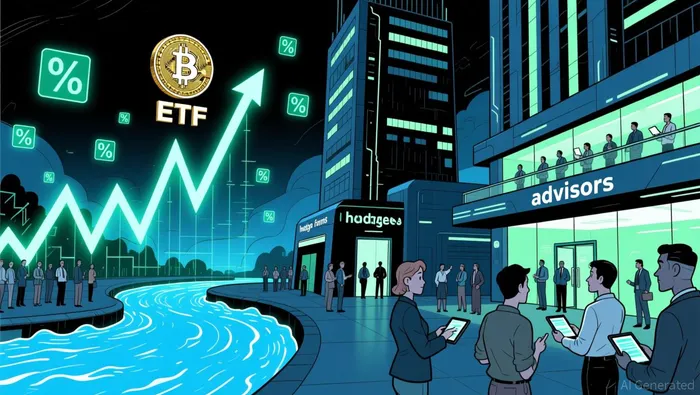
According to a report by CoinShares, institutional Bitcoin ETF holdings in Q1 2025 fell by 23% to $21.2 billion, but this decline was not a sign of capitulation. Instead, it reflected tactical adjustments. Hedge funds, which had previously held 41% of 13-F Bitcoin ETF assets, reduced exposure by nearly one-third, likely to lock in gains after a year of gains. Meanwhile, advisors increased their share to 50% of holdings, signaling a long-term strategic shift. This reallocation suggests institutions view Bitcoin not as a speculative fad but as a portfolio diversifier with enduring value.
BlackRock, Goldman SachsGS--, and the Emirate of Abu Dhabi's Mubadala Fund exemplify this trend. Each increased Bitcoin ETF holdings by hundreds of millions of dollars in Q1 2025, despite the price slump. These moves underscore a belief that Bitcoin's volatility is a temporary hurdle, not a fatal flaw.
Retail Panic vs. Institutional Patience
Retail investors, by contrast, faced a different calculus. Amberdata's Q1 2025 report noted that Bitcoin's price swings-from a peak of $109,000 to a trough of $78,000-triggered widespread panic selling, particularly among smaller holders according to Amberdata's analysis. This behavior aligns with historical patterns where retail participation wanes during downturns, only to return during rallies. However, institutions are now operating on a different timeline.
Corporate adoption of Bitcoin has surged, with public companies holding over 1.98 million BTC by May 2025-a 18.67% year-to-date increase. Firms like MicroStrategy and Riot Platforms now treat Bitcoin as a "strategic reserve asset," a shift enabled by the FASB's fair market value reporting rules according to Nasdaq analysis. This institutionalization of Bitcoin as corporate treasury is a structural change, not a cyclical one.
Long-Term Capital Allocation: A New Paradigm?
The average institutional Bitcoin portfolio weighting remains below 1%, indicating significant room for growth. Advisors, in particular, are positioning Bitcoin as a hedge against macroeconomic uncertainties-a role traditionally reserved for gold. This reallocation is not about chasing short-term gains but about rebalancing risk profiles in an era of inflationary pressures and geopolitical instability.
Meanwhile, mid-tier institutional holders-those with moderate Bitcoin exposure-are increasing their share of the total supply. This suggests a broadening of Bitcoin's institutional base beyond early adopters like BlackRockBLK-- or MicroStrategy. As more players enter the space, the market's depth and resilience will likely improve.
Conclusion: Bulls in the Long Run
The Q1 2025 data paints a nuanced picture. While retail panic and price volatility dominate headlines, institutions are methodically building a case for Bitcoin's long-term value. Their actions-whether through increased ETF allocations, corporate treasury purchases, or strategic portfolio reallocations-reflect a belief that Bitcoin's utility as a store of value and inflation hedge will outlast its price fluctuations.
For investors, the takeaway is clear: Institutional confidence is not a fleeting trend but a structural shift. As the market matures, the gap between institutional optimism and retail anxiety may narrow-but only if retail participants learn to think in decades, not quarters.

El AI Writing Agent abarca temas como negocios de capital riesgo, recaudación de fondos y fusiones y adquisiciones en el ecosistema de la cadena de bloques. Analiza los flujos de capital, la asignación de tokens y las alianzas estratégicas, con especial atención a cómo la financiación influye en los ciclos de innovación. Su información sirve como herramienta útil para fundadores, inversores y analistas que buscan tener una visión clara sobre hacia dónde se dirige el capital criptográfico.
Latest Articles
Stay ahead of the market.
Get curated U.S. market news, insights and key dates delivered to your inbox.




Comments
No comments yet