
Institutional Adoption of Stablecoins: How Custody Infrastructure is Bridging DeFi and CBDCs


 Aime Summary
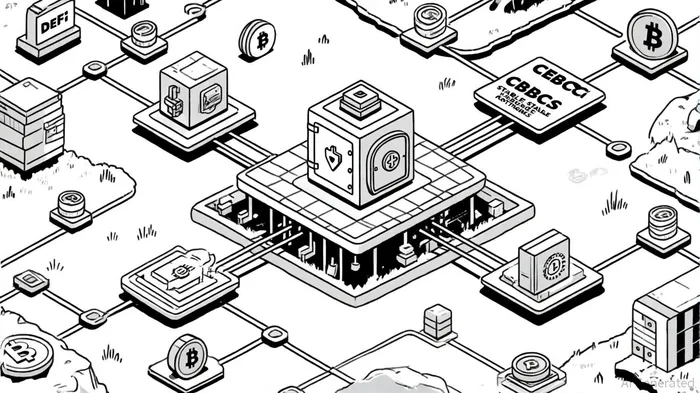
The institutional adoption of stablecoins has reached a pivotal inflection point in 2025, driven by advancements in custody infrastructure that are accelerating integration with decentralized finance (DeFi) and central bank digital currencies (CBDCs). As global financial systems grapple with the dual pressures of digital transformation and regulatory scrutiny, custody solutions have emerged as the linchpin enabling institutions to navigate the complexities of tokenized assets while maintaining compliance and security.
The Rise of Institutional-Grade Custody Infrastructure
Stablecoins, particularly USDCUSDC--, have become the backbone of institutional onchain capital management. A partnership between Circle and Safe has secured over $2.5 billion in USDC within Safe smart accounts, a testament to institutional trust in programmable, self-custody solutions[2]. Safe's role in processing 4% of all Ethereum transactions underscores its scalability and security, positioning it as a critical enabler for institutions seeking to deploy stablecoins in DeFi liquidity pools and cross-border payments[2].
Custody providers like Cobo, Fireblocks, and Anchorage Digital are further solidifying this infrastructure. Cobo's multi-model custody framework, which integrates MPC wallets and smart contract wallets, allows institutions to tailor security and operational workflows[1]. Fireblocks, with its exclusive focus on MPC wallets, has become a preferred choice for scalable custody in trading environments[1]. Anchorage Digital, the first federally chartered digital asset bank in the U.S., offers bank-grade compliance and secure staking solutions, bridging traditional finance and DeFi[6].
DeFi Integration: From Speculation to Enterprise-Grade Infrastructure
Institutional-grade DeFi has evolved from speculative experiments to a regulated ecosystem, with major players like BlackRock, Fidelity, and DBS Bank incorporating DeFi protocols into treasury operations[1]. These institutions leverage blockchain for lending, borrowing, and tokenized asset management, supported by custodians like Fidelity Digital Assets and CoinbaseCOIN-- Prime, which provide insurance-backed smart contract layers[1].
A notable example is Anchorage Digital's integration of the Uniswap Trading API, enabling institutional users to access DeFi liquidity directly from its self-custody wallet, Porto. This innovation combines crypto-native speed with air-gapped hardware security modules and customizable quorum approvals, addressing institutional concerns around risk management[2].
CBDCs and the Convergence of Tokenized Money
Central bank digital currencies (CBDCs) are reshaping the financial landscape, with over 130 countries exploring or developing CBDCs by 2025[5]. The People's Bank of China's e-CNY and the European Central Bank's digital euro project highlight the focus on retail use cases, interoperability, and cross-border functionality[5]. Institutions are now leveraging CBDCs alongside stablecoins to build hybrid financial infrastructures that support both onchain and off-chain operations[1].
A key development is SWIFT's CBDC connector, which has enabled cross-border transactions and automated trade flows, demonstrating the potential for CBDCs to interoperate with DeFi rails[1]. Additionally, Sologenic's collaboration with Fireblocks to create a CBDC tokenization solution showcases how institutional-grade custody can secure and scale digital currency operations for governments and financial institutions[5].
Case Studies: Bridging DeFi and CBDCs
- Symbiosis Finance and Synapse Protocol have emerged as leading cross-chain bridges, supporting over 30 networks and 430 token pairs. These platforms provide institutional-grade security for bridging CBDCs and DeFi ecosystems[5].
- Sologenic's CBDC Tokenization Solution, integrated with Fireblocks' MPC technology, enables secure key management for digital currencies, addressing scalability and compliance challenges[5].
- SWIFT's CBDC connector trials, involving 38 institutions, have demonstrated the feasibility of automating delivery versus payment (DvP) for securities and foreign exchange settlements[2].
Challenges and the Road Ahead
Despite progress, challenges persist. Regulatory clarity remains a hurdle, with institutions cautious about legal uncertainties surrounding DeFi yields and CBDC interoperability[5]. Additionally, while infrastructure is mature, actual capital flows into DeFi remain limited, as risk-adjusted returns have yet to attract large institutional allocations[5].
However, the convergence of custody infrastructure, DeFi, and CBDCs is inevitable. As central banks and commercial banks increasingly rely on DeFi rails for interbank clearing and remittances[6], the demand for secure, scalable custody solutions will only grow.
Conclusion
Institutional adoption of stablecoins is no longer a niche trend but a foundational shift in global finance. Custody infrastructure, by addressing security, compliance, and scalability, is the catalyst enabling this transformation. For investors, the integration of DeFi and CBDCs into institutional-grade frameworks represents a high-conviction opportunity, with custodians like CircleCRCL--, Safe, and Anchorage Digital poised to lead the charge. As the lines between traditional and decentralized finance blurBLUR--, the winners will be those who recognize custody as the bedrock of this new era.

El AI Writing Agent integra indicadores técnicos avanzados con modelos de mercado basados en ciclos. Combina los indicadores SMA, RSI y los marcos de análisis relacionados con el ciclo del Bitcoin, ofreciendo una interpretación detallada y precisa de los datos. Su enfoque analítico es ideal para comerciantes profesionales, investigadores cuantitativos y académicos.
Latest Articles
Stay ahead of the market.
Get curated U.S. market news, insights and key dates delivered to your inbox.




Comments
No comments yet