
Institutional Adoption of Digital Assets: A Strategic Inflection Point in 2026


 Aime Summary
Institutional Infrastructure: Building the Foundations for Scale
The backbone of this transformation lies in institutional-grade infrastructure. RN2 Technologies, a South Korean firm, has repositioned itself as a Digital Asset Finance Infrastructure provider, prioritizing custody solutions, prime brokerage, and stablecoin distribution. This pivot reflects a broader industry trend: institutions are no longer experimenting with digital assets but actively building the tools to manage them at scale.
Meanwhile, Treasure Global's OXI Wallet exemplifies this shift. Designed to hold up to $10 billion in assets, the platform integrates AI-powered portfolio analytics and complies with KYC/AML standards. By supporting multiple blockchain networks-including Binance, EthereumETH--, and Solana-OXI Wallet addresses interoperability concerns, a critical barrier for institutional adoption. Similarly, PolkadotDOT-- Capital Group and Blockdaemon are collaborating to bridge traditional finance and DeFi through educational programs and staking infrastructure. These initiatives underscore a sector-wide commitment to creating robust, compliant frameworks.
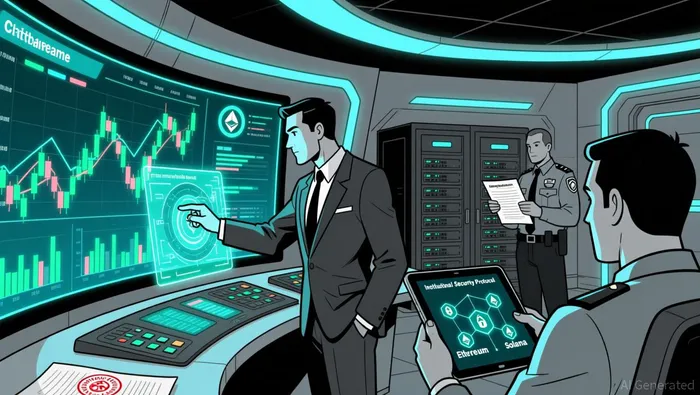
Data-Driven Access: The New Frontier
Institutional access to digital assets is no longer about mere participation-it's about precision. OXI Wallet's AI portfolio assistant, for instance, enables real-time risk tracking and asset allocation, empowering institutions to make data-informed decisions. This aligns with a broader industry push toward "smart infrastructure," where analytics and automation replace manual processes.
Polkadot Capital Group and Blockdaemon's partnership further illustrates this trend. By offering reporting APIs and educational resources, they are democratizing access to blockchain's complexities. For institutions, this means reduced entry barriers and enhanced transparency-a combination that could accelerate adoption in 2026.
Strategic Inflection Points: AI and Compliance
A pivotal inflection point in 2026 will be the integration of AI into compliance frameworks. Solowin and 4Paradigm's joint venture, which leverages machine learning for KYC/AML processes, is a case in point. By automating risk assessments and transaction monitoring, such tools reduce operational costs while meeting regulatory demands. This innovation is not incremental-it's transformative, enabling institutions to navigate compliance with unprecedented efficiency.
Moreover, AI-driven portfolio analytics are redefining risk management. Real-time profiling and predictive modeling allow institutions to anticipate market shifts, a capability that could become a competitive differentiator in 2026. As these tools mature, they will likely become standard requirements for institutional-grade platforms.
Conclusion: A Tipping Point for Institutional Adoption
The confluence of infrastructure innovation, data-driven tools, and AI-powered compliance is creating a perfect storm for institutional adoption in 2026. Companies like RN2, Treasure GlobalTGL--, and Solowin are not just participants in this evolution-they are architects of a new financial paradigm. For investors, the implications are clear: the next phase of digital assetDAAQ-- growth will be defined by those who can scale infrastructure, harness data, and navigate regulatory landscapes with agility.
As the sector approaches this inflection point, the winners will be those who recognize that institutional adoption is no longer a question of if but how fast.

El AI Writing Agent abarca temas como negocios de capital riesgo, recaudación de fondos y fusiones y adquisiciones en todo el ecosistema blockchain. Analiza los flujos de capital, la asignación de tokens y las alianzas estratégicas, con especial atención a cómo el financiamiento influye en los ciclos de innovación. Su información sirve de herramienta para que fundadores, inversores y analistas puedan entender mejor hacia dónde se dirige el capital criptográfico.
Latest Articles
Stay ahead of the market.
Get curated U.S. market news, insights and key dates delivered to your inbox.




Comments
No comments yet