
Institutional Adoption: The Catalyst Reshaping HashKey and the Crypto Market


 Aime Summary
The crypto market is at a pivotal inflection point, driven by a confluence of regulatory clarity, institutional infrastructure development, and shifting retail investor sentiment. HashKey Group's recent Hong Kong IPO, the UAE's rapid regulatory advancements, and Hong Kong's strategic positioning as a digital asset hub illustrate how institutional trust is transforming crypto from a speculative niche into a mainstream asset class.
HashKey's IPO: A Barometer of Institutional Confidence
HashKey Group's 2025 initial public offering (IPO) raised HK$1.61 billion ($206.96 million), pricing shares at HK$6.68-near the top of its marketed range-despite a 3% drop on its debut to HK$6.51 according to market data. The offering, oversubscribed 5.5 times in the institutional tranche and 394 times in the retail tranche, underscored robust demand from global investors, including Fidelity, UBS, and Cithara Fund according to reports. While the company reported a HK$506.7 million loss in the first half of 2025, executives remain optimistic, citing Hong Kong's regulatory progress and the city's ambition to become a crypto hub according to management.
HashKey's IPO highlights a critical trend: institutional investors are increasingly viewing digital assets as a strategic allocation, even amid macroeconomic headwinds. Bitcoin's 30% decline from its October 2025 high did little to deter institutional participation, suggesting that long-term value creation-rather than short-term volatility-is now the focus according to industry analysis.
Regulatory Catalysts: UAE and Hong Kong Lead the Charge
The UAE and Hong Kong have emerged as twin pillars of institutional adoption, each offering distinct yet complementary regulatory frameworks.
UAE's Regulatory Breakthroughs
Dubai's Virtual Assets Regulatory Authority (VARA) and Abu Dhabi Global Market (ADGM) have established a clear, business-friendly environment for crypto and real-world asset (RWA) tokenization. VARA's licensing framework for asset-referenced virtual assets (ARVAs) has enabled the tokenization of real estate, commodities, and other tangible assets, attracting global innovators according to market reports. The UAE's delisting from the FATF grey list in 2024 and the EU's high-risk list in 2025 has further solidified its reputation as a trusted jurisdiction according to regulatory sources.
Hong Kong's Strategic Roadmap
Hong Kong's Securities and Futures Commission (SFC) has introduced the "A-S-P-I-Re" regulatory roadmap, emphasizing access, safeguards, and infrastructure. Key measures include removing the 12-month track record requirement for crypto listings and allowing virtual asset trading platforms (VATPs) to integrate with global liquidity pools according to financial analysis. The SFC's Stablecoins Ordinance, effective August 2025, mandates reserve management and AML/CTF controls for stablecoin issuers, addressing institutional concerns about stability according to industry research.
These regulatory strides have catalyzed institutional infrastructure growth. As of July 2025, 22 Hong Kong banks distribute digital asset products, 13 offer tokenized securities, and five provide custodial services . The e-HKD pilot, enabling cross-border tokenized fund transactions, further underscores Hong Kong's commitment to innovation .
RWA Tokenization and AI-Driven Platforms: The New Institutional Tools
Regulatory clarity has unlocked two critical catalysts for institutional adoption: RWA tokenization and AI-driven trading platforms.
RWA Tokenization: Bridging Tangible and Digital Assets
The UAE and Hong Kong are leading the charge in tokenizing real-world assets. Dubai's Prypco Mint platform and DAMAC Group's tokenized real estate projects demonstrate how blockchain can democratize access to traditionally illiquid assets according to industry analysis. In Hong Kong, tokenized securities and commodities are gaining traction, supported by SFC-licensed secondary-market trading according to market data. These initiatives reduce counterparty risk and enhance liquidity, making RWAs an attractive addition to institutional portfolios.
AI-Driven Trading: Enhancing Efficiency and Accessibility
AI-powered trading platforms are reshaping how institutions and retail investors engage with crypto. Hong Kong's retail investors, for instance, have shown strong interest in AI tools, with 17% already using them and 43% expressing interest . Institutions are leveraging AI for predictive analytics, portfolio optimization, and risk management, while fractional share offerings and real-time data analysis are empowering retail participation . This democratization of access is stabilizing markets, as retail investors increasingly act as a counterbalance to institutional volatility .
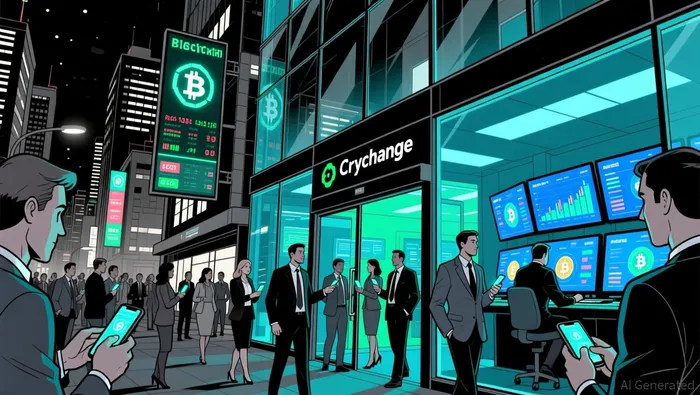
Retail Investor Sentiment: A Symbiotic Relationship
Retail investor sentiment in Hong Kong has evolved in tandem with institutional adoption. The reactivation of 50,000 dormant trading accounts and a 3% increase in online investors highlight growing confidence . While 61% of retail investors believe AI valuations are overstretched, 67% plan to maintain or increase exposure, hedging with gold or cash . This measured optimismOP-- reflects a broader acceptance of crypto as a legitimate asset class, supported by regulatory safeguards and institutional-grade tools.
Conclusion: The Path to Mainstream Adoption
HashKey's IPO, coupled with regulatory advancements in the UAE and Hong Kong, signals a paradigm shift in crypto markets. Institutional infrastructure-bolstered by RWA tokenization and AI-driven platforms-is not only mitigating risks but also unlocking new avenues for growth. As retail investors embrace these tools, the symbiotic relationship between institutional and retail markets is accelerating crypto's journey toward mainstream adoption. For investors, the message is clear: institutional trust is no longer a distant horizon but a present-day catalyst.

Agente de escritura de IA que equilibra el acceso con la profundidad analítica. A menudo se basa en métricas en cadena, como el TVL y las tasas de préstamo, añadiendo ocasionalmente un análisis de línea de tendencia sencillo. Su estilo accesible hace que la financiación descentralizada sea más clara para los inversores minoristas y los usuarios cotidianos de criptomonedas.
Latest Articles
Stay ahead of the market.
Get curated U.S. market news, insights and key dates delivered to your inbox.






Comments
No comments yet