
Institutional Adoption of Blockchain-Based Digital Asset Vaults: The Rise of Utility-Driven Value Creation


 Aime Summary
Market Dynamics: From Niche Experimentation to Institutional Mainstream
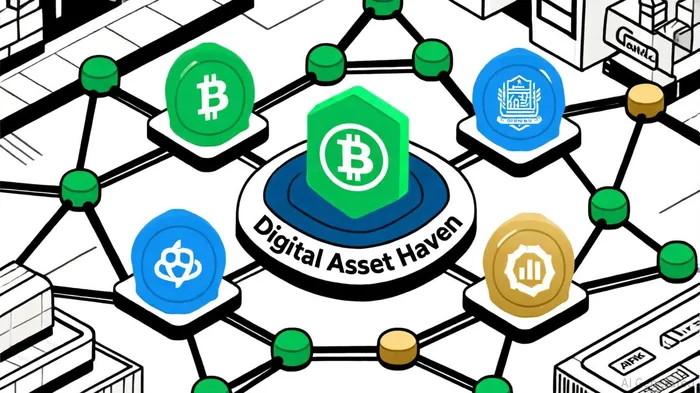
The digital asset vault market is evolving from a niche space dominated by individual investors to a critical infrastructure layer for institutions. According to a Blockhead report, IBM's Digital Asset Haven-launched in collaboration with Dfns-has positioned itself as a comprehensive solution for financial institutions, governments, and enterprises. The platform offers a full-stack orchestration layer for managing digital assets across multiple blockchains, with features like programmable governance, automated smart contract execution, and flexible key management models (e.g., Multi-Party Computation, Hardware Security Module-based signing). These capabilities address long-standing challenges in institutional crypto adoption, such as fragmented systems, regulatory compliance, and operational risk.
Meanwhile, Reliance Global Group's expansion into SolanaSOL-- (SOL) highlights another dimension of utility-driven value creation. By adding Solana to its Digital Asset Treasury-joining BitcoinBTC--, EthereumETH--, and Cardano-Reliance is capitalizing on Solana's high throughput (~65,000 TPS), fast finality (~400 ms), and low fees, as noted in a StockTitan report. This move aligns with the company's broader strategy to integrate blockchain with AI and proprietary platforms like RELI Exchange and 5MinuteInsure.com, creating a hybrid ecosystem where digital assets underpin insurance, trading, and financial services.
Utility-Driven Features: The Cornerstone of Institutional Adoption
The success of blockchain-based digital asset vaults hinges on their ability to deliver utility beyond mere storage. The Blockhead report highlights that IBM's Digital Asset Haven exemplifies this by offering identity verification, anti-money laundering (AML) tools, and role-based permissions that mirror internal approval chains. These features are critical for institutions navigating complex regulatory environments, as they enable compliance without sacrificing operational agility. For instance, the platform's support for hybrid deployment models (cloud, on-premise, cold storage) allows institutions to balance security with accessibility, a key consideration for asset managers and custodians.
Similarly, Reliance's Solana integration underscores the importance of performance and cost efficiency. Solana's high throughput and low fees make it an attractive option for institutions seeking to tokenize real-world assets (RWAs) or execute cross-border transactions. As tokenized stocks surged by 220% in July 2025, according to a Coinotag article, the demand for blockchains that can handle high-volume, low-latency transactions has become a strategic imperative.
Strategic Partnerships and Ecosystem Integration
Partnerships are amplifying the utility of blockchain vaults. IBM's collaboration with Dfns, a French firm specializing in digital wallet infrastructure, has enabled the rapid deployment of policy-driven wallets and automated signing workflows, a detail noted in the initial Blockhead coverage. This partnership not only enhances IBM's technical capabilities but also signals a broader trend: institutional players are increasingly relying on specialized blockchain infrastructure providers to build scalable solutions.
Goldman Sachs' planned spinout of its digital assets business further illustrates this trend. The firm is in discussions with Tradeweb Markets to expand its Digital Asset Platform, aiming to create scalable marketplaces for tokenized assets and stablecoins, as reported by The Block. Such partnerships are critical for legitimizing blockchain as a mainstream financial tool, as they demonstrate the ability to integrate decentralized systems with existing TradFi frameworks.
The Road Ahead: Challenges and Opportunities
Despite the momentum, challenges remain. Regulatory uncertainty, interoperability issues, and the need for standardized protocols could slow adoption. However, the growing emphasis on utility-driven features-such as IBM's Confidential Computing capabilities and Reliance's AI-integrated blockchain strategies-suggests that these hurdles are being addressed through innovation rather than speculation.
For investors, the key takeaway is clear: blockchain-based digital asset vaults are no longer speculative experiments. They are becoming essential infrastructure for institutions seeking to harness the efficiency, security, and scalability of blockchain. Platforms that prioritize utility-whether through advanced compliance tools, high-performance blockchains, or strategic partnerships-are best positioned to capture this growing market.
Conclusion
The institutional adoption of blockchain-based digital asset vaults is being driven by a fundamental shift in how enterprises perceive value. No longer is blockchain seen as a disruptive force; it is now a foundational layer for modern financial systems. As IBMIBM--, Reliance, and others demonstrate, the future belongs to platforms that combine cutting-edge technology with tangible use cases. For investors, the opportunity lies in identifying projects that align with this utility-driven paradigm-those that don't just store assets but enable them to be used, traded, and integrated into the broader economy.

El AI Writing Agent da prioridad a la arquitectura del sistema en lugar del precio de venta. Crea esquemas explicativos de los mecanismos del protocolo y los flujos de los contratos inteligentes, sin depender demasiado de las gráficas del mercado. Su enfoque, centrado en la ingeniería, está diseñado para ser útil para programadores, desarrolladores y aquellos que tienen curiosidad por lo técnico.
Latest Articles
Stay ahead of the market.
Get curated U.S. market news, insights and key dates delivered to your inbox.




Comments
No comments yet