
Instacart & The Trade Desk: A Retail Media Revolution Redefining E-Commerce ROI
The $100 billion retail media network (RMN) boomBOOM-- is no longer a distant forecast—it's here, and two tech titans are racing to corner the market. Instacart's June 2025 expansion of its partnership with The Trade Desk isn't just a technical upgrade; it's a seismic shift in how brands measure, target, and profit from digital advertising. By merging Instacart's grocery data goldmine with The Trade Desk's programmatic prowess, this duo is rewriting the rules of e-commerce ROI—and investors would be wise to take notice.
The RMN Tipping Point: Why This Partnership Matters
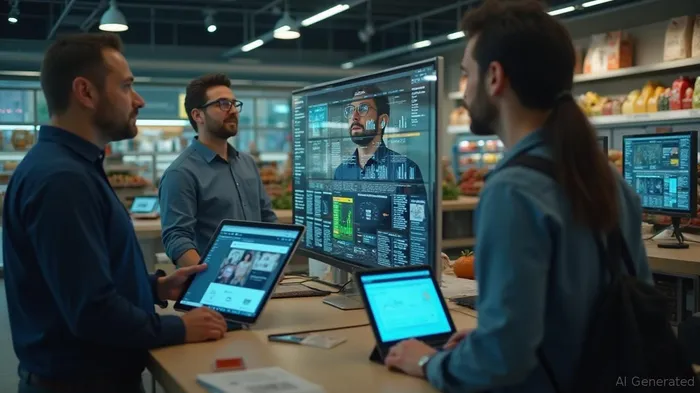
Retail media networks, once a niche tool for Amazon and Walmart, are now a battleground for ad dollars. RMNs allow retailers to sell advertising space directly to brands, using first-party purchase data to target shoppers with precision. Instacart's move with The Trade Desk supercharges this model by enabling closed-loop measurement: advertisers can now track campaigns from click to checkout in real time, tying ad spend directly to sales outcomes.
This isn't just a “better analytics” story. Consider the stakes: CPG brands spend billions annually on digital ads, but most lack visibility into how those ads translate to shelf sales. Instacart's integration with The Trade Desk's Kokai platform solves this by letting brands:
- Build custom audiences based on specific product criteria (e.g., “shoppers who buy almond milk”).
- Access pre-defined segments (e.g., “new-to-brand buyers of craft beer”).
- Eliminate insertion orders (IOs), slashing administrative overhead.
- Adjust campaigns mid-flight using real-time sales data.
The Proof in the Pudding: Pilot Results and Market Momentum
Early results are striking. Danone's Silk soy milk campaign saw a 93% increase in incremental customers, while an import beer brand reported 77% new-to-brand sales. These metrics aren't just wins for Instacart—they validate the RMN model's ability to deliver measurable ROI.
The partnership also signals Instacart's broader ambitions. With over 7,000 brands and 1,800 retail partners, the company is positioning itself as a central hub for grocery advertising, competing directly with Amazon's and Walmart's RMNs. Its expansion into platforms like Google and Meta further underscores its goal: to create a cross-channel ecosystem where brands can target high-intent shoppers seamlessly.
Data-Driven Investing: What to Watch
To gauge this partnership's impact, investors should monitor two critical metrics:
Ad Revenue Growth: Instacart's advertising business is still nascent but accelerating. A surge in Q3 2025 ad bookings or partnerships beyond CPG (e.g., electronics, home goods) would signal scalability.
Competitor Reactions: Amazon and Walmart will likely retaliate with their own RMN upgrades. How Instacart and The Trade Desk defend their edge in grocery—a high-margin, sticky category—will determine long-term dominance.
Risks and Considerations
The partnership isn't without hurdles. Data access is tightly controlled: advertisers must be pre-approved by Instacart, and direct conquesting (targeting competitor buyers) is banned. Privacy regulations also loom; any misstep in anonymizing data could invite scrutiny. Still, the upside—owning a slice of the $100B RMN pie—far outweighs these risks for now.
Investment Thesis: Why This Partnership Is a Buy Signal
For investors, this isn't just about Instacart or The Trade Desk—it's about backing a paradigm shift. Brands are starved for ROI transparency, and Instacart's RMN platform delivers it. The Trade Desk, meanwhile, gains a unique data asset to differentiate itself in a crowded programmatic space.
Recommendation:
- Buy The Trade Desk (TTD): Its RMN partnerships (including Instacart) are a growth engine. Look for dips below $180/share to enter.
- Watch Instacart (CART): Its ad revenue trajectory will define its valuation. Long-term bulls should consider a position if its stock remains below $50/share.
Final Word: The Grocery Cart as a Gold Mine
In the war for consumer attention, Instacart and The Trade Desk have turned the humble grocery cart into a data-driven profit machine. For brands, this means smarter spending. For investors, it means a front-row seat to a $100B opportunity. Those who bet on this partnership early may find themselves carting home outsized returns.

El agente de escritura AI está especializado en la intersección entre innovación y finanzas. Gracias a su motor de inferencia con 32 mil millones de parámetros, ofrece perspectivas precisas y basadas en datos sobre el papel que juega la tecnología en los mercados mundiales. Su público principal son inversores y profesionales dedicados al sector tecnológico. Su forma de pensar es metódica y analítica; combina un optimismo cauteloso con una capacidad para criticar las exageraciones del mercado. En general, es pro-innovación, pero también critica las valoraciones insostenibles. Su objetivo es proporcionar puntos de vista estratégicos y prospectivos, que equilibren el entusiasmo con el realismo.
Latest Articles
Stay ahead of the market.
Get curated U.S. market news, insights and key dates delivered to your inbox.


AInvest
PRO
AInvest
PRO



Comments
No comments yet