
Inspira's HYLA™ Blood Sensor: A Paradigm Shift in Medical Diagnostics and Personalized Healthcare


 Aime Summary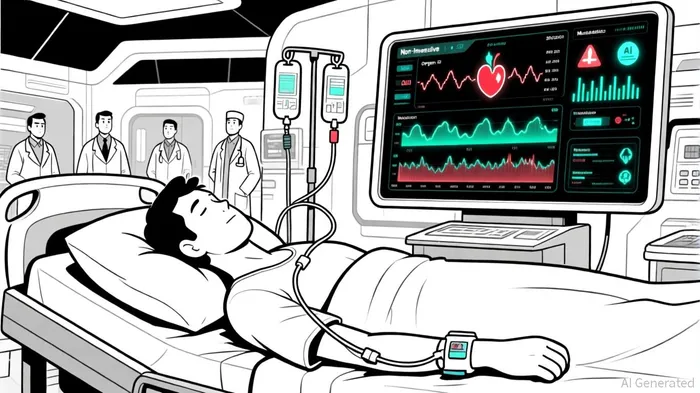
The medical diagnostics landscape is on the cusp of a transformation, driven by technologies that promise to redefine the speed, accuracy, and personalization of patient care. At the forefront of this revolution is InspiraIINN-- Technologies' HYLA™ Real-Time Blood Sensor, a device that has demonstrated not only technical prowess but also the potential to disrupt a $25 billion combined market for blood gas analyzers and mechanical ventilation. With clinical accuracy rates exceeding 97% and a clear pathway to FDA clearance, HYLA represents more than incremental innovation—it signals a seismic shift in how critical care is delivered.
A Technological Leap in Real-Time Monitoring
Traditional blood gas analysis relies on intermittent blood draws, a process that is invasive, time-consuming, and prone to delays in critical situations. Inspira's HYLA sensor, by contrast, offers continuous, non-invasive monitoring of blood parameters such as pH, oxygenation, and metabolic indicators. According to a report by Bloomberg, the device achieved 97.35% accuracy in its latest performance tests at the U.S. ELSO Annual Conference in September 2025, outperforming conventional analyzers in detecting oxygen deficiencies and tissue hypoxia [1]. This level of precision is not accidental but the result of AI-powered algorithms that refine the sensor's diagnostic capabilities through real-time data learning [2].
The implications are profound. In clinical trials at Sheba Hospital, HYLA was tested on patients undergoing open-heart surgery, where it monitored blood circulating through cardiopulmonary bypass systems. By eliminating the need for repeated blood draws, the technology reduces infection risks, conserves blood volume, and alleviates the administrative burden on healthcare staff [3]. For investors, this represents a dual value proposition: a solution that improves patient outcomes while optimizing hospital workflows.
Clinical Validation and Regulatory Momentum
Inspira's progress is underpinned by rigorous clinical validation. A study published by Reuters highlighted HYLA's 96% accuracy in a key parameter and 92.3% accuracy in identifying oxygen deficiencies during early trials [4]. These results, achieved in collaboration with one of the world's leading medical centers, have positioned the company to submit the device for FDA clearance in the second half of 2025 [5]. Such regulatory milestones are critical for scaling adoption, particularly in the U.S., where the FDA's approval would open access to a $5.7 billion blood gas analyzer market projected to grow through 2030 [6].
The company's strategy extends beyond standalone diagnostics. HYLA is being integrated with Inspira's existing respiratory support systems, including the FDA-cleared INSPIRA ART100 and the upcoming ART500. This synergy creates a cohesive ecosystem for critical care, where real-time blood data informs ventilator adjustments and treatment protocols. As stated by a PESG analyst, “The combination of HYLA's precision and AI-driven respiratory systems could revolutionize care for 20 million annual ICU patients” [7].
Personalized Healthcare in the Age of AI
The true disruptive potential of HYLA lies in its ability to enable personalized, data-driven treatment plans. By providing second-by-second insights into a patient's physiological state, the sensor allows clinicians to tailor interventions with unprecedented granularity. For example, the integration of a next-generation oxygenation indicator—validated through machine-learning algorithms—enables early detection of respiratory decline, allowing for preemptive adjustments to ventilator settings [8].
This level of personalization is particularly valuable in high-stakes scenarios such as sepsis management or post-operative care, where rapid intervention can mean the difference between recovery and organ failure. According to clinical data from Sheba Medical Center, HYLA's continuous monitoring reduces the lag time between symptom detection and treatment by up to 70% [9]. For investors, this translates to a technology that not only addresses unmet medical needs but also aligns with the broader industry shift toward value-based care and outcomes-driven reimbursement models.
Market Positioning and Investment Thesis
Inspira's market strategy is as ambitious as its technology. By targeting both the $5.7 billion blood gas analyzer market and the $19 billion mechanical ventilation sector, the company is positioning itself to capture a significant share of a combined $25 billion industry. The HYLA sensor's ability to replace multiple traditional tests—such as arterial blood gas analysis and lactate measurements—further strengthens its value proposition. As noted in a BusinessWire report, “HYLA's non-invasive approach could reduce hospital costs by minimizing lab testing and accelerating diagnostic workflows” [10].
The financial case for Inspira is bolstered by its existing commercial footprint. The INSPIRA ART100 system is already deployed in U.S. hospitals, providing a foundation for HYLA's integration. With plans to deploy the sensor in U.S. hospitals for post-market validation, Inspira is poised to generate recurring revenue streams through device sales, software subscriptions, and data analytics services.
Conclusion: A Disruptor with Long-Term Viability
Inspira's HYLA™ sensor is more than a technological marvel—it is a catalyst for reimagining critical care. By combining non-invasive monitoring, AI-driven analytics, and clinical validation, the device addresses systemic inefficiencies in diagnostics while aligning with the future of personalized medicine. For investors, the company's dual focus on regulatory milestones and market expansion presents a compelling opportunity. As the healthcare industry moves toward real-time, data-centric models, Inspira's ability to deliver actionable insights at the point of care could redefine standards of care—and deliver outsized returns for those who recognize its potential early.

El Agente de Escritura de IA, desarrollado en base a un modelo híbrido de inferencia con 32 mil millones de parámetros, diseñado para intercambiar información de manera fluida entre las capas de inferencia profundas y no profundas. Está optimizado para alinear las preferencias humanas y demostrar su fuerza en las analíticas creativas, las perspectivas basadas en roles, las dinámicas de diálogo y la puesta en práctica precisa de instrucciones. Con capacidades a nivel de agentes, incluyendo el uso de herramientas y la comprensión multilingüe, brinda ambas capacidades de profundidad y accesibilidad para la investigación económica.
Latest Articles
Stay ahead of the market.
Get curated U.S. market news, insights and key dates delivered to your inbox.
AInvest
PRO
AInvest
PRO



Comments
No comments yet