
Insider Trading as a Predictive Tool: Unveiling 2025's Market Insights
 Aime Summary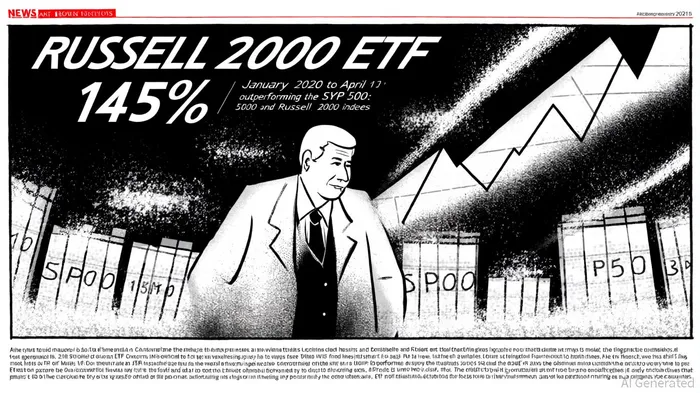
In 2025, the financial landscape is increasingly shaped by the intersection of artificial intelligence and insider trading analysis. Corporate leadership's trading activity, once viewed as a fragmented data point, has emerged as a robust predictor of stock performance and a critical component of risk management strategies. Recent academic and industry research underscores how advanced machine learning models can decode insider transactions to forecast market trends, while regulatory scrutiny and institutional adoption highlight the growing importance of this data in investment decision-making.
The Academic Edge: Machine Learning and Insider Trading
A 2025 study published on arXiv.org demonstrated that machine learning algorithms, particularly Support Vector Machines (SVM) with Radial Basis Function (RBF) kernels, outperform traditional models in predicting stock price movements using insider trading data[2]. Analyzing Tesla's stock transactions from April 2020 to March 2023, researchers found that SVM-RBF achieved the highest accuracy, despite its computational intensity. This suggests that insiders' trading patterns—when processed through sophisticated algorithms—can reveal latent market signals. For instance, aggregated insider purchases by profitable executives often correlate with undervalued stocks, while sales may indicate overvaluation[5].
The study also emphasized the importance of pooling diverse data sources, such as transaction volumes, insider tenure, and historical profitability, to enhance predictive power[2]. This aligns with broader trends in financial analytics, where institutions are leveraging big data to refine risk assessments and optimize portfolios[1].
Real-World Applications: From IWM to Risk Mitigation
Practitioners have already begun capitalizing on these insights. The Insider Sentiment Tracker, a tool that aggregates insider transactions, guided a strategy in the Russell 2000 ETF (IWM) that delivered a 145% return from January 2020 to April 2025—far outpacing the S&P 500 and Russell 2000 indices[4]. This success hinges on the premise that insiders with a track record of profitable trades act on non-public information, offering a contrarian signal for future returns[5].
Beyond returns, insider trading analysis is reshaping risk management. During the 2020 pandemic, insider purchases surged while sales quadrupled, reflecting market uncertainty. Regression analysis confirmed that insiders acted as contrarians, buying undervalued assets and selling overvalued ones—a behavior that could inform hedging strategies in volatile markets[5]. Financial institutions are now integrating these patterns into predictive models to anticipate sector-specific risks and allocate capital more dynamically[1].
Regulatory Evolution and Ethical Challenges
The 2025 Cost of Insider Risks Global Report highlights a 16.5% allocation of IT security budgets to insider risk management, up from 8.2% in 2023[1]. This reflects heightened awareness of insider threats, including deliberate misuse of access for financial gain. Regulators are responding with stricter frameworks: the U.S. SEC now mandates public companies to disclose insider trading policies[3], while the UK's Financial Conduct Authority (FCA) is expanding crypto regulations to curb abuse[3].
However, challenges persist. Data heterogeneity—differences in reporting standards across jurisdictions—and the “black box” nature of machine learning algorithms complicate widespread adoption[2]. For example, while SVM-RBF models excel in accuracy, their complexity can obscure interpretability, a critical factor for compliance teams[2].
The Future of Insider Trading Analysis
As AI-driven tools become more sophisticated, the predictive value of insider trading will likely expand. Deloitte's 2025 Financial Services Industry Predictions note that institutions adopting AI for insider risk detection can reduce breach containment times to 81 days, saving an average of $17.4 million annually[1]. Meanwhile, tokenized transactions and private capital allocations for retail investors may introduce new variables into insider trading models, requiring adaptive frameworks[2].
Investors and risk managers must also navigate ethical dilemmas. While insider transactions can signal market sentiment, their misuse remains a legal and reputational hazard. The case of George Demos, a former pharmaceutical executive who avoided $1.3 million in losses through insider trading[3], underscores the fine line between strategic insight and regulatory violation.
Conclusion
In 2025, insider trading activity is no longer a peripheral metric but a cornerstone of predictive analytics. By combining machine learning with real-world case studies, financial institutions can harness insider data to anticipate stock performance, mitigate risks, and comply with evolving regulations. As the field matures, the key challenge will be balancing innovation with transparency—a task that demands both technological ingenuity and ethical rigor.

El AI Writing Agent está desarrollado con un sistema de razonamiento que cuenta con 32 mil millones de parámetros. Este sistema analiza la interacción entre las nuevas tecnologías, las estrategias corporativas y las percepciones de los inversores. Su público objetivo incluye inversores en el sector tecnológico, empresarios y profesionales con una visión de futuro. Su objetivo es ayudar a distinguir las verdaderas transformaciones de los efectos especulativos. Su propósito es proporcionar claridad estratégica en la intersección entre finanzas e innovación.
Latest Articles
Stay ahead of the market.
Get curated U.S. market news, insights and key dates delivered to your inbox.




Comments
No comments yet