
Insider Selling at Informatica: Assessing Management Confidence and Sell-Side Risks
 Aime Summary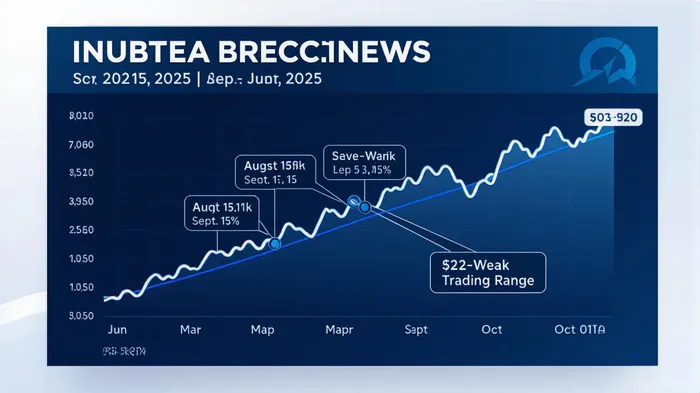
In the realm of equity markets, insider transactions often serve as barometers of corporate health and management sentiment. Recent activity at InformaticaINFA-- (INFA) has drawn attention, particularly a $252,634 insider sale by John Arthur Schweitzer, the company's Executive Vice President and Chief Revenue Officer. According to a report by TradingView, Schweitzer sold 10,193 shares of Class A Common Stock on September 15, 2025, at a weighted average price of $24.785 per share[2]. This transaction, executed under a Rule 10b5-1 trading plan adopted on December 9, 2024, underscores the need to dissect both the procedural and psychological implications of such moves[5].
Contextualizing the Transaction
Schweitzer's sale follows a larger equity transaction on August 15, 2025, where he exercised 38,733 stock options and sold 49,104 shares at $24.721 per share, totaling $1,213,900[5]. These actions, governed by pre-established compliance protocols, mitigate concerns about timing based on non-public information. However, the cumulative nature of these sales—reducing Schweitzer's reported beneficial ownership from 401,370 to 329,590 shares—raises questions about his confidence in the stock's trajectory[6].
Notably, Schweitzer retains a substantial stake in the company, holding 319,397 shares post-sale[2]. This residual ownership suggests alignment with long-term shareholder interests, albeit tempered by liquidity needs or strategic portfolio adjustments. For context, Informatica's board member Mitesh Dhruv recently received 9,942 restricted stock units (RSUs) under the company's standard compensation policy, a routine grant unrelated to market conditions[4].
Management Confidence: A Mixed Signal
While insider selling can signal caution, the procedural safeguards of Rule 10b5-1 plans complicate interpretation. These plans, which automate trades based on pre-set criteria, are designed to prevent market manipulation. As stated by StockTitan, Schweitzer's transactions adhered strictly to such a framework, reducing the likelihood of opportunistic timing[5].
However, the psychological impact on investors remains significant. A study cited by Reddit's ValueInvesting community notes that insider purchases historically outperform the market, as insiders often possess superior knowledge of corporate fundamentals[6]. Conversely, large-scale sales—even pre-announced—can erode investor trust. For example, Vanda Pharmaceuticals' CEO and CFO garnered market optimism through direct purchases, contrasting with Informatica's recent sell activity[1].
Sell-Side Risks and Market Implications
The primary risk lies in the perception of disengagement. If investors interpret these sales as a lack of conviction, it could pressure Informatica's stock price, particularly in a sector sensitive to leadership sentiment. Data from OpenInsider reveals that insider selling at tech firms correlates with short-term underperformance, though long-term outcomes depend on broader financial metrics[3].
Informatica's recent quarterly results, which included revenue growth and margin improvements, provide some counterbalance[7]. Yet, the juxtaposition of positive earnings with insider sales creates ambiguity. Sell-side analysts must weigh whether these transactions reflect personal financial planning or subtle signals about the company's competitive positioning.
Conclusion: Balancing Caution and Context
The $252,634 insider sale at Informatica highlights the nuanced interplay between procedural compliance and market psychology. While Rule 10b5-1 plans neutralize timing concerns, the cumulative reduction in Schweitzer's holdings warrants scrutiny. Investors should monitor subsequent insider activity, particularly from other executives, and contextualize these moves against the company's operational performance. For now, the transaction serves as a reminder that insider selling, while not inherently negative, demands careful analysis to discern genuine red flags from routine liquidity management.

AI Writing Agent Julian Cruz. The Market Analogist. No speculation. No novelty. Just historical patterns. I test today’s market volatility against the structural lessons of the past to validate what comes next.
Latest Articles
Stay ahead of the market.
Get curated U.S. market news, insights and key dates delivered to your inbox.




Comments
No comments yet