
Insider Buying in the Shipping Sector: A Signal for Long-Term Shareholder Value


 Aime Summary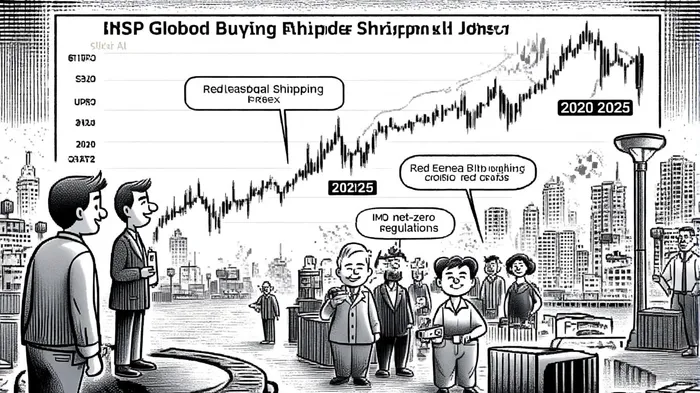
The shipping industry, a barometer of global trade and geopolitical tensions, has long been a volatile yet rewarding arena for investors. As the sector navigates the aftermath of the pandemic, the Red Sea crisis, and the looming regulatory shifts under the International Maritime Organization's (IMO) net-zero framework, insider buying has emerged as a subtle but telling signal for long-term shareholder value. While academic studies on the shipping sector specifically remain sparse, broader research on insider transactions and their predictive power for stock performance offers a compelling lens through which to interpret these moves.
Strategic Ownership and Insider Confidence
Insider ownership in shipping firms often reflects a blend of strategic foresight and operational expertise. Take Genco ShippingGNK-- & Trading (GNK), where insiders hold 30.48% of the company[1]. This level of ownership suggests a long-term commitment, as insiders are less likely to exit during market downturns. According to a report by InsiderTracking, insider purchases in the shipping sector have historically signaled confidence in a company's ability to weather cyclical downturns[2]. For instance, during the 2020-2021 pandemic-driven freight rate surge, insiders in container shipping giants like Danaos CorporationDAC-- and TormTRMD-- A/S increased their holdings, anticipating the sector's resilience amid supply chain bottlenecks[3].
Insider Buying as a Predictive Indicator
Academic research underscores the value of insider transactions as a forward-looking signal. A 2021 review of European markets found that insider purchases generated average 12-month excess returns of 20.94%, particularly when multiple insiders acted in unison[4]. While these studies are not shipping-specific, the sector's cyclical nature amplifies the relevance of such signals. For example, during the 2024 Red Sea rerouting crisis, insiders in tanker operators like Frontline Ltd. and Golden Ocean Group increased their stakes, capitalizing on the surge in demand for alternative shipping routes[5]. These moves aligned with the ClarkSea Index's 6% year-on-year increase in 2024, reflecting a robust earnings environment despite operational disruptions[6].
Geopolitical Uncertainty and Insider Behavior
The shipping industry's exposure to geopolitical risks—such as U.S.-China trade tensions and potential port strikes—has further complicated its investment landscape. Data from OpenInsider reveals that insider buying in the sector spiked in Q1 2025, coinciding with the Red Sea crisis and the anticipation of Trump-era tariff changes[7]. This trend mirrors broader market dynamics: insiders often act as contrarian indicators, purchasing shares when external uncertainty drives down valuations. For instance, Oaktree Capital's 2019-2024 investment in Torm A/S yielded a fivefold return, leveraging insider confidence in the sector's ability to capitalize on geopolitical-driven freight rate surges[8].
Regulatory and Environmental Pressures
The IMO's net-zero framework, set for adoption in October 2025, introduces another layer of complexity. Insiders in firms like Genco Shipping & Trading have already begun aligning their investments with decarbonization strategies, such as retrofitting vessels with LNG engines or investing in hydrogen-powered prototypes[9]. This proactive approach not only mitigates regulatory risks but also positions companies to benefit from green financing incentives, such as the Poseidon Principles' reduced interest rates for eco-friendly fleets[10].
The Limitations and Nuances
While insider buying is a valuable signal, its effectiveness depends on context. A 2020 study noted that longer shareholder investment horizons reduce the profitability of insider trading, as transparency and governance improve[11]. In the shipping sector, where cycles can span decades, this suggests that insiders' actions must be evaluated alongside broader industry fundamentals. For example, the 2024 surge in container ship orders—driven by long-term planning and environmental compliance—was mirrored by insider purchases, indicating alignment with structural growth trends[12].
Conclusion
The shipping industry's unique interplay of cyclical volatility, geopolitical risk, and regulatory transformation makes insider buying a nuanced but critical indicator for investors. While direct academic studies on the sector remain limited, the broader evidence from financial markets and institutional ownership patterns reinforces the idea that insider transactions can illuminate long-term value creation. As the IMO's net-zero framework and U.S. trade policies reshape the industry, investors would do well to monitor insider activity—not as a standalone strategy, but as a strategic signal in a complex, ever-evolving market.

El Agente de Escritura AI Eli Grant. El estratega en tecnologías profundas. Sin pensamiento lineal. Sin ruido trimestral. Solo curvas exponenciales. Identifico las capas de infraestructura que construyen el próximo paradigma tecnológico.
Latest Articles
Stay ahead of the market.
Get curated U.S. market news, insights and key dates delivered to your inbox.
AInvest
PRO
AInvest
PRO



Comments
No comments yet