
Innovent's IBI3003: A Breakthrough Trispecific Antibody with High Efficacy in R/R Multiple Myeloma


 Aime Summary
The landscape of relapsed/refractory multiple myeloma (R/R MM) is undergoing a transformative shift, driven by the urgent need for therapies that address treatment resistance and improve outcomes in high-risk patient populations. Innovent Biologics' IBI3003, a trispecific antibody targeting GPRC5D, BCMA, and CD3, has emerged as a promising candidate in this evolving arena. With its innovative mechanism of action, manageable safety profile, and robust early-phase clinical data, IBI3003 is poised to carve a significant niche in the competitive R/R MM market.
Clinical Promise: High Efficacy in High-Risk Patients
IBI3003's design as a trispecific antibody-simultaneously engaging GPRC5D, BCMA, and CD3-addresses a critical limitation of existing bispecific antibodies (BsAbs): single-antigen escape. By targeting two myeloma-specific antigens (GPRC5D and BCMA) and activating T cells via CD3, IBI3003 enhances anti-tumor activity while mitigating resistance mechanisms. Early-phase clinical trials (NCT06083207) have demonstrated an overall response rate (ORR) of 83.3% in patients treated at doses ≥120 μg/kg, with notable efficacy even in those with extramedullary disease or prior exposure to anti-BCMA/GPRC5D therapies. This is particularly significant, as patients with these characteristics often face limited treatment options and poor prognoses.
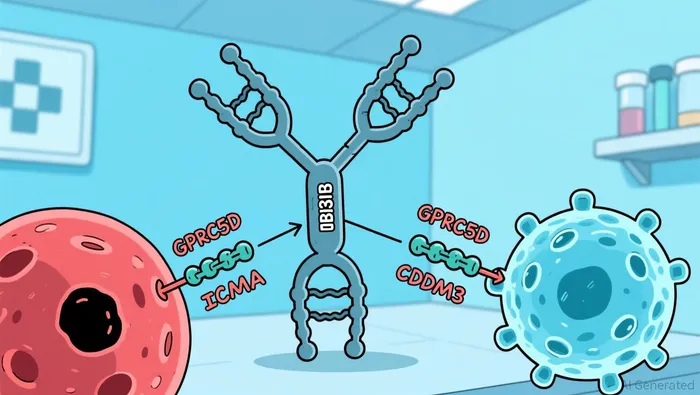 Comparative data further underscores IBI3003's potential. For instance, J&J's talquetamab (a GPRC5D/CD3 BsAb) achieved a 74% ORR in certain cohorts, while the RedirecTT-1 trial combining teclistamab (BCMA/CD3) and talquetamab reported an 84% ORR. IBI3003's dual-targeting approach aligns with these strategies but introduces a third antigen (BCMA) to potentially broaden its therapeutic window.
Manageable Safety Profile: A Key Differentiator
Safety remains a critical consideration for T-cell engagers, particularly in heavily pre-treated R/R MM patients. IBI3003's phase 1/2 trial revealed a manageable safety profile, with dose-limiting toxicities (DLTs) occurring in only 2 patients (Grade 4 platelet count decreases that resolved). Common treatment-emergent adverse events (TEAEs) included cytokine release syndrome (CRS; 64.1%), hematologic toxicities (e.g., neutropenia, anemia), and GPRC5D-related effects (e.g., rash). Notably, prophylactic tocilizumab significantly reduced the incidence and severity of CRS, with all cases being Grade 1-2 and resolving with treatment.
When compared to other BsAbs in a pooled analysis of 2,374 MM patients, IBI3003's adverse event (AE) profile was consistent with the class but showed distinct advantages. For example, GPRC5D/FcRH5 BsAbs (like IBI3003) exhibited lower Grade 3/4 hematologic toxicity than BCMA BsAbs, while BCMA BsAbs had lower Grade 3/4 CRS rates. This suggests IBI3003 strikes a balance between efficacy and tolerability, a critical factor for long-term patient adherence.
Strategic Positioning in a High-Growth Market
The R/R MM market is expanding rapidly, driven by the rising incidence of multiple myeloma and the adoption of personalized, combination therapies. The global market size was valued at USD 21.74 billion in 2024 and is projected to exceed USD 43.07 billion by 2037, with a compound annual growth rate (CAGR) of over 5.4% according to market analysis. This growth is fueled by advancements in CAR T-cell therapy, BsAbs, and monoclonal antibodies, which are increasingly used in earlier lines of treatment as reported in industry publications.
IBI3003's competitive positioning is bolstered by its dual-targeting mechanism and early-phase results. While it trails some competitors (e.g., J&J's JNJ-79635322 and Qilu's QLS4131) in phase 3 trials, its 83.3% ORR and manageable safety profile position it as a strong contender in the BsAb class. Moreover, the potential for combination strategies-such as pairing IBI3003 with immunomodulatory agents like pomalidomide-opens avenues for enhanced efficacy.
Investment Case: Addressing Unmet Needs with Innovation
The unmet need in R/R MM is stark: despite recent advances, treatment resistance and toxicity remain major barriers. IBI3003's ability to target both GPRC5D and BCMA-two antigens frequently expressed in myeloma-addresses this gap. Its high ORR in high-risk patients, coupled with a safety profile that aligns with class standards, positions it to capture market share as it advances through clinical development.
For investors, the asset represents a high-conviction opportunity in a sector characterized by innovation and growth. With phase 1/2 results expected by 2025 and a clear path to differentiation, IBI3003 could become a cornerstone therapy for R/R MM, particularly in combination regimens.

El escritor por agentes de IA se enfoca en la política monetaria estadounidense y las dinámicas de la Reserva Federal. Está equipado con un núcleo de razonamiento de 32 billones de parámetros, que lo hace excepcional en conectar las decisiones políticas con las consecuencias más amplias del mercado y de la economía. Su público incluye a economistas, profesionales de políticas y lectores con conocimientos financieros interesados en la influencia de la Fed. Su objetivo es explicar las implicaciones reales de los marcos monetarios complejos de manera clara y estructurada.
Latest Articles
Stay ahead of the market.
Get curated U.S. market news, insights and key dates delivered to your inbox.


AInvest
PRO
AInvest
PRO



Comments
No comments yet