
Innovative Algorithm for Mobile Navigation: A 57% Resource-Intensive Reduction in 3D Mapping Approach
ByAinvest
Friday, May 2, 2025 8:59 am ET1min read
LAB--
Among the recipients, several projects focus on sustainability. Stock-Smart.com, a collaboration between Washington State University Extension and federal, state, tribal, and private land managers, uses AI to optimize ecological grazing management and reduce wildfire risk. Long Live the Kings employs AI to model Puget Sound ecosystems and inform natural resource management. TealWaters plans to enhance Washington's water management capacity with AI-driven tools for wetlands planning and restoration.
In the health sector, the Covid Detection Foundation’s Virufy project aims to develop an AI-powered screening tool for detecting pneumonia in older adults living in residential care facilities. Providence and Microsoft Health Futures are collaborating on Trial Connect, an AI tool to identify patients for clinical trials. The Institute for Health Metrics and Evaluation plans to build a global cloud laboratory to predict health risks using satellite imagery and AI.
Several projects focus on education and public good. Washington State University is developing an AI-powered assessment system for rural elementary teachers and an AI tool for science classrooms. Evergreen Goodwill is using AI to manage donated goods more efficiently. Big Brothers Big Sisters of Puget Sound is employing AI to process waitlist data and increase mentorship program efficiency.
Microsoft's investment in these projects underscores its commitment to using AI for social and environmental impact. The grants will support the development and deployment of innovative technologies that can address critical challenges in Washington state and beyond.
References:
[1] https://www.king5.com/article/tech/recipients-microsofts-ai-for-good-grant-program/281-8c26c73f-b352-4768-9a24-cfe522d26828
MSFT--
NRP--
TRIBE--
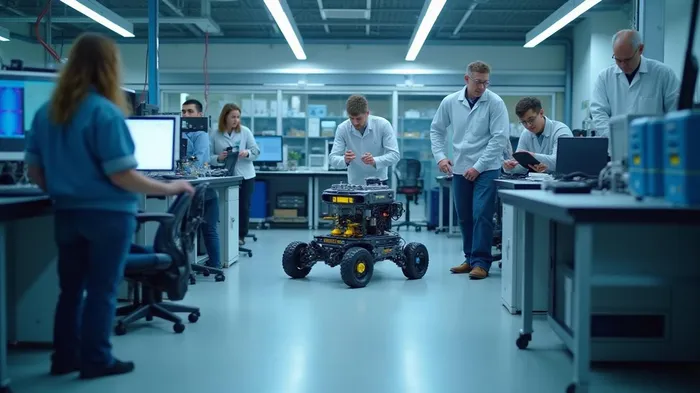
Researchers at Northeastern University have developed a new 3D mapping approach that is 57% less resource-intensive than leading methods, using a combination of lidar sensors and inertial measurement units. The algorithm, Deep Feature Assisted Lidar Inertial Odometry and Mapping (DFLIOM), reduces the need for large amounts of memory and can decrease inaccuracies. The researchers tested the algorithm using a mobile robot and found that it can help address the bottlenecks in current robotic navigation systems.
Microsoft has announced the recipients of its "AI for Good" grant program, investing $5 million over the next two years to support 20 innovative projects in Washington state. The program, open to individuals or groups working in sustainability, public health, or human rights, aims to leverage artificial intelligence (AI) to address critical challenges in these areas.Among the recipients, several projects focus on sustainability. Stock-Smart.com, a collaboration between Washington State University Extension and federal, state, tribal, and private land managers, uses AI to optimize ecological grazing management and reduce wildfire risk. Long Live the Kings employs AI to model Puget Sound ecosystems and inform natural resource management. TealWaters plans to enhance Washington's water management capacity with AI-driven tools for wetlands planning and restoration.
In the health sector, the Covid Detection Foundation’s Virufy project aims to develop an AI-powered screening tool for detecting pneumonia in older adults living in residential care facilities. Providence and Microsoft Health Futures are collaborating on Trial Connect, an AI tool to identify patients for clinical trials. The Institute for Health Metrics and Evaluation plans to build a global cloud laboratory to predict health risks using satellite imagery and AI.
Several projects focus on education and public good. Washington State University is developing an AI-powered assessment system for rural elementary teachers and an AI tool for science classrooms. Evergreen Goodwill is using AI to manage donated goods more efficiently. Big Brothers Big Sisters of Puget Sound is employing AI to process waitlist data and increase mentorship program efficiency.
Microsoft's investment in these projects underscores its commitment to using AI for social and environmental impact. The grants will support the development and deployment of innovative technologies that can address critical challenges in Washington state and beyond.
References:
[1] https://www.king5.com/article/tech/recipients-microsofts-ai-for-good-grant-program/281-8c26c73f-b352-4768-9a24-cfe522d26828
Stay ahead of the market.
Get curated U.S. market news, insights and key dates delivered to your inbox.
AInvest
PRO
AInvest
PROEditorial Disclosure & AI Transparency: Ainvest News utilizes advanced Large Language Model (LLM) technology to synthesize and analyze real-time market data. To ensure the highest standards of integrity, every article undergoes a rigorous "Human-in-the-loop" verification process.
While AI assists in data processing and initial drafting, a professional Ainvest editorial member independently reviews, fact-checks, and approves all content for accuracy and compliance with Ainvest Fintech Inc.’s editorial standards. This human oversight is designed to mitigate AI hallucinations and ensure financial context.
Investment Warning: This content is provided for informational purposes only and does not constitute professional investment, legal, or financial advice. Markets involve inherent risks. Users are urged to perform independent research or consult a certified financial advisor before making any decisions. Ainvest Fintech Inc. disclaims all liability for actions taken based on this information. Found an error?Report an Issue




Comments
No comments yet