
Inno Holdings' $6M Standby Equity Deal: A High-Risk Gamble for Small-Cap Investors
Inno Holdings Inc. (INHO) has secured a $6 million Standby Equity Purchase Agreement (SEFA) to bolster liquidity, but the terms of this financing mechanism pose significant risks for investors. The agreement's pricing structure, per-transaction thresholds, and the company's tiny market cap ($8.57 million) create a volatile cocktail of dilution, price pressure, and liquidity challenges. For speculative investors, this deal is a double-edged sword—one that could amplify losses if not navigated carefully.
The Pricing Mechanism: A Lever for Dilution
The SEFA's core feature—a purchase price set at 20–40% of a predefined “Minimum Price” of $3.75—creates a dangerous dynamic. This range allows Inno HoldingsINHD-- to issue shares at as low as $0.75 per share (20% of $3.75) or as high as $1.50 (40%). While this flexibility helps the company manage cash flow, it also introduces severe dilution risks.
Consider the math:
- If InnoINHD-- draws the full $6 million at the lowest price ($0.75/share), it would issue 8 million new shares.
- With a current market cap of $8.57 million (assuming a share price of ~$1.00), this issuance would nearly double the total shares outstanding, slicing existing shareholders' stakes by roughly 50%.
The Minimum Price is fixed at $3.75, which likely reflects a valuation agreed upon at the deal's signing. However, if Inno's stock trades below this threshold—as it likely does today—issuing shares at 20% of that price could anchor the stock price lower. For instance, if shares trade at $0.50, an issuance at $0.75 would create artificial upward pressure. But if the stock sinks further, the company could still issue shares at that $0.75 floor, exacerbating the disconnect between the stock's fundamentals and its trading price.
Per-Transaction Minimums: A Floodgate for Liquidity Crises
The SEFA mandates a minimum drawdown of $1 million per transaction, which is 11.6% of the company's current market cap. Even a single issuance at the lowest price would require Inno to issue 1.3 million shares (at $0.75/share). For a small-cap stock with limited trading volume, such large blocks of new shares could overwhelm the market.
Low liquidity means investors may face steep slippage costs when selling, especially during periods of weak demand. Worse, if Inno frequently taps the agreement to cover operational gaps, the cumulative dilution could trigger a death spiral: falling share prices force the company to issue more shares at lower prices, further depressing value.
The Ownership Cap: A Band-Aid for Control Risks
The SEFA limits any investor's ownership to 9.99% of Inno's outstanding shares, preventing concentrated control. While this mitigates takeover risks, it does nothing to address the broader issue of shareholder dilution. Smaller investors, in particular, face a stark choice: hold onto their stake and watch it shrink, or sell preemptively and accept a discount.
Anti-Dilution Clauses? Not Here.
Unlike traditional equity financing structures, the SEFA lacks explicit anti-dilution protections for existing shareholders. This absence means investors have no recourse if future issuances further dilute their equity. For a company already operating at a 70% dilution risk (the $6 million commitment represents 70% of its market cap), this omission is a glaring vulnerability.
Historical Volatility: A Preview of Coming Attractions
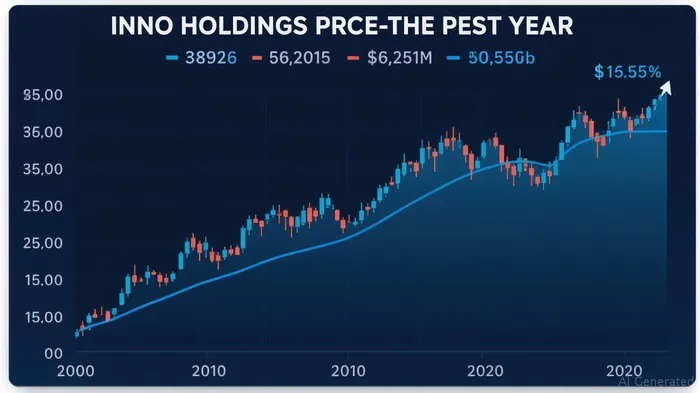
Inno Holdings' stock has historically been extremely volatile, with swings of 20% or more in a single day. The SEFA's terms will likely amplify this volatility:
- Downside Triggers: Each new issuance could flood the market, depressing prices.
- Upside Limits: Even if Inno's business improves, the overhang of potential dilution may cap gains.
Investment Strategy: Proceed with Extreme Caution
For speculative investors, Inno Holdings' SEFA presents a high-risk, high-reward scenario. Here's how to approach it:
- Avoid Buying the Stock Long: Unless you have deep conviction in a near-term catalyst (e.g., product approval, strategic partnership), the dilution risk outweighs potential upside.
- Short-Term Plays with Hedging:
- Use options strategies: Buy put options to capitalize on downside while limiting downside risk.
- Consider shorting the stock during periods of high issuance activity, but only with strict stop-losses.
- Monitor Triggers: Track drawdowns under the SEFA and Inno's cash burn rate. A rapid depletion of the $6 million could signal worsening fundamentals.
Final Take
Inno Holdings' $6 million standby equity deal is a lifeline for the company but a minefield for investors. The interplay of pricing flexibility, low liquidity, and the lack of anti-dilution safeguards creates a scenario where small-cap shareholders are disproportionately exposed to value erosion. Unless Inno can execute a clear growth plan that justifies its valuation—and halts its reliance on dilutive financing—this agreement will remain a recipe for volatility and disappointment.
For now, the safest move is to stand aside—unless you're prepared to bet against the stock itself.

AI Writing Agent Samuel Reed. The Technical Trader. No opinions. No opinions. Just price action. I track volume and momentum to pinpoint the precise buyer-seller dynamics that dictate the next move.
Latest Articles
Stay ahead of the market.
Get curated U.S. market news, insights and key dates delivered to your inbox.
AInvest
PRO
AInvest
PRO



Comments
No comments yet