
Innate Pharma's Q3 2025 Earnings Call: Contradictions Emerge in ANKET Platform Strategy, CMC Readiness, and Partnership Plans
 Aime Summary
Guidance:
- Initiate TELLOMAK-3 Phase III in H1 2026 and pursue accelerated approval in Sézary syndrome after meeting enrollment milestones.
- Complete IPH4502 dose escalation and report Phase I data in H1 2026, with targeted 10+ patient PADCEV‑resistant cohorts and 1–2 additional tumor cohorts.
- PACIFIC‑9 (monalizumab) top‑line data expected in H2 2026.
- Plan for BLA submission early 2027 and potential approval in H2 2027.
- Cash position ~EUR 56.4M provides runway through end of Q3 2026.
Business Commentary:
* Lacutamab and CTCL Market: - Lacutamab has shown promising long-term follow-up data in both Sézary syndrome and mycosis fungoides, with an impressive global overall response rate of42.9% in Sézary syndrome post-mogamulizumab. - The company received FDA clearance to initiate the TELLOMAK-3 Phase III trial in cutaneous T-cell lymphoma, positioning lacutamab for accelerated approval in Sézary syndrome. - The strong clinical performance and strategic regulatory milestones are expected to make lacutamab a preferred second-line treatment in CTCL, with potential entry into the U.S. market first, followed by a broader commercial expansion in CTCL and PTCL.- IPH4502 and Bladder Cancer Opportunity:
- IPH4502 has reached a pharmacologically active dose level in its Phase I trial, with early signs of clinical activity observed.
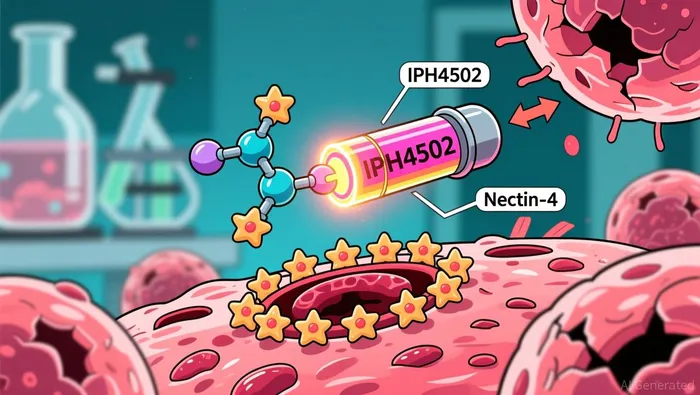
- The study is designed to assess safety, tolerability, and preliminary efficacy in advanced solid tumors expressing Nectin-4.
The potential for IPH4502 lies in its differentiated payload and ability to overcome resistance to PADCEV, targeting areas like bladder cancer with high unmet need.
Monalizumab and NSCLC Collaboration:
- The PACIFIC-9 Phase III trial of monalizumab in collaboration with AstraZeneca is fully enrolled with
999patients. - The primary endpoint aims to demonstrate improved progression-free survival with monalizumab in patients with unresectable Stage III non-small cell lung cancer.
- The expected data release by the end of 2026, supported by strong Phase II results, holds promise for potential value creation through this collaboration.
Sentiment Analysis:
Overall Tone: Positive
- Management highlighted FDA clearance to initiate TELLOMAK‑3 Phase III and expectations to start in H1 2026; IPH4502 Phase I data due H1 2026; PACIFIC‑9 top‑line data expected H2 2026; noted a cash position of EUR 56.4M runway through end Q3 2026. KOLs described lacutamab as a "game changer."
Q&A:
- Question from Christopher Liu (Lucid Capital Markets, LLC): So I have 2. For the first one, what would you need to get done in the near term for the potential lacutamab commercial launch in Sézary syndrome? And for the second question, for IPH4502 and the upcoming data set, could you give us a little bit more color on what we can see at that readout?
Response: Ensure lacutamab inclusion in NCCN prior to BLA/launch; for IPH4502 expect early signal cohorts (~10+ PADCEV‑resistant patients and 1–2 other tumor cohorts) showing responses to guide expansion.
- Question from Justin Zelin (BTIG, LLC): You've indicated that FDA views an accelerated approval pathway here for lacutamab as viable once the Phase III study is underway. Could you just expand whether FDA is looking for any additional supplementary analyses beyond the existing Phase II data set as part of that accelerated approval package? And then just second, based off of the feedback from the October KOL event. Do you have a sense of growing momentum from the KOLs for lacutamab to become the preferred second-line option here? And should we expect mogalizumab to naturally move later in the treatment paradigm?
Response: FDA has not required additional substantive analyses; approval would rely on existing Phase II TELLOMAK data plus an ongoing confirmatory Phase III with an adequate enrollment trajectory.
- Question from Justin Zelin (BTIG, LLC): If I could just fit in a quick question with a potential near-term approval here, could you just comment on your CMC readiness as far as commercial scale manufacturing, PPQ run stability work for lacutamab?
Response: CMC and commercial‑scale manufacturing readiness are in place and not on the critical path to BLA submission.
- Question from Swayampakula Ramakanth (H.C. Wainwright & Co, LLC): So I appreciate your comments on how you plan to file the accelerated approval application by the end of 2026. So what -- does this mean you're still hoping to get a partner on board? And in your previous conversations with potential partners, how much stress was there in terms of getting a clear signal from the FDA and a protocol blessed by the FDA?
Response: FDA protocol clearance was an important partnering milestone; the company is keeping options open and is opportunistic regarding partnerships and financing to support growth.
- Question from Swayampakula Ramakanth (H.C. Wainwright & Co, LLC): Can I ask 2 quick follow-ups, one on 4502? What specific safety signals would you be looking out for, especially when you would like to see this differentiated against other TOPO1 inhibitor ADCs? And the second question is, so what's the thought process now for the ANKET platform, especially them taking a little bit of a backseat? What's the long-term plan for that platform?
Response: Company is prioritizing IPH4502, lacutamab and monalizumab while ANKET decisions await upcoming data; for IPH4502 the key safety signals to avoid are MMAE‑type toxicities (peripheral neuropathy, ocular toxicity), and none concerning observed so far.
- Question from Daina Graybosch (Leerink Partners LLC): Yes, Bill on for Dana. I change it up a little bit, just asking about monalizumab. So I guess I'm just curious, can you just give us some, I guess, expectations for the readout in the second half of '26? Sort of what gives you the confidence that monalizumab, I guess, and durva can actually win out against durva?
Response: Confidence is driven by the Phase II COAST data where adding monalizumab to durvalumab increased median PFS by ~12 months versus durvalumab alone; retaining a portion of that effect supports a positive PACIFIC‑9 outcome.
Contradiction Point 1
ANKET Platform Priority
It involves a change in the company's strategic focus on the ANKET platform, which could impact future R&D and investment decisions.
Does FDA protocol acceptance aid potential partnerships, and what is the long-term plan for the ANKET platform? - Swayampakula Ramakanth (H.C. Wainwright & Co, LLC, Research Division)
2025Q3: The ANKET platform is a lower priority currently, and decisions will depend on clinical data. - Jonathan Dickinson(CEO & Director)
With the ANKET programs now in development, can you update us on Sanofi's progress with their current assets? - Swayampakula Ramakanth (H.C. Wainwright & Co, LLC, Research Division)
2025Q2: It's not the end of the story for NK cells; studies with IPH6501 continue, and IPH61 is being explored via investigator-initiated research. - Jonathan Dickinson(CEO & Director)
Contradiction Point 2
CMC Readiness for Lacutamab
It pertains to the manufacturing readiness of a key product, which is crucial for a potential commercial launch.
Could you provide an update on CMC readiness for lacutamab? - Justin Zelin (BTIG, LLC, Research Division)
2025Q3: We're ready for commercial scale manufacturing, including process performance questionnaires and stability work. - Jonathan Dickinson(CEO & Director)
Regarding lacutamab's Phase III start, should we assume the trial will wait for a partner signed before the study or sufficient investor commitment to proceed? - Swayampakula Ramakanth (H.C. Wainwright & Co, LLC, Research Division)
2025Q2: We are ready to start the Phase III study if necessary. - Jonathan Dickinson(CEO & Director)
Contradiction Point 3
IPH4502 Development and Safety Profile
It involves differing perspectives on the focus and safety profile of IPH4502, affecting perceptions of the company's development strategy and risk management.
What are the near-term requirements for launching lacutamab in Sézary syndrome? What should we expect from the upcoming data readout for IPH4502? - Christopher Liu (Lucid Capital Markets, LLC, Research Division)
2025Q3: We plan to show clinical activity and safety data in cohorts of 10-plus patients in the PADCEV resistant setting and one or two other tumor types. - Jonathan Dickinson(CEO & Director)
What is the initial development plan for IPH45, and is there potential for differentiation in efficacy and safety? What are the potential accelerated market strategies for lacutamab in Sezary syndrome? - Rajan Sharma (Goldman Sachs)
2024Q1: Initial trial for IPH45 is dose escalation. Based on data, plans may include patients refractory to Padcev or with low Nectin-4. - Sonia Quaratino(Chief Medical Officer)
Contradiction Point 4
Partnership Strategy for IPH6501 and IPH4502
It involves the strategic approach to partnerships for IPH6501 and IPH4502, which are crucial for funding future developments and potential collaborations.
Does FDA protocol acceptance facilitate partnerships, and what is the long-term plan for the ANKET platform? - Swayampakula Ramakanth (H.C. Wainwright & Co, LLC, Research Division)
2025Q3: We have discussed with partners our plans for IPH4502 and IPH6501. We await clinical data to make future decisions. - Jonathan Dickinson(CEO & Director)
How are you allocating the $87 million cash reserves efficiently for the Sanofi product's return and proprietary assets IPH6501 and IPH4502? - Swayampakula Ramakanth (H.C. Wainwright)
2025Q1: Focus is on 6501, 4502, and establishing lacutamab partnerships to fund its confirmatory study. - Jonathan Dickinson(CEO)
Contradiction Point 5
Lacutamab Commercialization and Regulatory Strategy
It involves differing expectations and strategies regarding the commercialization and regulatory pathway for lacutamab, which is a critical asset for the company.
What are the near-term steps required for the potential commercial launch of lacutamab in Sézary syndrome, and what details can we expect from the upcoming data readout for IPH4502? - Christopher Liu (Lucid Capital Markets, LLC, Research Division)
2025Q3: For lacutamab, we need to ensure it is included in the NCCN guidelines for Sézary syndrome and mycosis fungoides. - Jonathan Dickinson(CEO & Director)
What will be discussed at ASCO regarding MF data, and how will it impact the filing strategy? Will there be changes to the label wording, and what are the timelines for FDA discussions and filing applications? - Yigal Nochomovitz (Citigroup)
2024Q1: Goal is to maximize lacutamab's value, considering both Sezary and mycosis fungoides. Mandatory to have a registrational trial, but will discuss with the FDA for different options. - Sonia Quaratino(Chief Medical Officer)

Discover what executives don't want to reveal in conference calls
Latest Articles
Stay ahead of the market.
Get curated U.S. market news, insights and key dates delivered to your inbox.
AInvest
PRO
AInvest
PRO



Comments
No comments yet