
U.S. Initial Jobless Claims Rise to 236,000: Sector Rotation Opportunities Amid Divergent Market Impacts on Consumer Durables and Banks
 Aime Summary
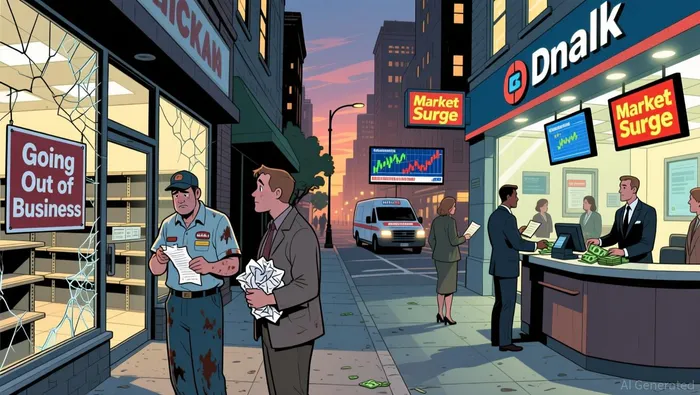
The U.S. labor market has entered a period of divergence, marked by a sharp rise in initial jobless claims to 236,000 in the week ending December 6, 2025—a 44,000 increase from the previous week and the largest jump since March 2020. This volatility, amplified by seasonal distortions and corporate layoffs, has created a critical inflection point for . While the Consumer Durables sector faces headwinds from weak labor demand, the Banks sector is poised to benefit from the 's dovish pivot and rate-cut expectations. Investors must now navigate this bifurcation to capitalize on emerging opportunities.
The Labor Market's Fragile Signal: A Warning for Consumer Durables
The surge in jobless claims, though partly attributed to holiday-related volatility, underscores a broader trend of . The four-week moving average of claims rose to , still within a “normal” range but signaling a loss of momentum in hiring. For the Consumer Durables sector, this translates to a direct hit on consumer spending power.
The sector's reliance on discretionary spending—such as home appliances, automotive purchases, and travel—has been strained by a rising unemployment rate (4.3% in August 2025) and a shrinking labor force participation rate (62.3%). Retail inventories have remained flat, , reflecting tighter inventory discipline and muted demand. For example, Deere & Co. (DE) recently reported mixed fiscal Q4 results, missing earnings estimates by 3 cents per share despite beating revenue expectations. This duality highlights the sector's vulnerability to macroeconomic shifts.
Investors should also note the inventory-to-sales ratio for total business inventories, which declined to 1.37 in July 2025. Historically, such a decline has signaled economic transitions, often preceding periods of reduced consumer demand. With the labor market showing signs of a “no fire, no hire” environment, the Consumer Durables sector is likely to remain under pressure until hiring momentum stabilizes.
Banks: Beneficiaries of the Fed's Dovish Pivot
While Consumer Durables grapple with weak demand, the Banks sector is emerging as a key beneficiary of the Federal Reserve's . The Fed's December 2025 decision to lower the benchmark rate to —its third consecutive cut—was a direct response to the labor market's fragility. This is expected to stimulate lending activity, reduce borrowing costs, and improve liquidity for financial institutions.
The S&P 500 Financials Index, for instance, surged , driven by lower corporate borrowing costs and increased loan issuance. Banks with strong balance sheets, such as JPMorgan Chase (JPM) and Bank of America (BAC), are well-positioned to capitalize on this environment. Lower interest rates also benefit asset managers and mortgage lenders, as capital access improves and yield-seeking behavior intensifies.
Moreover, the Fed's rate cuts are likely to extend the easing cycle into 2026, with analysts projecting a . This creates a favorable backdrop for banks to expand net interest margins and boost profitability. The sector's makes it a compelling destination for investors seeking to hedge against the Consumer Durables sector's stagnation.
Strategic Sector Rotation: Where to Allocate Capital
The divergent trajectories of these sectors present a clear case for . Here's how to approach it:
- Underweight Consumer Durables:
- Avoid overexposure to companies reliant on discretionary spending, such as Home Depot (HD) or Lowe's (LOW), as labor market weakness could further dampen demand.
Monitor inventory levels and retail sales data for signs of stabilization.
Overweight Banks and Financials:
- Prioritize banks with robust balance sheets and low-cost deposit bases, such as Wells Fargo (WFC) or Citigroup (C).
Consider ETFs like the Financial Select Sector SPDR (XLF) to gain broad exposure to the sector.
Balance with Defensive Plays:
- While rotating into financials, maintain a portion of the portfolio in defensive sectors like utilities or healthcare to mitigate volatility.
Conclusion: Navigating the Divergence
The rise in jobless claims to 236,000 is not just a labor market signal—it's a catalyst for sector rotation. Consumer Durables, burdened by weak hiring and cautious consumer behavior, face near-term challenges. Meanwhile, Banks are set to thrive in a low-rate environment, supported by the Fed's accommodative stance.
Investors must act decisively, shifting capital from cyclical sectors to rate-sensitive financials. By aligning portfolios with the Fed's policy trajectory and macroeconomic realities, they can position themselves to outperform in this evolving landscape. The key is to remain agile, leveraging data like the four-week moving average of claims and the S&P 500 Financials Index to time entries and exits effectively.

Stay ahead of the market.
Get curated U.S. market news, insights and key dates delivered to your inbox.
AInvest
PRO
AInvest
PRO



Comments
No comments yet