
Infrastructure Safety Risks and Investment Implications in China


 Aime Summary
Financial Costs: A Ripple Effect on Local and National Economies
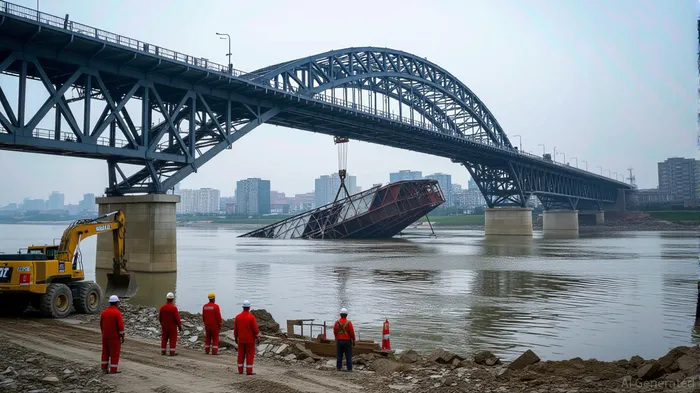
The immediate financial fallout from the Henan bridge collapse includes direct repair costs and indirect economic disruptions. While specific figures for this incident remain unreported, parallels can be drawn to the 2024 collapse of Baltimore's Francis Scott Key Bridge, which triggered $16.5 billion in direct losses and a three-month port closure, as reported in a CBS News report. In Henan, the partially collapsed Hongqi Bridge-completed earlier in 2025-disrupted regional transportation networks, compounding costs for logistics and supply chains.
According to a Reuters report, the incident also exposed vulnerabilities in China's infrastructure management, particularly in remote regions where maintenance oversight is less rigorous. The economic ripple effects are likely to extend beyond Henan, as investors reassess the reliability of infrastructure projects in high-risk areas.
Government Policy Responses: A Shift Toward Accountability
The Chinese government's response to the Henan collapse has emphasized accountability and systemic reform. President Xi Jinping directed "all-out rescue efforts" and mandated enhanced monitoring systems to prevent secondary disasters, as reported in a Reuters report. This aligns with broader policy trends, such as the November 2025 cybersecurity incident reporting rules, which reflect a growing emphasis on transparency and risk mitigation, as described in a China Briefing article.
Notably, the government has also prioritized infrastructure safety audits. Following the collapse, authorities dispatched task forces to investigate structural failures and enforce stricter compliance with engineering standards, as reported in a Business & Human Rights report. These measures, while commendable, signal increased regulatory scrutiny that could delay future projects and inflate compliance costs for developers.
Investment Implications: Navigating a New Risk Landscape
For investors, the Henan incident highlights three key risks:
1. Regulatory Uncertainty: Heightened safety mandates may slow project timelines and increase capital expenditures. For example, the National Transportation Safety Board's post-Baltimore recommendations-such as vulnerability assessments for 68 U.S. bridges-could inspire similar requirements in China, as described in the CBS News report.
2. Reputational Exposure: Projects in regions with weak governance or environmental risks now face greater reputational scrutiny, potentially deterring foreign capital.
3. Insurance and Liability Costs: The 2021 Henan floods, which generated 9.8 billion yuan in insurance claims, demonstrate how natural and structural disasters amplify liability risks, as reported in a Nature article. Insurers may respond with higher premiums or stricter coverage terms.
Conversely, the crisis could spur long-term opportunities. Stricter safety protocols and government funding for infrastructure resilience may create demand for advanced engineering solutions and risk-management technologies.
Conclusion
The Henan bridge collapse serves as a cautionary tale for investors. While China's infrastructure boom continues to attract capital, the incident underscores the need for rigorous due diligence. Investors must now weigh not only the economic returns of projects but also the evolving regulatory and safety landscapes. As the government tightens oversight, the sector's long-term stability will depend on balancing growth with accountability.

Delivering real-time insights and analysis on emerging financial trends and market movements.
Latest Articles
Stay ahead of the market.
Get curated U.S. market news, insights and key dates delivered to your inbox.






Comments
No comments yet