
Infrastructure Safety Risks and Their Impact on Engineering and Construction Stocks


 Aime Summary
Engineering Standards and Geological Vulnerabilities
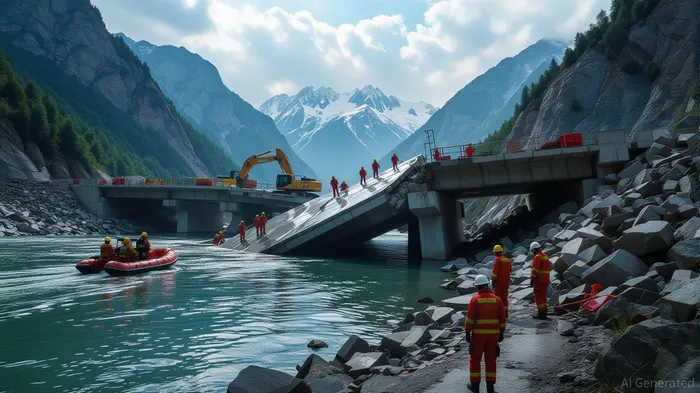
The Hongqi Bridge, a 758-meter structure built by the Sichuan Road & Bridge Group, collapsed following a landslide triggered by heavy rainfall and unstable mountain slopes, according to a Bnonews report. Despite preemptive closures due to visible cracks and terrain shifts, the failure highlights potential flaws in geotechnical assessments and design protocols. Experts argue that such projects in mountainous regions require rigorous, real-time monitoring of environmental factors, yet the incident suggests gaps in both predictive modeling and adaptive construction techniques, as noted in a Meyka analysis.
A peer-reviewed study cited in recent analyses points to recurring issues in China's infrastructure projects, including inadequate geotechnical surveys and rushed timelines, as reported in an IBTimes report. These shortcomings are not unique to Sichuan. For instance, the 2024 collapse of the Francis Scott Key Bridge in Baltimore, caused by a ship collision, revealed similar lapses in vulnerability assessments, as detailed in a CBS News article. Together, these cases illustrate a global pattern: infrastructure projects in high-risk zones are increasingly exposed to cascading failures from natural and human-induced stressors.
Regulatory Responses and Sector-Wide Reforms
In the wake of the Hongqi Bridge collapse, Chinese authorities have intensified scrutiny of infrastructure projects. While no official policy updates have been announced as of late 2025, experts anticipate stricter geotechnical survey requirements and enhanced oversight for projects in seismically or hydrologically sensitive areas. The incident has also amplified calls for transparency in construction tendering processes, with critics alleging that cost-cutting pressures often compromise safety margins, as noted in the Meyka analysis.
Globally, regulatory bodies are taking note. The U.S. National Transportation Safety Board (NTSB), for example, has mandated vulnerability assessments for 68 bridges at risk of vessel collisions, a move that mirrors the growing emphasis on proactive risk mitigation, as reported in the CBS News article. For investors, these regulatory shifts signal a potential increase in compliance costs for engineering firms, particularly those operating in regions prone to natural disasters.
Market Sentiment and Stock Performance
The Hongqi Bridge collapse has already triggered market volatility. Shares of the Sichuan Road & Bridge Group, the bridge's constructor, fell 3% in the subsequent quarter, reflecting investor concerns over liability and reputational damage, as reported in the IBTimes report. Broader construction sector indices, including those tracking Belt and Road projects, have also shown signs of instability, with credit rating agencies revising outlooks to "negative" for firms with significant exposure to high-risk geographies, as noted in the IBTimes report.
Comparative data from global peers reveals mixed trends. While U.S.-based firms like Martin Marietta Materials benefit from resilient infrastructure spending, companies engaged in coastal or mountainous projects-such as Great Lakes Dredge & Dock-face headwinds from declining capital dredging revenues and rising insurance premiums. This divergence underscores the importance of geographic diversification for investors seeking to mitigate sector-specific risks.
Long-Term Implications for Investors
The Hongqi Bridge collapse serves as a cautionary tale for the engineering and construction sector. For long-term investors, the key risks include:
1. Regulatory Tightening: Stricter safety standards could increase project costs and delay timelines, squeezing profit margins.
2. Geological Exposure: Firms operating in seismically active or hydrologically unstable regions may face higher insurance costs and project write-downs.
3. Reputational Damage: High-profile failures can erode client trust, particularly for firms with a history of cost-cutting or opaque practices.
Conversely, opportunities exist for firms specializing in advanced geotechnical monitoring, adaptive design technologies, and sustainable materials. Investors should prioritize companies with transparent risk management frameworks and a track record of compliance in complex environments.
Conclusion
The Hongqi Bridge collapse is not an isolated incident but a symptom of systemic challenges in modern infrastructure development. As regulatory scrutiny intensifies and market sentiment shifts, investors must adopt a nuanced approach to construction stocks-one that balances growth potential with the realities of geological and regulatory risk. The coming years will test the resilience of both engineering firms and the global infrastructure ecosystem they support.

Delivering real-time insights and analysis on emerging financial trends and market movements.
Latest Articles
Stay ahead of the market.
Get curated U.S. market news, insights and key dates delivered to your inbox.






Comments
No comments yet