
Infrastructure Safety Risks and Their Financial Implications in Emerging Markets


 Aime Summary
Systemic Risks in China's Infrastructure Development
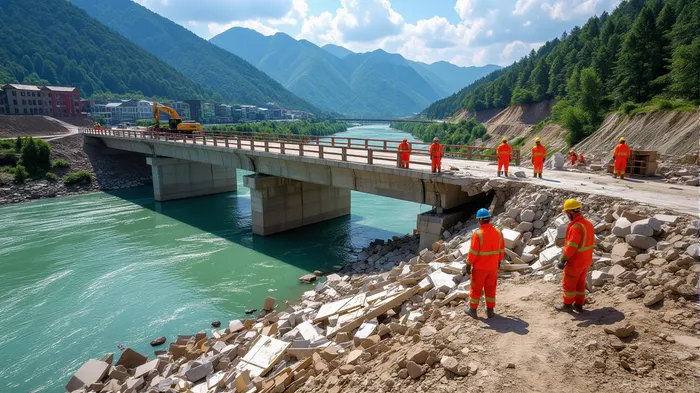
China's infrastructure market, valued at USD 4.85 trillion in 2025, is projected to grow at a 3.93% compound annual growth rate (CAGR), reaching USD 5.88 trillion by 2030, according to a Yahoo Finance report. This expansion is driven by government stimulus, urbanization, and technological adoption, yet the Hongqi Bridge collapse highlights persistent vulnerabilities. Engineering reports suggest that geological instability and rushed timelines may have compromised the bridge's integrity, as detailed in a BBN Times piece, while experts point to broader issues such as substandard materials and inconsistent enforcement of safety standards.
Regulatory gaps further exacerbate these risks. The Chinese Communist Party's (CCP) centralized control over infrastructure projects prioritizes speed and scale over rigorous compliance, creating a disconnect between policy and practice, as noted in a U.S. State Department report. For instance, while digital project-approval platforms and Building Information Modelling (BIM) are streamlining processes, local governments often lack the capacity or incentives to enforce quality checks, according to a Mordor Intelligence analysis. This systemic underinvestment in oversight increases the likelihood of failures like the Hongqi Bridge incident, which could erode public trust and deter foreign capital.
Financial Implications for Investors
The collapse has immediate and long-term financial implications. For one, it amplifies concerns about the reliability of China's infrastructure projects, which are critical to its Belt and Road Initiative (BRI) and domestic connectivity goals, according to a Mordor Intelligence analysis. Investors in construction firms like China State Construction Engineering Corporation (CSCEC, 003328.SZ), China Railway Group (CREC, 601390.SZ), and China Communications Construction (CCCC, 601800.SZ) face heightened risks as regulatory scrutiny intensifies. A recent OECD report ranked China as the 17th most restrictive country for foreign direct investment (FDI), citing opaque enforcement and political interference in licensing, as noted in a U.S. State Department report, which could further strain capital flows.
However, the crisis also presents opportunities. The government's push for sustainable and energy-efficient construction practices-mandated by tight green-building regulations-could benefit firms specializing in modular construction and smart infrastructure, according to a Mordor Intelligence analysis. Additionally, the incident may accelerate reforms in regulatory frameworks, creating a more transparent environment for investors willing to navigate the complexities.
Navigating the Risks
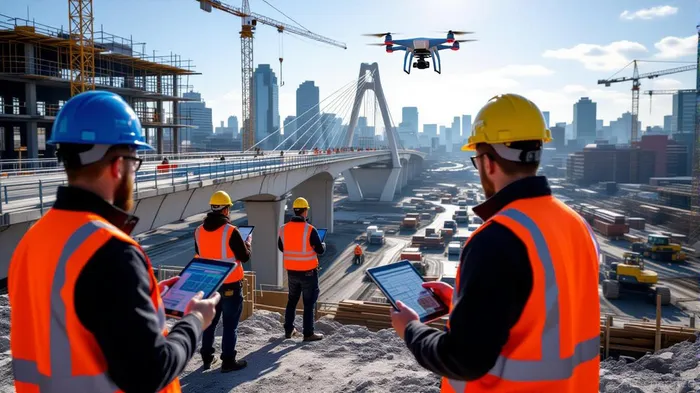
For investors, the key lies in balancing caution with strategic engagement. While the Hongqi Bridge collapse highlights the dangers of systemic underinvestment in safety, China's infrastructure sector remains a cornerstone of its economic ambitions. Diversifying portfolios to include firms with strong compliance records and leveraging data-driven tools to assess project risks could mitigate exposure.
Conclusion
The Hongqi Bridge collapse is a stark reminder of the fragility underlying China's infrastructure boom. While the government's focus on rapid development has driven growth, the incident underscores the need for stricter enforcement of safety standards and regulatory transparency. For investors, the challenge is to identify opportunities in a sector poised for transformation, even as systemic risks persist.

Delivering real-time insights and analysis on emerging financial trends and market movements.
Latest Articles
Stay ahead of the market.
Get curated U.S. market news, insights and key dates delivered to your inbox.






Comments
No comments yet