
Infrastructure Safety and Risk Management in Emerging Markets: Lessons from Recent Failures and Their Impact on Investment Flows


 Aime Summary
The Hongqi Bridge case is not an isolated event. Across Latin America and Africa, similar failures have compounded economic and political risks for investors. In Zambia, a 2025 dam collapse released 50 million liters of toxic waste into the Kafue River, devastating ecosystems and agriculture while prompting stricter regulatory scrutiny of mining infrastructure, as noted in a Boh-Infra analysis. Meanwhile, in Panama, geopolitical tensions over BlackRock's acquisition of ports-intended to counter Chinese influence-highlight how infrastructure investments are increasingly entangled with strategic rivalries, according to The Hill. These examples reveal a broader pattern: infrastructure failures in emerging markets are not merely technical or financial setbacks but catalysts for systemic shifts in investment flows and policy frameworks.
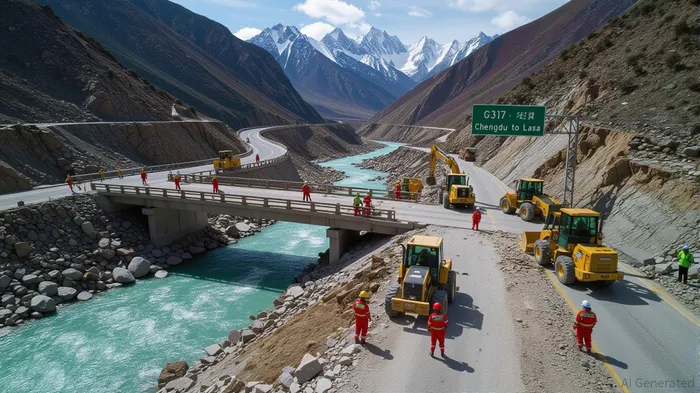
The economic repercussions of such failures are immediate and far-reaching. The Hongqi Bridge collapse forced rerouting of traffic along National Highway G317, increasing travel times between Chengdu and Lhasa by hours, according to Reuters. This disrupted trade and tourism, sectors vital to Sichuan's economy. Similarly, in Latin America, infrastructure gaps exacerbated by project failures have driven up costs for private investors. A 2025 UNCTAD report noted that global foreign direct investment (FDI) fell 3% in the first half of the year, with infrastructure and manufacturing sectors hit hardest, according to UNCTAD. High borrowing costs and political instability further strain capital flows, as seen in Zambia, where annual infrastructure damage from disasters now exceeds $12.7 billion, as reported by Bloomberg.
Risk management frameworks are evolving to address these challenges. Legal & General's $235 million Emerging Markets Nature Conservation and Sustainable Development Strategy, launched in 2024, exemplifies a shift toward mitigating environmental and social risks through innovative financing tools like use-of-proceeds bonds, according to ESG Today. Meanwhile, PESTLE analysis-a structured approach to evaluating political, economic, social, technological, legal, and environmental risks-is gaining traction among investors. For instance, AES Corporation's struggles in Georgia, where government interference led to financial losses, underscore the need for dynamic risk assessments that account for shifting geopolitical landscapes, according to Maccelerator.
Yet, even robust frameworks face limitations. The Hongqi Bridge collapse, despite preemptive closures, raises questions about the adequacy of geological risk assessments in mountainous regions. Similarly, the delayed BlackRockBLK-- port acquisition in Panama illustrates how geopolitical rivalries can override technical evaluations of infrastructure viability, as noted in a Yahoo News report. These cases suggest that while risk mitigation strategies are essential, they must also contend with unpredictable political and environmental variables.
For investors, the lesson is clear: infrastructure projects in emerging markets require not only technical rigor but also geopolitical agility. Diversification across regions and sectors, coupled with contingency planning for natural disasters and political shifts, is becoming table stakes. Policymakers, meanwhile, must prioritize transparency and regulatory consistency to rebuild trust. In Zambia, new mining codes emphasizing local ownership and environmental safeguards, as described in the Boh-Infra analysis, offer a template for aligning development with sustainability.
As emerging markets grapple with the dual pressures of climate change and geopolitical competition, infrastructure safety will remain a litmus test for economic resilience. The Hongqi Bridge, the Kafue River, and the contested ports of Panama are not just isolated incidents-they are symptoms of a system under strain. For investors, the path forward lies in balancing ambition with caution, recognizing that the true cost of infrastructure is measured not just in yuan or dollars, but in the stability of the ecosystems and societies it serves.

Delivering real-time insights and analysis on emerging financial trends and market movements.
Latest Articles
Stay ahead of the market.
Get curated U.S. market news, insights and key dates delivered to your inbox.
AInvest
PRO
AInvest
PRO



Comments
No comments yet