
Infrastructure Safety and Risk Management in Emerging Markets: The Case of Chinese Infrastructure Projects


 Aime Summary
The ESG Framework: Progress and Persistent Gaps
China's ESG risk management landscape has evolved significantly in recent years. The Ministry of Finance's Application Guide for the Corporate Sustainability Disclosure Standards – Basic Standards (Trial), issued in 2025, mandates a "double materiality" approach, requiring companies to disclose both the financial impact of sustainability factors and their broader environmental and social effects, as noted in a China Briefing article. This aligns with international standards but also reflects domestic priorities such as carbon neutrality by 2060. However, the gap between policy and practice remains pronounced.
For instance, while the Belt and Road Initiative (BRI) 2.0 strategy emphasizes outsourcing risk management to multilateral institutions and Western banks, 2022 data revealed a sharp decline in the application of strong ESG safeguards, according to a AidData blog. Environmental and social risks in Chinese-financed infrastructure projects rose from 33% in 2021 to 48% in 2022, driven by a collapse in syndicated infrastructure commitments from state-owned creditors, as AidData found. This underscores a critical challenge: even with robust contractual safeguards, implementation often falters under global financial volatility or local governance weaknesses.
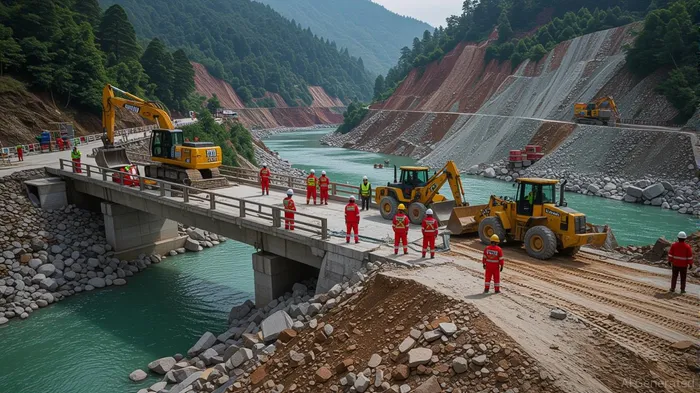
Foreign Investor Reactions: Caution and Calculated Optimism
Foreign investors remain divided in their response to China's infrastructure projects. On one hand, apprehension persists over capital controls, policy unpredictability, and the government's tendency to intervene in private-sector operations. Investors like Adam Watson of Partners Capital have scaled back exposure to Chinese markets, citing these risks, as CNBC reported. On the other hand, optimism is emerging in sectors like high-tech infrastructure, where government incentives and strategic investments are driving growth. The Hang Seng Tech Index and CSI 300 have surged in 2025, reflecting renewed interest in China's innovation-driven projects, CNBC noted.
Yet, the bridge collapse highlights a critical question: How can foreign investors reconcile China's ambitious infrastructure agenda with the risks of underdeveloped ESG governance? The answer lies in rigorous due diligence. Investors must scrutinize not only the technical aspects of projects but also the alignment of ESG frameworks with local realities. For example, while the Thar Coal Block-1 Power Plant in Pakistan-a $1.36 billion syndicated loan project-required an Environmental and Social Impact Assessment (ESIA), similar safeguards are inconsistently applied across China's domestic projects, as AidData observed.
Construction Equity Exposure: Growth Amid Rising Risks
China's construction sector has seen a 1.1% year-on-year increase in infrastructure investment in the first three quarters of 2025, with private investment rising by 7%, according to a China Daily report. The government's 14th Five-Year Plan emphasizes innovation, digitalization, and low-carbon development, driving CNY1.2 trillion in transport infrastructure spending between January and May 2025, according to a Yahoo Finance article. However, this growth is shadowed by rising ESG risk exposure.
The 2022 data reveals that 48% of new infrastructure commitments faced at least one type of ESG risk, with governance issues affecting 16% of projects, according to AidData. This trend is particularly concerning for foreign investors, as it suggests that even projects with strong de jure safeguards (e.g., contractual requirements for ESIA) often lack de facto implementation. The Hongqi Bridge collapse exemplifies this disconnect: while the bridge was a recent completion, its design and construction quality-key factors in the ongoing investigation-raise questions about the rigor of pre-approval risk assessments, as Zoombangla reported.
The Path Forward: Bridging the Gap Between Policy and Practice
For China to attract sustained foreign investment, it must address the chasm between its ESG frameworks and their execution. The Ministry of Finance's upcoming Basic Guidelines for Corporate Sustainability Disclosure-set for finalization in December 2024-aim to build a national sustainability disclosure system by 2030, according to a UNEP FI report. However, success will depend on enforcing these standards at the project level.
Foreign investors should prioritize projects with transparent ESG reporting, active community engagement, and third-party audits. The People's Bank of China's push for green finance instruments, including green loans and bonds, offers a promising avenue for aligning investments with sustainability goals, as UNEP FI noted. Yet, as the Hongqi Bridge incident demonstrates, even the most advanced frameworks are meaningless without accountability.
Conclusion
The collapse of the Hongqi Bridge is not an isolated event but a symptom of broader challenges in infrastructure safety and ESG risk management. For foreign investors, the lesson is clear: due diligence must extend beyond financial metrics to encompass environmental, social, and governance factors. While China's infrastructure ambitions are formidable, the path to sustainable investment lies in bridging the gap between policy and practice-a task that demands vigilance, collaboration, and a commitment to transparency.

Delivering real-time insights and analysis on emerging financial trends and market movements.
Latest Articles
Stay ahead of the market.
Get curated U.S. market news, insights and key dates delivered to your inbox.






Comments
No comments yet