
Infrastructure Safety and Risk in China's Rapid Urbanization: Investor Due Diligence in Engineering and Construction Sectors


 Aime Summary
The Hongqi Bridge Collapse: A Case Study in Geotechnical Risk
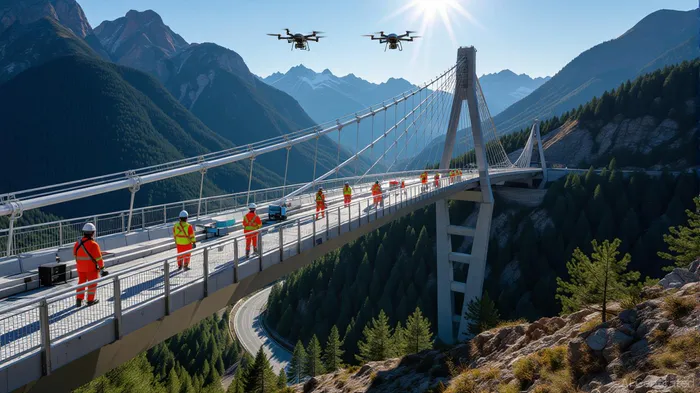
The Hongqi Bridge, part of National Highway 317, partially collapsed on November 11, 2025, after heavy landslides destabilized its foundation. Local authorities had preemptively closed the bridge the day prior due to visible cracks and ground shifts, averting potential casualties, as reported by a BBC News report. The bridge, completed in early 2025 by the Sichuan Road & Bridge Group, was hailed as a symbol of China's push to integrate its interior regions with border territories. Yet its failure within months of completion highlights the challenges of constructing infrastructure in mountainous areas prone to seismic and geological activity, according to a Zoombangla video.
Initial investigations point to a combination of factors: saturated soil from heavy rains, pre-existing slope instability, and the limitations of engineering designs for such volatile environments, as reported by Reuters. While no immediate construction flaws have been confirmed, the incident has reignited debates about the adequacy of geotechnical assessments and real-time monitoring systems in high-risk zones, as noted in a HarvKat analysis.
Regulatory Responses and the Need for Systemic Reform
In the wake of the collapse, Chinese regulators have emphasized the need for stricter geotechnical safeguards. According to a BBC report, officials are calling for enhanced slope monitoring technologies, contingency planning, and more rigorous environmental risk assessments for projects in mountainous regions. These measures align with broader global trends, such as the U.S. National Transportation Safety Board's (NTSB) post-2024 recommendations for bridge vulnerability assessments following the Francis Scott Key Bridge collapse, as noted in a Newsweek report.
However, the absence of a detailed public report on the Hongqi Bridge's failure-unlike the transparent NTSB process-raises concerns about accountability and transparency in China's infrastructure governance. For investors, this opacity complicates due diligence efforts, as it limits access to critical data on project risks and regulatory enforcement.
Investor Due Diligence: Key Considerations
The Hongqi Bridge collapse highlights three critical areas for investor scrutiny in China's engineering and construction sectors:
Geotechnical Risk Assessment:
Projects in seismically or geologically active regions require continuous monitoring, not just during construction but throughout the asset's lifecycle. Investors should prioritize companies that integrate real-time geotechnical data into their risk management frameworks. For example, firms employing AI-driven slope stability analysis or IoT-based sensor networks may demonstrate superior resilience to natural hazards, as noted in a Reuters report.Regulatory Compliance and Oversight:
While China's infrastructure boom is often praised for its speed, the lack of standardized safety protocols in remote regions remains a red flag. Investors must assess whether contractors adhere to national safety codes and whether local governments enforce them rigorously. The absence of a public investigation into the Hongqi Bridge's collapse, for instance, suggests gaps in transparency that could deter long-term capital, as reported in a BBC report.Long-Term Asset Viability:
Infrastructure projects in mountainous areas face unique challenges, including erosion, landslides, and climate change impacts. Investors should evaluate whether developers account for these factors in their designs. For example, the use of flexible bridge foundations or reinforced retaining walls can mitigate risks in unstable terrain, as noted in a Reuters report.
The Broader Implications for Infrastructure Investment
The Hongqi Bridge incident is not an isolated event. Over the past five years, similar failures in China's mountainous regions-such as the 2023 collapse of a highway tunnel in Yunnan-have underscored the fragility of infrastructure in geologically complex environments, as noted in a BBC report. For investors, these cases highlight the importance of diversifying portfolios to avoid overexposure to high-risk regions.
Moreover, the collapse has accelerated discussions about the role of private capital in infrastructure. As the Chinese government increasingly relies on public-private partnerships (PPPs), investors must ensure that risk-sharing mechanisms are clearly defined. For example, PPP contracts should include clauses that hold developers accountable for long-term maintenance and environmental monitoring, as noted in a Reuters report.
Conclusion: Balancing Growth and Safety
China's infrastructure ambitions remain a cornerstone of its economic strategy, but the Hongqi Bridge collapse demonstrates that growth cannot come at the expense of safety. For investors, the key lies in adopting a proactive due diligence approach that prioritizes geotechnical expertise, regulatory transparency, and adaptive engineering solutions. As the country continues to build bridges-both literal and metaphorical-between its regions, the lessons from Sichuan will shape the future of infrastructure investment in a rapidly urbanizing world.

Delivering real-time insights and analysis on emerging financial trends and market movements.
Latest Articles
Stay ahead of the market.
Get curated U.S. market news, insights and key dates delivered to your inbox.


AInvest
PRO
AInvest
PRO



Comments
No comments yet