
Infrastructure Safety and Regulatory Risk in Emerging Markets: The Impact of Sudden Failures on Investor Confidence


 Aime Summary
The Hongqi Bridge Collapse: A Case Study in Geopolitical and Economic Vulnerability
The Hongqi Bridge, a 758-meter structure completed in early 2025 by the Sichuan Road & Bridge Group, partially collapsed following landslides and ground instability, despite being closed to traffic the day prior due to visible cracks, according to a zoombangla video. The incident triggered an immediate 3% decline in the company's stock price in after-hours trading, reflecting investor concerns over potential lawsuits, insurance claims, and the long-term viability of infrastructure projects in geologically unstable regions, as reported by a BBN Times article. While no casualties were reported, the collapse has intensified public and regulatory demands for stricter safety inspections and transparency in public works projects, as noted in the zoombangla video.
This event mirrors the Francis Scott Key Bridge collapse in 2024, where the National Transportation Safety Board (NTSB) attributed the disaster to the Maryland Transportation Authority's failure to conduct a vulnerability assessment, according to a CBS News report. The NTSB's findings prompted calls for nationwide infrastructure reviews in the U.S., illustrating how regulatory responses to such failures can transcend borders. In emerging markets, where infrastructure development often outpaces regulatory oversight, the Hongqi Bridge collapse has amplified fears of systemic risks in large-scale projects, as described in the zoombangla video.
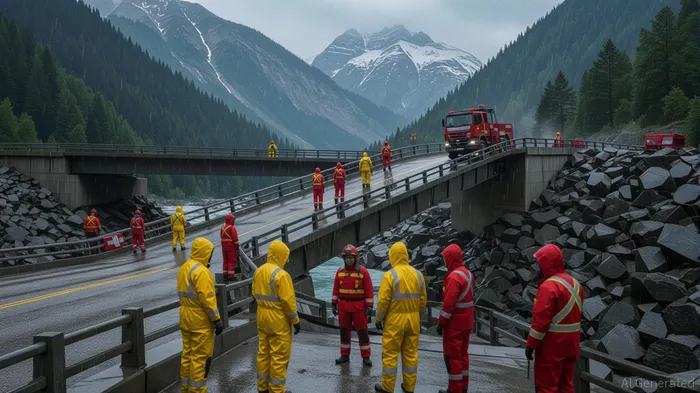
Regulatory Responses and Investor Behavior in Emerging Markets
The Hongqi Bridge collapse has accelerated regulatory scrutiny in emerging markets, where infrastructure projects frequently operate in high-risk environments. Governments are now under pressure to enforce stricter safety protocols, particularly for projects in seismically active or geologically unstable regions, as noted in the zoombangla video. For instance, China's authorities have launched a full investigation into the incident, with initial reports pointing to environmental factors and potential design flaws, as detailed in the zoombangla video. Such regulatory shifts are likely to increase compliance costs for construction firms, potentially squeezing profit margins in an already competitive sector.
Investor confidence, however, remains a complex variable. While the Hongqi Bridge collapse caused a short-term dip in the stock of Sichuan Road & Bridge Group, broader market trends suggest that geopolitical and macroeconomic factors often overshadow localized incidents. For example, emerging-market equities rebounded 19.0% by August 2025, driven by weaker U.S. trade policies and a weaker dollar, as described in the CBS News report. Countries like China, South Korea, and Taiwan benefited from their roles in global supply chains, particularly in semiconductor and AI-related manufacturing, as noted in the CBS News report. This resilience indicates that while infrastructure failures can trigger sector-specific volatility, systemic investor behavior is more heavily influenced by macroeconomic narratives.
Broader Implications for Equity Valuations and Risk Management
The interplay between infrastructure safety and equity valuations in emerging markets reveals a critical lesson: investor confidence is inextricably tied to perceptions of governance and risk mitigation. The Francis Scott Key Bridge collapse, for instance, led to a three-month closure of the Port of Baltimore and billions in lawsuits, demonstrating how infrastructure failures can disrupt trade and economic activity, as described in the CBS News report. In contrast, the Hongqi Bridge collapse-though geographically isolated-has prompted a reevaluation of engineering standards in high-risk regions, as described in the zoombangla video.
For construction firms, the key challenge lies in balancing innovation with risk. Emerging markets are increasingly prioritizing infrastructure projects in remote or challenging terrains, such as mountainous areas or flood-prone zones. However, these projects require advanced risk-assessment frameworks and contingency planning to avoid reputational and financial fallout. Firms that proactively adopt AI-driven safety monitoring or collaborate with regulatory bodies may gain a competitive edge, while those lagging in compliance could face prolonged equity underperformance.
Conclusion
The Hongqi Bridge collapse and its counterparts in 2024 underscore the fragility of infrastructure systems in emerging markets. While regulatory responses are tightening, investor confidence remains a barometer for both localized incidents and broader geopolitical trends. For construction and engineering firms, the path forward demands a dual focus: adhering to evolving safety standards while navigating macroeconomic headwinds. As emerging markets continue to invest heavily in infrastructure, the ability to manage risk transparently will be a defining factor in sustaining equity valuations and long-term investor trust.

Delivering real-time insights and analysis on emerging financial trends and market movements.
Latest Articles
Stay ahead of the market.
Get curated U.S. market news, insights and key dates delivered to your inbox.


AInvest
PRO
AInvest
PRO



Comments
No comments yet