
Infrastructure Safety and Public Confidence in China's Construction Sector: Investment Risks and Opportunities in State-Owned Engineering Firms Post-Hongqi Bridge Collapse


 Aime Summary
State Ownership and Systemic Vulnerabilities
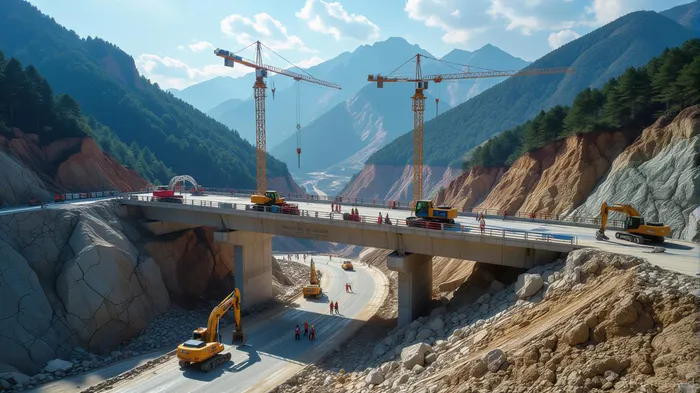
SRBG, a subsidiary of the Shudao Investment Group, operates under the supervision of the Sichuan State-Owned Assets Supervision & Administration Commission (SASAC), holding a 73.82% majority stake, according to a SWOT analysis. Its state-backed status ensures alignment with national infrastructure goals but also ties its fortunes to broader policy shifts. The Hongqi Bridge collapse, attributed to environmental factors like heavy rainfall and unstable terrain, according to a Yahoo article, highlights a critical tension: while state-owned firms dominate China's construction sector, their projects often face unique challenges in geologically fragile regions.
The incident has drawn parallels to the 2024 collapse of Baltimore's Francis Scott Key Bridge, where regulatory failures led to lawsuits and increased compliance costs for involved firms, as reported in a CBS News report. In China, similar outcomes could materialize if investigations reveal lapses in SRBG's risk assessments or geological surveys. However, unlike the U.S. case, China's centralized governance model may prioritize rapid project completion over exhaustive safety reviews, complicating post-crisis reforms.
Regulatory Uncertainty and Market Reactions
Though no explicit regulatory changes have been announced post-collapse, according to a Reuters report, historical precedents suggest heightened scrutiny is likely. For instance, after the 2019 collapse of a bridge in Jiangsu province, China introduced stricter geotechnical survey requirements for mountainous projects, as noted in the Yahoo article. The Hongqi Bridge incident could catalyze similar measures, such as mandatory landslide risk assessments or enhanced oversight of state-owned contractors.
Investors must also consider indirect impacts. SRBG's stock, while not directly referenced in available data, could face volatility if regulatory costs rise or project timelines are delayed. State-owned firms often benefit from implicit government support, but this buffer may shrink if public confidence erodes. A Bloomberg analysis of similar incidents noted that firms linked to high-profile failures typically see a 5–15% short-term decline in market value, though long-term recovery depends on policy clarity and operational transparency.
Opportunities in a Shifting Landscape
Despite risks, the collapse may create opportunities for firms that adapt to stricter safety standards. For example, companies specializing in geotechnical engineering or advanced materials could see increased demand for retrofitting existing infrastructure. Additionally, state-owned firms with robust compliance frameworks-such as China Communications Construction Company (CCCC)-may outperform peers by preemptively addressing regulatory expectations.
The incident also underscores the strategic importance of infrastructure in China's connectivity goals, particularly for projects linking Sichuan to the Tibetan Plateau. While SRBG's role in the G317 highway project, as reported in the Yahoo article, highlights its critical position, it also means the firm could secure future contracts if it demonstrates improved risk management.
Conclusion: Balancing Caution and Resilience
The Hongqi Bridge collapse is a cautionary tale for China's construction sector, revealing the fragility of infrastructure in geologically unstable regions. For state-owned firms like SRBG, the path forward hinges on navigating regulatory uncertainty while maintaining public trust. Investors should monitor upcoming policy announcements and assess how firms integrate geological risk into project planning. While the immediate outlook carries risks, the long-term potential for innovation and resilience in China's infrastructure sector remains robust-if managed wisely.

Delivering real-time insights and analysis on emerging financial trends and market movements.
Latest Articles
Stay ahead of the market.
Get curated U.S. market news, insights and key dates delivered to your inbox.


AInvest
PRO
AInvest
PRO



Comments
No comments yet