
Infrastructure Risks in Emerging Markets: Engineering Failures and Their Impact on Public and Private Investment Confidence


 Aime Summary
The Hongqi Bridge Collapse: A Case Study in Geological and Engineering Vulnerability
The Hongqi Bridge, a 758-meter structure designed to connect Sichuan province with the Tibetan Plateau, partially collapsed following a landslide triggered by unstable geological conditions and heavy rainfall, as captured in a video. Authorities had preemptively closed the bridge to traffic after observing visible cracks and ground shifts, a decision that likely prevented casualties, according to a DevDiscourse report. However, the incident exposed critical weaknesses in the project's geotechnical analysis and risk mitigation strategies. Experts have pointed to the bridge's proximity to the Shuangjiangkou Hydropower Station reservoir as a potential contributor, with fluctuating water levels and sedimentation exacerbating structural stress, as noted in a Times of India article.
Local officials attributed the collapse to mountain slope instability rather than a direct design flaw, as reported in a DevDiscourse article, yet this explanation has done little to quell public skepticism. A 2024 peer-reviewed study by Dina Tang and Minshui Huang, highlighted in an IBTimes piece, highlighted recurring issues in Chinese bridge projects, including rushed timelines and inadequate site-specific assessments. The Hongqi Bridge, part of a national initiative to enhance transportation in geologically sensitive regions, now stands as a cautionary tale of prioritizing speed over safety.
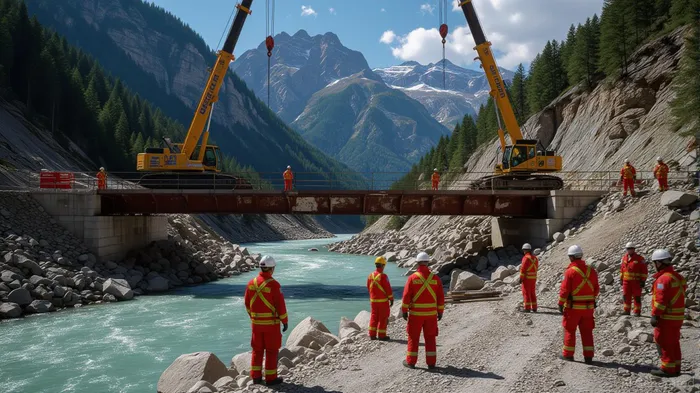
Regulatory Responses and the Evolution of Risk Management
The collapse has prompted immediate regulatory scrutiny. Chinese authorities have launched a full investigation into the bridge's design, material quality, and construction practices, as detailed in a Springer article, signaling a potential shift toward stricter safety inspections. This aligns with broader trends in China's infrastructure policy, where the government has increasingly shifted from shielding firms to "pushing" them to absorb commercial risks, as described in a EurekAlert report. For instance, the rise of PPPs in transportation and urban development has introduced new challenges, including heightened demand risk and the need for long-term operational accountability, as noted in a MDPI study.
However, the effectiveness of these reforms hinges on governance. A 2025 study on PPP projects in China revealed that private firm participation increases termination risks, while state-owned enterprise (SOE) involvement stabilizes projects, particularly during economic downturns, as detailed in the EurekAlert report. This dynamic raises questions about the balance between private innovation and public oversight in high-risk environments.
Economic Implications: Trust, Costs, and the Future of Investment
The economic fallout from the Hongqi Bridge collapse extends beyond immediate repair costs. Infrastructure failures disrupt transportation networks, erode public trust, and trigger reevaluations of risk-sharing mechanisms, as described in a MDPI study. For investors, the incident highlights the vulnerability of PPPs in geologically unstable regions. According to a report on sustainable bridge development in China, such failures can lead to substantial direct and indirect losses, including increased insurance premiums and regulatory penalties, as noted in the MDPI study.
Moreover, the collapse may accelerate the adoption of advanced monitoring technologies, such as automated structural health systems, to mitigate future risks, as suggested in the MDPI study. While these innovations add upfront costs, they could enhance long-term resilience-a critical factor for investors seeking to balance returns with sustainability.
Conclusion: Rebuilding Confidence in Emerging Market Infrastructure
The Hongqi Bridge collapse is not an isolated event but a symptom of systemic challenges in emerging market infrastructure. For public and private investors alike, the incident underscores the necessity of integrating geotechnical expertise, transparent governance, and adaptive risk management into project planning. As China and other emerging economies continue to expand their infrastructure footprints, the lessons from Sichuan will likely shape the next phase of global investment strategies.
In the end, the true cost of engineering failures is not measured in concrete or steel but in the trust of communities and capital markets. Rebuilding that trust will require more than regulatory adjustments-it will demand a cultural shift toward accountability and foresight.

Delivering real-time insights and analysis on emerging financial trends and market movements.
Latest Articles
Stay ahead of the market.
Get curated U.S. market news, insights and key dates delivered to your inbox.






Comments
No comments yet