
Infrastructure Risk and Resilience in Emerging Markets: Investor Implications of the Recent Chinese Bridge Collapse


 Aime Summary
Systemic Risks in Emerging Market Infrastructure
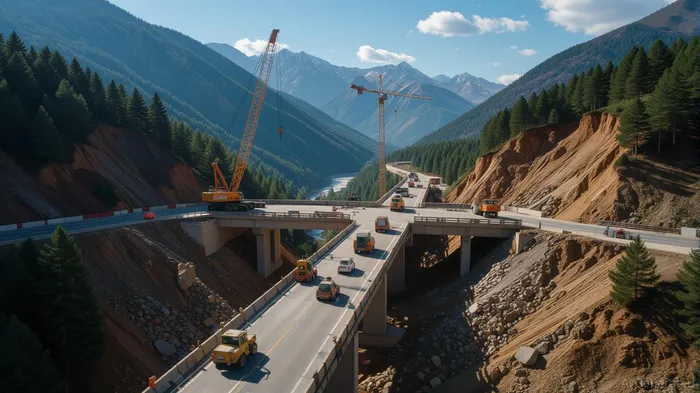
Infrastructure failures in emerging markets often stem from a confluence of factors: geological instability, cost-cutting pressures, and inadequate regulatory enforcement. The Hongqi Bridge collapse, for instance, followed reports of cracks and landslides linked to the nearby Shuangjiangkou Hydropower Station reservoir, a Fox News report. Experts have pointed to the challenges of building in mountainous regions, where terrain shifts and water management complicate engineering efforts, as shown in a Zoombangla video. This mirrors broader trends in countries like India and Brazil, where infrastructure projects frequently face delays or failures due to environmental and regulatory hurdles.
The speed of development in these markets exacerbates risks. China's push to connect remote regions through highways and bridges has prioritized scale over caution, with some analysts arguing that cost overruns and time constraints have compromised safety standards, as noted in the Zoombangla video. Similar patterns emerge in Nigeria, where the heavy construction equipment market is projected to grow at a 6.3% CAGR through 2034, driven by urbanization but shadowed by concerns over maintenance and oversight, according to a GlobeNewswire report.
Investor Reactions and Market Implications
Infrastructure failures have historically triggered volatility in construction equities, particularly in markets where governance and transparency are under scrutiny. In 2025, the collapse of the Qinghai railway bridge-another Chinese project-spurred debates about safety protocols and led to a temporary dip in shares of firms tied to high-risk infrastructure contracts, as reported by the New York Times. However, the sector's resilience is evident in companies like Parsons CorporationPSN--, which secured a $15 billion U.S. Navy contract for Indo-Pacific infrastructure projects, reflecting investor confidence in firms with robust risk management and ESG (Environmental, Social, and Governance) frameworks, according to an Investing.com article.
Data from emerging markets further illustrates this duality. EMSTEEL, a UAE-based steel and building materials manufacturer, reported a 28% year-over-year increase in EBITDA for the first nine months of 2025, despite global infrastructure challenges, as detailed in a Zawya report. Similarly, the Nigeria heavy construction equipment market is forecasted to grow at a 6.3% CAGR through 2034, driven by government initiatives like the 30-year National Integrated Infrastructure Master Plan, according to the GlobeNewswire report. These examples highlight how firms that balance growth with safety and sustainability can outperform in volatile environments.
Regulatory Responses and Policy Shifts
The Hongqi Bridge collapse has already prompted calls for stricter oversight in China. While specific reforms remain under investigation, the incident aligns with a global trend of regulatory tightening in response to infrastructure crises. In India, for example, the government has intensified customs enforcement, penalizing firms like Volkswagen and Kia for misclassifying imports-a move that underscores the importance of compliance in capital-intensive sectors, as described in an India-Briefing article. Brazil, meanwhile, has leveraged monetary policy to stabilize its infrastructure-dependent economy, raising interest rates to curb inflation while investing in renewable energy projects like Neoenergia's 22MW solar and battery initiative, as noted in a Reuters report.
China's regulatory response is likely to focus on geological risk assessments and construction oversight, particularly in regions with hydropower projects. The concrete block making machines market, a critical input for infrastructure, is already adapting to these pressures, with China's CAGR projected at 5.7% through 2035 as demand for safer, more durable materials grows, according to an OpenPR report. Such shifts could create opportunities for firms specializing in advanced materials and geotechnical engineering, while penalizing those reliant on outdated practices.
Conclusion: Balancing Growth and Resilience
The Hongqi Bridge collapse serves as a stark reminder that infrastructure in emerging markets is both a driver of economic growth and a potential liability. For investors, the key lies in distinguishing between projects that prioritize long-term resilience and those that sacrifice safety for speed. Regulatory reforms, while often reactive, can mitigate systemic risks-if enforced rigorously. As emerging economies continue to invest heavily in connectivity and energy, the construction sector's ability to adapt to these pressures will determine its role in shaping the next decade of global development.

Delivering real-time insights and analysis on emerging financial trends and market movements.
Latest Articles
Stay ahead of the market.
Get curated U.S. market news, insights and key dates delivered to your inbox.
AInvest
PRO
AInvest
PRO



Comments
No comments yet