
Infrastructure Risk and Resilience in Emerging Markets: Investor Implications of the Recent Bridge Collapse in China


 Aime Summary
A Convergence of Risks
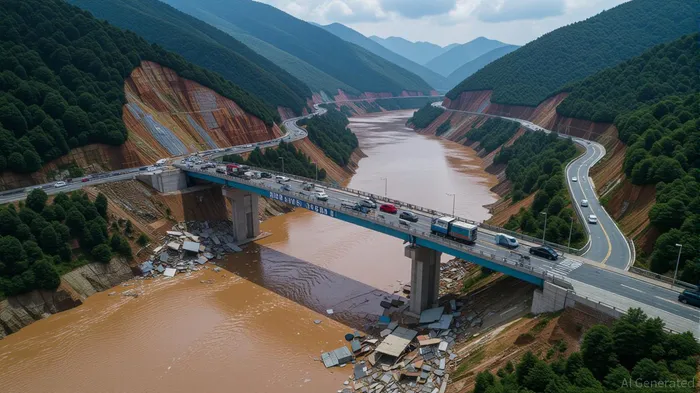
The Hongqi Bridge, a 758-meter structure spanning a national highway connecting Sichuan to Tibet, partially collapsed following terrain shifts and landslides triggered by heavy rainfall, as reported by Reuters. Local authorities had previously observed cracks and ground instability, leading to a preemptive closure just one day before the disaster, as noted in a DevDiscourse article here. While the exact cause remains under investigation, experts point to a combination of geological vulnerabilities, design flaws, and potential lapses in construction quality control, as detailed in a Zoombangla video here.
This event highlights a critical challenge for emerging markets: balancing accelerated infrastructure expansion with rigorous safety protocols. In regions like Sichuan, where rugged terrain and seismic activity are common, infrastructure projects often face heightened risks. According to a Reuters report, the collapse has amplified concerns about the long-term durability of such projects, particularly when development timelines prioritize speed over meticulous environmental assessments, as Reuters has reported.
Investor Implications: From Risk to Resilience
For investors, the Sichuan incident underscores the need for robust risk assessment frameworks. Emerging markets account for a significant portion of global infrastructure investment, driven by demand for connectivity and economic integration. However, as the Hongqi Bridge collapse demonstrates, these projects are increasingly exposed to environmental and engineering risks.
A GIS and drone-based risk assessment framework, developed in the past year, offers a potential solution, as described in a ResearchGate publication here. By integrating geospatial data with real-time monitoring, investors can better evaluate the stability of infrastructure sites in high-risk areas. This technology could mitigate future disasters by identifying vulnerabilities before they escalate.
Yet, technological solutions alone are insufficient. The collapse of Baltimore's Key Bridge in 2024-another case of infrastructure failure-reveals systemic gaps in regulatory preparedness, as noted in a CBS News report here. The National Transportation Safety Board (NTSB) found that the Maryland Transportation Authority had failed to conduct vulnerability assessments, a lapse that could have been avoided with stricter oversight. For emerging markets, where regulatory frameworks often lag behind development ambitions, such lessons are critical.
Insurance and Regulatory Adjustments
The Sichuan collapse is likely to trigger a reevaluation of insurance policies and regulatory standards. Infrastructure projects in geologically unstable regions may face higher premiums or stricter underwriting criteria as insurers reassess risk profiles, as Reuters has reported. Additionally, governments may introduce mandatory vulnerability assessments and extended maintenance protocols to prevent similar incidents.
Investors must also consider the reputational and financial fallout of infrastructure failures. The Key Bridge collapse, for instance, led to billions in lawsuits and a three-month disruption of the Port of Baltimore, as CBS News reported. Such cascading effects highlight the interconnected nature of infrastructure resilience and economic stability.
The Path Forward
Emerging markets will need to adopt a dual strategy: accelerating development while embedding resilience into every phase of infrastructure planning. This includes:
1. Enhanced Geotechnical Assessments: Prioritizing detailed geological surveys and continuous monitoring using technologies like drones and AI.
2. Regulatory Reforms: Implementing mandatory vulnerability assessments and stricter safety standards, particularly in high-risk regions.
3. Investor Due Diligence: Incorporating environmental and engineering risk metrics into investment decision-making.
The Sichuan bridge collapse is not an isolated event but a symptom of broader systemic challenges. For investors, the key lies in transforming these risks into opportunities by supporting projects that prioritize long-term resilience over short-term gains.

Delivering real-time insights and analysis on emerging financial trends and market movements.
Latest Articles
Stay ahead of the market.
Get curated U.S. market news, insights and key dates delivered to your inbox.






Comments
No comments yet