
Infrastructure Risk and Resilience in Emerging Markets: Investor Due Diligence in China's Fast-Developing Transportation Sectors


 Aime Summary
The Hongqi Bridge Collapse: A Catalyst for Scrutiny
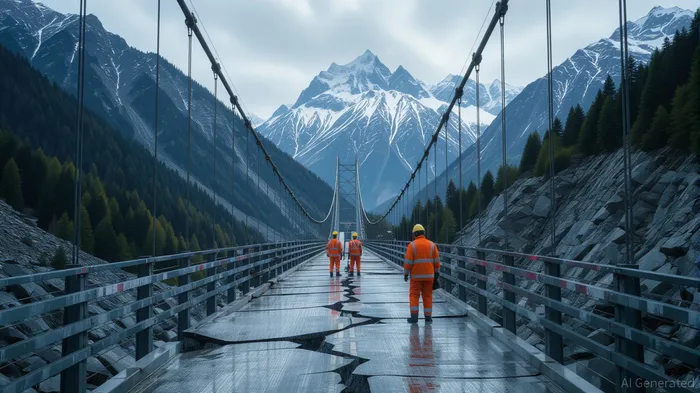
The Hongqi Bridge, completed in 2025 by the Sichuan Road & Bridge Group, partially collapsed following landslides triggered by heavy rainfall and unstable geological conditions, according to a Zoombangla video. Local authorities had preemptively cordoned off the structure after detecting cracks and ground shifts, a decision that likely averted casualties, as reported in a DevDiscourse article. The incident has sparked a broader debate about the adequacy of safety protocols in China's infrastructure projects, particularly in seismically active regions. According to a Meyka blog post, the collapse has reignited public concerns over the long-term viability of such projects, with social media platforms flooded with demands for accountability.
The Chinese government has pledged a thorough investigation, focusing on design flaws, material quality, and construction oversight, according to the Zoombangla video. While the final report remains pending, the incident has already prompted calls for stricter regulatory frameworks. This aligns with global trends, such as the U.S. National Transportation Safety Board's (NTSB) recent emphasis on vulnerability assessments for aging infrastructure, as seen in the 2024 collapse of Baltimore's Francis Scott Key Bridge, which prompted a public NTSB meeting CBS News coverage.
Investor Due Diligence: From Reactive to Proactive Risk Management
The Hongqi Bridge collapse has reshaped investor perceptions of infrastructure projects in emerging markets. Historically, due diligence in China's transportation sector has prioritized cost efficiency and speed of execution. However, the incident has shifted focus toward engineering governance metrics and long-term resilience. Investors are now demanding rigorous geological assessments, stress tests for seismic activity, and transparent reporting on material quality, as noted in the Meyka blog post.
This shift mirrors the NTSB's post-Key Bridge collapse recommendations, which emphasized the need for vulnerability assessments to evaluate risks from external factors like vessel collisions, according to CBS News coverage. For Chinese infrastructure developers, similar frameworks could involve evaluating risks from landslides, earthquakes, and climate change. As the Meyka blog post notes, investors are increasingly scrutinizing projects for compliance with updated safety standards, a trend that could slow approvals but enhance long-term asset value.
Regulatory Reforms and Market Implications
The Chinese government's response to the Hongqi Bridge collapse may set a precedent for regulatory reforms. While no concrete policy changes have been announced yet, the incident has accelerated discussions about harmonizing national standards with international best practices. For instance, the NTSB's requirement for 68 U.S. bridges to undergo vulnerability assessments, as reported in a Detroit News article, could serve as a model for China's transportation authorities.
However, the challenge lies in balancing rapid infrastructure expansion with enhanced safety protocols. China's transportation sector, which accounts for a significant portion of the country's GDP, must navigate the dual pressures of economic growth and risk mitigation. The Mintz Group's recent release of detained employees in Beijing-a move seen as an effort to attract foreign investment-suggests that regulatory flexibility may persist, albeit with heightened scrutiny on engineering governance, according to a WUSF article.
Conclusion: A New Paradigm for Emerging Market Infrastructure
The Hongqi Bridge collapse is a stark reminder that infrastructure resilience is not merely a technical issue but a governance imperative. For investors, the incident underscores the need to integrate engineering metrics-such as geological stability, material durability, and seismic preparedness-into due diligence frameworks. As emerging markets like China continue to expand their transportation networks, the lessons from Sichuan and Baltimore highlight a universal truth: infrastructure must be designed not just for speed and scale, but for survival.
In the coming years, the ability of investors and regulators to adapt to these evolving standards will determine the success-or failure-of high-risk, high-reward infrastructure projects in the global south.

Delivering real-time insights and analysis on emerging financial trends and market movements.
Latest Articles
Stay ahead of the market.
Get curated U.S. market news, insights and key dates delivered to your inbox.


AInvest
PRO
AInvest
PRO



Comments
No comments yet