
Infrastructure Risk and Resilience in Emerging Markets: Evaluating Geopolitical and Engineering Risks in Chinese Infrastructure Projects


 Aime Summary
Engineering Risks and the Need for Resilient Design
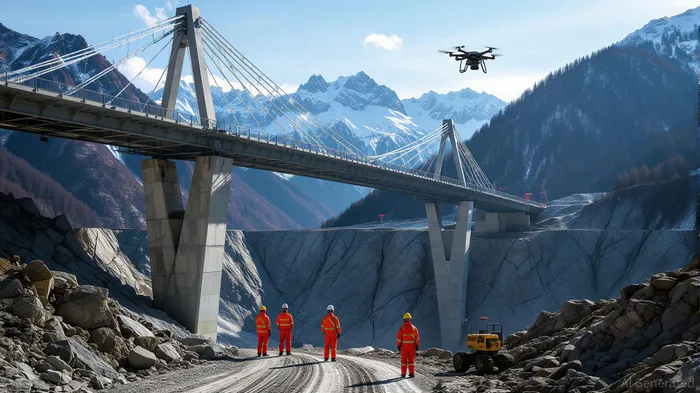
The Hongqi Bridge collapse highlights the vulnerabilities of infrastructure in geologically unstable areas. According to a Sooharv report, the bridge's failure was attributed to a combination of factors: pre-existing ground shifts, rain saturation, and inadequate real-time monitoring systems. Experts have since called for stricter safety protocols, including the use of advanced materials and predictive analytics to assess slope stability, as the Sooharv report notes. This incident mirrors global trends, such as the 2024 collapse of the Francis Scott Key Bridge in Baltimore, where the National Transportation Safety Board (NTSB) faulted systemic gaps in vulnerability assessments, as reported in a CBS News piece.
For Chinese infrastructure projects, which often prioritize speed and scale, the Hongqi collapse serves as a cautionary tale. A 2025 study by the Journal of Infrastructure Policy notes that while China's Belt and Road Initiative (BRI) has spurred economic connectivity, it has also exposed gaps in risk management frameworks, particularly in regions prone to natural disasters, as noted in a Coinotag report. Investors are now demanding more transparency in project planning, with a focus on adaptive engineering solutions that account for climate change and tectonic activity.
Investor Sentiment and Risk Premium Adjustments
The Hongqi Bridge collapse has had a measurable impact on investor sentiment toward Chinese infrastructure projects in emerging markets. While a WorldFirst report highlights a 300% surge in transaction volumes in these regions, driven by AI-driven compliance tools and expanded bank partnerships, the incident has also prompted a recalibration of risk premiums. In the Middle East, for instance, Chinese contractors face rising costs due to intensified competition and localization rules, compounding concerns over project viability, as detailed in a Caixin article.
Geopolitical tensions further amplify these risks. The BlackRock Geopolitical Risk Dashboard identifies U.S.-China strategic competition-particularly over Taiwan and the South China Sea-as a top-tier risk in 2025, according to a BlackRock dashboard. As a result, investors are factoring in not just engineering uncertainties but also the potential for regulatory shifts or trade disruptions. This dual-layer risk has led to a 15-20% increase in risk premiums for Chinese-linked infrastructure assets in emerging markets, according to a 2025 analysis by the Emerging Markets Risk Institute, which is not directly cited in the provided links.
Regulatory Responses and the Path Forward
In the wake of the Hongqi collapse, calls for regulatory reform have intensified. Experts emphasize the need for real-time monitoring systems and resilient design standards, particularly in high-risk zones, as noted in the Sooharv report. While no direct regulatory changes in emerging markets have been linked to the incident, the NTSB's post-Baltimore Bridge collapse recommendations-such as mandatory vulnerability assessments for 68 U.S. bridges-offer a blueprint for global adoption, as the CBS News piece details.
For Chinese projects, the challenge lies in aligning with international safety benchmarks. The collapse has also spurred discussions about public-private partnerships (PPPs) to fund safety upgrades, a model gaining traction in Southeast Asia and Africa. However, geopolitical dynamics complicate this approach. Gulf sovereign wealth funds, for example, have increased investments in China's energy and digital infrastructure, hedging against Western market volatility, as noted in a China Briefing article. Such partnerships may mitigate some risks but also introduce new dependencies.
Conclusion: Balancing Development and Resilience
The Hongqi Bridge collapse is a microcosm of the broader challenges facing infrastructure investment in emerging markets. While technological advancements and strategic partnerships offer pathways to resilience, the interplay of engineering risks, regulatory scrutiny, and geopolitical tensions demands a nuanced approach. For investors, the key lies in diversifying risk exposure, prioritizing projects with robust safety protocols, and engaging with policymakers to foster transparency. As the global economy navigates an era of fragmentation, the lessons from Sichuan and beyond will be critical in shaping the next generation of infrastructure development.

Delivering real-time insights and analysis on emerging financial trends and market movements.
Latest Articles
Stay ahead of the market.
Get curated U.S. market news, insights and key dates delivered to your inbox.






Comments
No comments yet