
Infrastructure Risk and Resilience in China: Implications for Construction and Insurance Sectors


 Aime Summary
The Hongqi Bridge Collapse: A Case Study in Geotechnical Challenges
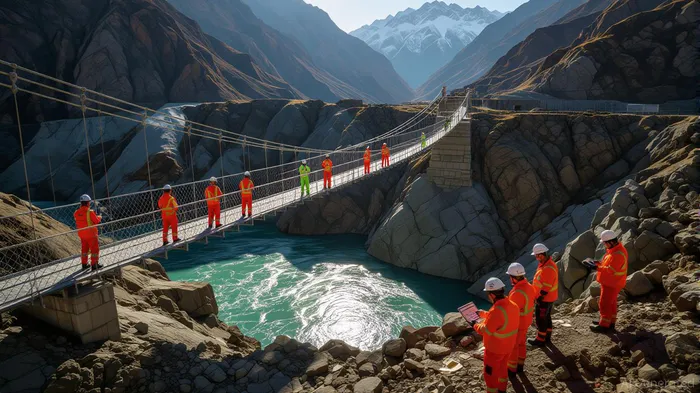
The Hongqi Bridge, a 758-meter structure completed by the Sichuan Road & Bridge Group in 2025, collapsed due to landslides exacerbated by water accumulation from the nearby Shuangjiangkou reservoir and heavy rainfall, as reported by a Zoombangla video. Authorities had closed the bridge the day prior after observing visible cracks and ground shifts, a precaution that likely prevented casualties, according to the same Zoombangla video. The incident has prompted an official investigation into design flaws, material quality, and construction oversight, as noted in the Zoombangla video.
This collapse mirrors the 2024 Francis Scott Key Bridge disaster in Baltimore, where the National Transportation Safety Board (NTSB) attributed the failure to the Maryland Transportation Authority's (MDTA) failure to conduct a vulnerability assessment, as reported in a CBS News article. The NTSB's findings led to mandatory assessments for 68 U.S. bridges, emphasizing the need for proactive risk evaluation, as reported in the CBS News article. While China's regulatory framework differs, the Hongqi Bridge collapse suggests a potential gap in addressing geotechnical risks in mountainous regions, where infrastructure projects face unique challenges.
Regulatory Evolution in Engineering Standards
China has implemented significant regulatory updates between 2023 and 2025, including expanded Compulsory Certification (CCC) requirements for products like lithium-ion batteries and electric vehicle charging devices, according to a Nemko blog. These changes reflect a broader push for product safety and sustainability. However, the Hongqi Bridge collapse raises questions about whether similar rigor has been applied to infrastructure projects in geologically unstable areas.
The U.S. experience with the Key Bridge collapse offers a cautionary tale. The NTSB's emphasis on vulnerability assessments-particularly for structures exposed to natural or human-induced risks-could influence China's regulatory trajectory, as reported in the CBS News article. While no direct regulatory changes have been announced post-Hongqi, the incident may accelerate the adoption of stricter geotechnical evaluation protocols for infrastructure in high-risk zones.
Insurance Sector Adaptations: Balancing Risk and Resilience
The insurance sector in China has demonstrated resilience in the first quarter of 2025, with non-life insurance premiums growing due to the rise of new-energy vehicles, according to a Fitch Ratings report. However, infrastructure-related risks, including natural disasters and structural failures, have caused economic losses exceeding CNY 400 billion in 2024, according to the Fitch Ratings report. Insurers are now enhancing catastrophe modeling capabilities and securing reinsurance to manage these exposures, as reported in the Fitch Ratings report.
The Hongqi and Key Bridge collapses have further reshaped underwriting practices. Insurers are tightening terms, increasing premiums, and demanding more detailed risk assessments for infrastructure projects, as noted in the Zoombangla video. For example, surety bonds-guarantees for project performance and payments-are gaining traction as a risk-mitigation tool, as reported in the Zoombangla video. Deloitte's 2025 global insurance outlook emphasizes the need for insurers to integrate AI-driven data ecosystems to address evolving risks, including climate change and technological disruptions, as noted in the Deloitte report.
Investment Implications: Navigating a Shifting Landscape
For investors, the interplay of regulatory changes and insurance sector adaptations presents both risks and opportunities. Construction firms operating in geologically unstable regions may face higher compliance costs and project delays, particularly if new geotechnical standards are introduced. Conversely, companies specializing in advanced engineering solutions-such as AI-powered risk modeling or resilient materials-could benefit from increased demand.
The insurance sector, meanwhile, is poised for innovation. Insurers that successfully balance solvency with proactive risk management-through tools like dynamic reinsurance or parametric insurance-may outperform peers. However, the sector's profitability could be tested if infrastructure failures become more frequent due to climate change or aging assets.
Conclusion
The Hongqi Bridge collapse serves as a stark reminder of the fragility of infrastructure in high-risk environments. While China's regulatory and engineering frameworks continue to evolve, the incident underscores the need for a holistic approach to risk management-one that integrates geotechnical expertise, regulatory vigilance, and innovative insurance solutions. For investors, the path forward lies in identifying companies that can navigate these challenges while capitalizing on the growing demand for resilient infrastructure.

Delivering real-time insights and analysis on emerging financial trends and market movements.
Latest Articles
Stay ahead of the market.
Get curated U.S. market news, insights and key dates delivered to your inbox.






Comments
No comments yet