
Infrastructure Risk and Resilience in China: Geopolitical and Economic Implications of Recent Failures


 Aime Summary
Infrastructure Risk and Investor Sentiment
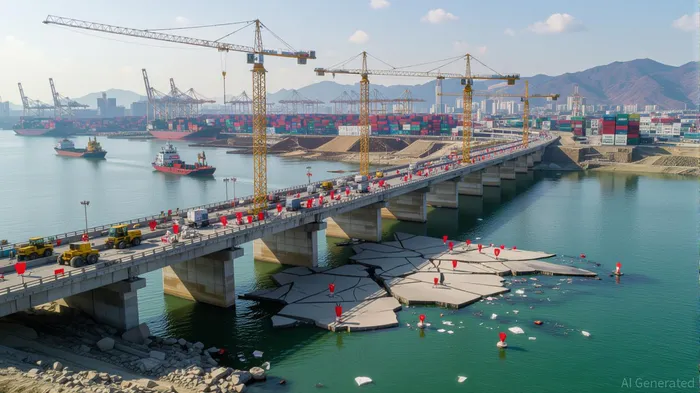
The Sichuan collapse is not an isolated event. Earlier in 2025, a railway bridge in Qinghai province collapsed, killing 12 people, according to a Hindustan Times report. These failures have amplified concerns about the durability of infrastructure projects, particularly those tied to the BRI. Investors are now scrutinizing construction timelines, safety protocols, and the financial health of contractors like Sichuan Road & Bridge Group, which built the Hongqi Bridge, according to a Global Times report.
Data from the CEPR highlights a shifting geopolitical landscape in BRI-linked investments. The United States has increased foreign direct investment (FDI) in BRI countries, particularly in infrastructure and energy, to counter China's influence. For instance, the U.S. and G7 partners recently launched a railway project in Angola to challenge China's dominance in the region, as reported in a CEPR analysis. Conversely, the UK has scaled back its FDI in BRI countries due to supply chain risks and geopolitical tensions, while Japan's investments remain stagnant, reflecting strategic hesitancy, according to the CEPR analysis. These trends suggest that infrastructure failures in China could accelerate a realignment of global capital flows.
Sectoral Performance and Project Delays
The construction sector's stock valuations have historically been sensitive to infrastructure risks. While no direct stock price fluctuations were recorded post-Sichuan collapse (as of November 2025), the incident has already prompted delays in regional development plans. The Hongqi Bridge's collapse, for example, threatens to disrupt hydropower projects in Barkam county, a key node in Sichuan's energy grid, according to a Global Times report. Such delays could ripple across the BRI, where timely project completion is critical to maintaining investor trust.
A visual representation of FDI trends in BRI countries reveals stark contrasts. The U.S. has surged ahead in infrastructure investments, while the UK's retreat underscores growing skepticism about China's project management capabilities, and Japan's neutrality reflects a cautious wait-and-watch approach, as reported in the CEPR analysis.
Geopolitical Implications and Long-Term Outlook
The Sichuan incident has also intensified geopolitical debates about infrastructure resilience. The U.S. National Transportation Safety Board's recent critique of the Baltimore Key Bridge collapse-attributed to inadequate vulnerability assessments-has drawn parallels to China's own infrastructure challenges, as reported in a CBS News report. These comparisons risk eroding confidence in BRI projects, particularly in regions with complex geographies like South Asia and Southeast Asia.
For China, the collapse of the Hongqi Bridge is a wake-up call. Strengthening geological surveys, adopting AI-driven risk modeling, and enhancing transparency in project timelines could mitigate future risks. However, without systemic reforms, the BRI's reputation-and the construction sector's valuations-may face sustained headwinds.
Conclusion
Infrastructure failures like the Sichuan bridge collapse are not merely technical setbacks; they are geopolitical and economic flashpoints. As global investors recalibrate their strategies, the BRI's success will hinge on China's ability to demonstrate resilience, adaptability, and a commitment to long-term quality over rapid expansion. For now, the cracks in Sichuan's terrain serve as a stark reminder: infrastructure is not just about building bridges-it's about building trust.

Delivering real-time insights and analysis on emerging financial trends and market movements.
Latest Articles
Stay ahead of the market.
Get curated U.S. market news, insights and key dates delivered to your inbox.






Comments
No comments yet