
Infrastructure Risk and Market Reactions in China's Growing Economy


 Aime Summary
The Hongqi Bridge Collapse: A Case of Unforeseen Consequences
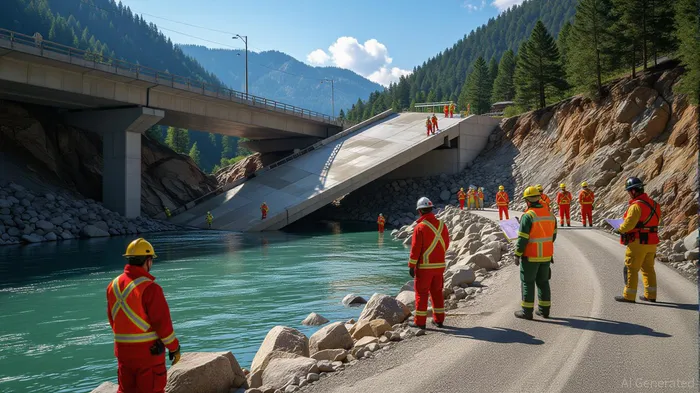
The Hongqi Bridge, a 758-meter structure completed in early 2025 by the Sichuan Road & Bridge Group, partially collapsed on November 11, 2025, after landslides destabilized its approach road and supporting structures, according to a zoombangla video. Local authorities had preemptively closed the bridge the day before, citing visible cracks and ground shifts, as reported by a DevDiscourse article DevDiscourse. While no casualties were reported, the incident has reignited debates about the safety of infrastructure projects in geologically fragile regions. Experts like Dina Tang and Minshui Huang of Wuhan Institute of Technology have pointed to recurring issues: rushed construction timelines, inadequate geotechnical surveys, and environmental stressors such as fluctuating water levels near the Shuangjiangkou Hydropower Station, as noted in an IBTimes analysis.
The collapse has also highlighted the limitations of current risk assessment frameworks. According to a DevDiscourse report, the bridge's failure was attributed to a landslide involving 3 million cubic meters of debris, exacerbated by rain saturation and unstable slopes, as detailed in a Sooharv article. This raises critical questions about the adequacy of pre-construction evaluations in capturing environmental and climatic threats.
Regulatory Scrutiny and the Call for Stricter Protocols
In the aftermath, Chinese authorities launched a full investigation into the incident, with experts examining design, material quality, and construction oversight, according to the zoombangla video. The collapse has prompted calls for stricter safety protocols, including real-time monitoring of slopes and structures to predict failures, as discussed in the Sooharv article. While the U.S. National Transportation Safety Board (NTSB) has focused on vulnerability assessments for bridges at risk of vessel collisions, as reported in a CBS News piece, China's regulatory response has centered on geotechnical resilience.
The incident has also drawn attention to the broader need for policy reforms. The National Energy Administration has emphasized enhanced support for private investment in energy and infrastructure projects, including "green channel" approvals for stock listings, as noted in a Business Times report. However, these measures may not address the root causes of infrastructure failures in high-risk regions.
Investor Sentiment: Caution Amid Strategic Shifts
The collapse has had immediate repercussions on investor sentiment. Shares of the Sichuan Road & Bridge Group declined in after-hours trading, reflecting market concerns over project durability, according to a BBN Times report. Broader indices tracking infrastructure projects, particularly those linked to China's Belt and Road Initiative, have shown signs of caution, as also noted in the BBN Times report.
Investor behavior in the sector has been shaped by a mix of optimism and skepticism. While multinational corporations like Shell continue to expand EV charging networks in China, the Hongqi Bridge incident has amplified scrutiny over project timelines and oversight. As noted by experts in the IBTimes analysis, the balance between speed and safety remains a contentious issue.
Geopolitical, Operational, and Reputational Risks
The collapse has exposed three critical risks for investors:
1. Geopolitical Risks: Infrastructure projects in border regions, such as Sichuan's proximity to the Tibetan Plateau, are vulnerable to geopolitical tensions and environmental shifts.
2. Operational Risks: The incident underscores the challenges of executing projects in geologically unstable areas, where climate change and human activity exacerbate risks.
3. Reputational Risks: Failures like the Hongqi Bridge collapse can erode public trust in state-driven projects, leading to legal and financial liabilities for involved entities, as noted in the CBS News piece.
Strategic Investment Caution: A Path Forward
For investors, the Hongqi Bridge collapse serves as a cautionary tale. Strategic caution is warranted in infrastructure-linked sectors, particularly in projects with high exposure to geological and climatic risks. Key considerations include:
- Enhanced Due Diligence: Prioritize projects with robust geotechnical assessments and climate-resilient designs.
- Regulatory Engagement: Support policy reforms that mandate real-time monitoring and stricter safety protocols.
- Diversification: Balance investments across regions and sectors to mitigate localized risks.
Conclusion
The Hongqi Bridge collapse is a microcosm of the broader challenges facing China's infrastructure ambitions. While the country's growth narrative remains compelling, investors must navigate a landscape where speed and scale are increasingly scrutinized. By integrating geopolitical, operational, and reputational risk assessments, investors can better align their strategies with the realities of high-growth, state-driven infrastructure ventures.

Delivering real-time insights and analysis on emerging financial trends and market movements.
Latest Articles
Stay ahead of the market.
Get curated U.S. market news, insights and key dates delivered to your inbox.


AInvest
PRO
AInvest
PRO



Comments
No comments yet