
Infrastructure Risk and Engineering Oversight in Emerging Markets: Lessons from the Hongqi Bridge Collapse


 Aime Summary
The Hongqi Bridge Collapse: A Case Study in Systemic Risk
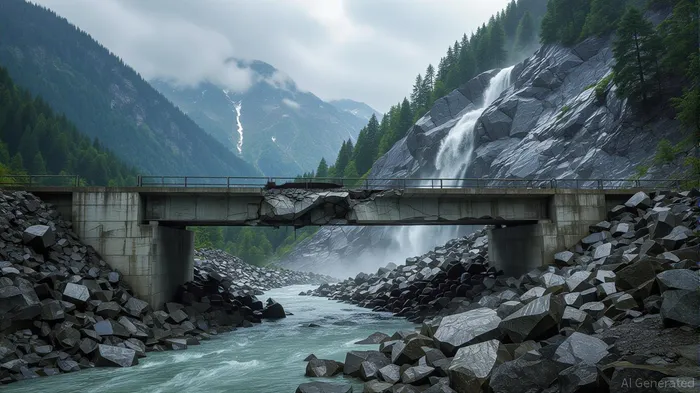
The 758-meter bridge, constructed by the Sichuan Road & Bridge Group earlier in 2025, was part of a broader initiative to enhance connectivity between Sichuan and the Tibetan Plateau. Despite visible cracks and ground shifts prompting a temporary closure, the structure collapsed within hours of reopening, raising urgent questions about geotechnical assessments and construction quality, as a report from IBTimes found. Officials are now investigating potential design flaws, material defects, and the role of environmental factors such as fluctuating water levels from the nearby Shuangjiangkou Hydropower Station reservoir, as a Zoombangla video reported.
Experts have pointed to recurring issues in emerging market infrastructure projects: rushed timelines, inadequate geological surveys, and a prioritization of cost efficiency over long-term stability, as the Zoombangla video noted. The bridge's proximity to a hydropower facility further complicates the analysis, as sedimentation and water-level fluctuations may have exacerbated slope instability, according to the same video. This case highlights how environmental and engineering risks are often interconnected, demanding holistic risk assessments that go beyond structural design.
Implications for Engineering Contracts and Construction ETFs
The Hongqi Bridge collapse has immediate repercussions for engineering contracts in emerging markets. Contractors and consultants may face heightened scrutiny over their adherence to safety protocols, potentially leading to increased insurance costs, stricter regulatory requirements, and longer project timelines. For instance, companies like Martin Marietta Materials, Inc. (MLM) and Great Lakes Dredge & Dock Corporation (GLDD), which benefit from infrastructure spending in the U.S. and globally, could see their margins pressured if similar risks emerge in their projects, as the abrdn commentary noted.
Construction ETFs, which aggregate exposure to firms involved in infrastructure development, are also at risk. The abrdn Global Infrastructure Fund, for example, has already faced underperformance due to challenges in emerging market holdings like Loma Negra Compañía Industrial Argentina and Rumo, where political and operational risks have eroded returns, as the commentary explained. While the fund's strategy emphasizes high-quality infrastructure opportunities, incidents like the Hongqi Bridge collapse could amplify investor caution, leading to outflows or reduced appetite for emerging market exposure, the commentary added.
Equity Valuations and the Cost of Complacency
Emerging market infrastructure equities, which have historically attracted investors seeking growth in developing economies, now face a credibility crisis. The Hongqi Bridge collapse, coupled with the 2024 Francis Scott Key Bridge disaster in the U.S., illustrates how infrastructure failures can trigger lawsuits, regulatory penalties, and reputational damage. For example, the Maryland Transportation Authority was faulted for failing to conduct a vulnerability assessment before the Key Bridge collapse, a lapse that could parallel findings in the Hongqi investigation, as the abrdn commentary suggested.
Investors must now weigh the potential returns from infrastructure projects against the likelihood of such risks materializing. Equity valuations for firms in emerging markets may face downward pressure if investors demand higher risk premiums. This is particularly relevant for companies operating in geologically unstable regions, where the cost of retrofitting or redesigning infrastructure could outweigh initial savings from expedited timelines, the commentary noted.
A Call for Enhanced Risk Frameworks
The Hongqi Bridge collapse is not an isolated incident but a symptom of systemic challenges in emerging market infrastructure. To mitigate these risks, stakeholders must adopt more rigorous geotechnical assessments, enforce stricter safety standards, and integrate environmental stressors into project planning. For investors, this means prioritizing transparency in due diligence and favoring projects with robust oversight mechanisms.
While infrastructure ETFs and equities offer compelling growth opportunities, the Hongqi Bridge serves as a cautionary tale. The financial markets are increasingly recognizing that infrastructure is not just a physical asset but a complex interplay of engineering, environment, and governance. As emerging markets continue to invest heavily in connectivity and development, the true test of their success will lie in their ability to balance ambition with accountability.

Delivering real-time insights and analysis on emerging financial trends and market movements.
Latest Articles
Stay ahead of the market.
Get curated U.S. market news, insights and key dates delivered to your inbox.






Comments
No comments yet