
Infrastructure Risk in Emerging Markets: Lessons from the Hongqi Bridge Collapse


 Aime Summary
Political Risks: Ambition vs. Accountability
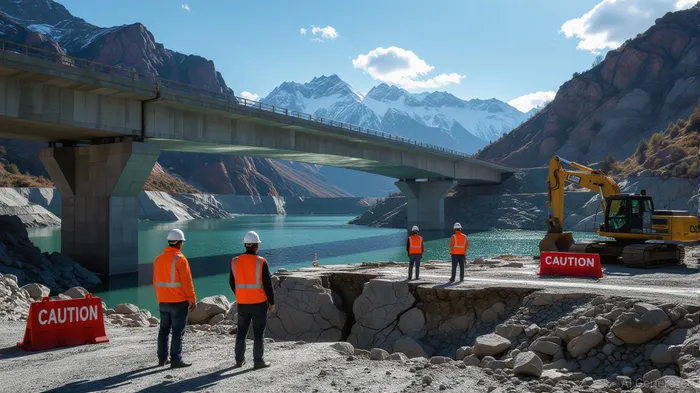
The Hongqi Bridge, part of National Highway 317 linking Sichuan to Tibet, was a symbol of China's infrastructure ambitions. Built by the state-backed Sichuan Road & Bridge Group, the project was intended to showcase the country's engineering prowess and economic connectivity, according to a Fox News report. However, the bridge's collapse-triggered by geological instability and exacerbated by visible cracks and slope deformation-raises questions about the prioritization of political goals over safety.
In emerging markets, infrastructure projects often serve as political tools to demonstrate progress, sometimes at the expense of rigorous risk assessment. A 2024 report by the Economist Intelligence Unit found that 47% of firms in these regions cited political volatility as their top concern, according to a Riddle Insights analysis. The Hongqi Bridge's swift reopening after temporary closures for safety checks suggests a pressure to maintain momentum, even in the face of red flags. This dynamic is not unique to China; similar patterns have been observed in infrastructure projects across Southeast Asia and Africa, where political timelines can override technical caution.
Regulatory Failures: Enforcement Gaps and Risk Allocation
The bridge's collapse also exposes regulatory enforcement issues. Despite early warnings about slope deformation and cracks, authorities failed to implement measures that could have mitigated the risk. A parallel can be drawn with the 2024 collapse of the Francis Scott Key Bridge in Baltimore, where the National Transportation Safety Board (NTSB) attributed the disaster to a lack of vulnerability assessments by the Maryland Transportation Authority, according to a CBS News report. While the U.S. case involved different technical failures, the common thread is regulatory complacency.
In China, the absence of an official report explicitly linking governance failures to the Hongqi Bridge collapse does not negate the broader pattern. Regulatory frameworks in emerging markets often lack the teeth to enforce compliance, particularly when projects are politically sensitive. For instance, the recent £11 million enforcement package imposed on Wessex Water in the U.K. for wastewater management failures illustrates how accountability can be enforced through financial penalties, according to a Water Magazine report. In contrast, Chinese regulators have yet to demonstrate similar rigor in infrastructure oversight, leaving investors exposed to opaque risk environments.
Operational Risks: The Cost of Shortcuts
Operationally, the Hongqi Bridge's failure points to potential flaws in geological surveys, design, or construction quality. While the exact cause remains under investigation, the bridge's collapse into a reservoir after months of detected instability suggests inadequate contingency planning. This aligns with broader challenges in emerging markets, where infrastructure projects often face cost overruns and time pressures that compromise quality.
For equity investors, operational risks are compounded by the lack of transparency in project management. A McKinsey report emphasizes that infrastructure projects in developing markets require "predictive maintenance systems and real-time monitoring tools" to mitigate such risks, according to a McKinsey report. The absence of these measures in the Hongqi Bridge's lifecycle-despite visible warning signs-highlights a critical gap in operational due diligence.
Mitigating Risks: A Framework for Due Diligence
To navigate these challenges, investors must adopt a multifaceted approach:
1. Political Risk Mitigation: Engage local legal experts to navigate regulatory ambiguities and assess the stability of governance structures. AI-driven platforms can consolidate data from sanctions lists and local news to identify hidden risks, as noted in the Riddle Insights analysis.
2. Regulatory Scrutiny: Demand transparency in risk allocation frameworks. For example, structuring contracts to require government guarantees for geological surveys or mandating third-party audits can reduce exposure to enforcement gaps, as suggested in a Kearney report.
3. Operational Resilience: Prioritize projects with integrated technology solutions, such as AI-powered predictive maintenance systems, to enhance asset longevity, according to a McKinsey report.
The Hongqi Bridge collapse serves as a cautionary tale: rapid development, while economically attractive, can erode long-term value if not paired with robust governance. For infrastructure equity investors, the lesson is clear-due diligence must extend beyond financial metrics to encompass the political and regulatory landscapes that define project success.

Delivering real-time insights and analysis on emerging financial trends and market movements.
Latest Articles
Stay ahead of the market.
Get curated U.S. market news, insights and key dates delivered to your inbox.






Comments
No comments yet