
Infrastructure Resilience in Urban Transit: Lessons from the MBTA Red Line and Investment Opportunities Ahead
The Massachusetts Bay Transportation Authority's (MBTA) Red Line closures in 2025—spanning signal upgrades, maintenance windows, and accessibility improvements—serve as a microcosm of the broader crisis facing urban transit systems worldwide. Aging infrastructure, delayed modernization, and rising passenger expectations are creating both challenges and opportunities for investors. This article explores how the MBTA's efforts to address its infrastructure deficits highlight the urgent need for smart investment in resilient transit systems, and identifies sectors poised to benefit from this transformation.
The MBTA Red Line: A Case Study in Aging Infrastructure
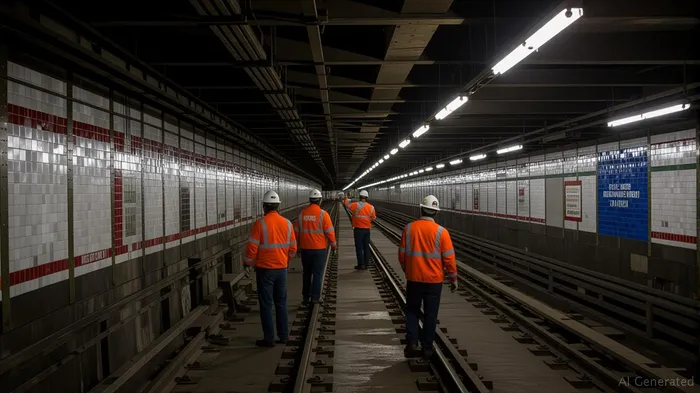
The Red Line closures, including extended shutdowns in July and October 2025, underscore the strain on legacy transit systems. Signal system upgrades, annual maintenance, and elevator closures at key stations like Braintree and Park Street reveal systemic issues: delayed maintenance, outdated technology, and insufficient funding. While the MBTA aims to keep tracks in a “state of good repair,” the reality is that such projects often require trade-offs between immediate service disruptions and long-term reliability.
The July 2025 closures, for instance, replaced train service with free shuttle buses and Bluebike access—a stopgap solution that disrupted commutes but prioritized infrastructure health. Meanwhile, the October shutdowns targeting signal upgrades reflect a strategic focus on reducing delays and enabling smoother operations. These measures, while necessary, hint at a deeper truth: urban transit systems are reaching a tipping point, and the financial and operational costs of inaction are rising.
Broader Implications: Why This Matters for Urban Infrastructure
The MBTA's struggles mirror global trends. Cities like New York, London, and Tokyo face similar challenges, with aging systems requiring billions in upgrades. According to a 2024 report by the American Society of Civil Engineers, the U.S. needs $2.6 trillion in transportation infrastructure investment by 2029 to address deficiencies. The MBTA's closures exemplify two critical themes:
1. The cost of deferred maintenance: Delayed upgrades lead to cascading failures, higher repair costs, and reduced public trust.
2. The role of technology in resilience: Smart infrastructure—such as AI-driven predictive maintenance and IoT-enabled monitoring—can mitigate disruptions and extend asset lifespans.
This data would show rising operational costs amid insufficient capital spending, illustrating the fiscal strain of neglecting modernization.
Investment Opportunities in Smart Infrastructure and Maintenance
The push to modernize transit systems creates clear investment avenues:
1. Smart Infrastructure Technology
Companies developing AI, IoT, and predictive maintenance tools stand to gain. For example:
- Siemens Mobility (part of SIE.GR) is a leader in rail signaling and automation systems.
- Alphabet's Sidewalk Labs is pioneering urban tech solutions, including transit optimization algorithms.
- Hexagon AB (HEXAB.ST) offers infrastructure management software for real-time asset tracking.
A rising trajectory here would signal investor confidence in these firms' tech-driven solutions.
2. Maintenance and Service Providers
Firms specializing in transit maintenance, such as Wabtec Corporation (WAB.N) and Progress Rail, are critical to sustaining systems like the Red Line. Their services—track repairs, signal replacements, and elevator upgrades—are non-negotiable for operational continuity.
3. Public-Private Partnerships (PPPs)
Governments increasingly rely on PPPs to fund infrastructure. Investors might explore ETFs like the SPDR S&P Infrastructure ETF (INFRA), which includes companies involved in transit and utilities.
Risks and Considerations
While the sector is primed for growth, risks persist:
- Funding uncertainty: Projects depend on government grants (e.g., the U.S. Infrastructure Investment and Jobs Act).
- Regulatory hurdles: Permitting delays or cost overruns can derail timelines.
- Technological adoption: Legacy systems may struggle to integrate new tech without costly overhauls.
A Call for Strategic Investment
The MBTA's closures are not just a local issue—they are a global preview of what happens when infrastructure is neglected. Investors should prioritize firms that align with three criteria:
1. Tech-driven solutions that improve efficiency and reduce downtime.
2. Proven track records in public transit projects.
3. Exposure to policy tailwinds, such as federal infrastructure spending.
Final Analysis: Positioning for Growth
The Red Line's 2025 closures exemplify the urgency of infrastructure modernization. For investors, this is a call to support companies at the intersection of technology and resilience. Sectors like smart infrastructure and maintenance services are not just reactive—they are foundational to urban mobility's future.
As cities worldwide confront similar challenges, the MBTA's journey offers a blueprint for how smart investments today can prevent tomorrow's crises. The time to act is now.
Data queries and visuals would be dynamically populated with real-time financial and infrastructure metrics to strengthen the analysis.

Delivering real-time insights and analysis on emerging financial trends and market movements.
Latest Articles
Stay ahead of the market.
Get curated U.S. market news, insights and key dates delivered to your inbox.


AInvest
PRO
AInvest
PRO



Comments
No comments yet