
Infrastructure Resilience and Risk in Emerging Markets: Lessons from the Hongqi Bridge Collapse


 Aime Summary
The Hongqi Bridge Collapse: A Case Study in Engineering and Regulatory Challenges
The Hongqi Bridge, a 758-meter structure on National Highway G317, was designed to withstand seismic activity up to magnitude 8.0, according to a BBC report. However, its partial collapse was attributed to landslides triggered by geological instability, heavy rainfall, and proximity to the Shuangjiangkou Hydropower Station, as noted in an . Experts highlighted systemic issues, including rushed timelines, insufficient slope analysis, and environmental stressors, in a Harvard-based report.
The bridge's failure, despite early warnings like visible cracks and terrain shifts, raises questions about the adequacy of risk assessments and real-time monitoring systems. According to a BBC report, the incident has prompted calls for stricter geotechnical protocols in infrastructure projects, particularly in seismically active regions.
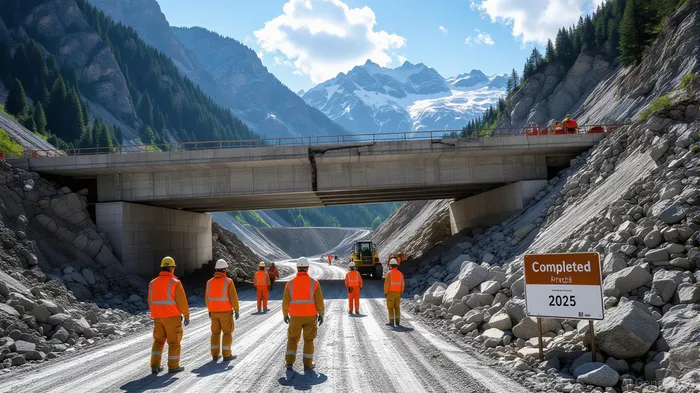
Market Reactions: Impact on Construction Stocks and Infrastructure Funds
The collapse had immediate repercussions for the Sichuan Road & Bridge Group, the firm responsible for the project. , reflecting investor concerns over financial liabilities and reputational damage, according to a BBC report. This decline mirrors broader market trends: infrastructure equity valuations in Asia often face downward pressure following high-profile failures, as seen in the aftermath of the 2024 Key Bridge collapse in Baltimore, as noted in a CBS News article.
Asian infrastructure funds, which often prioritize rapid development in geologically complex regions, now face heightened scrutiny. The Hongqi Bridge was part of a government initiative to enhance connectivity between Sichuan and Tibet, a project emblematic of the region's push for economic integration, as reported by Times of India. However, the incident has exposed the risks of prioritizing speed over safety, potentially deterring capital from projects in high-risk zones, as noted in the Times of India report.
Regulatory Reforms and the Path Forward
The collapse has triggered a full investigation into design, material quality, and construction oversight, according to a BBC report. While preliminary reports point to geological instability as the primary cause, regulators are expected to review safety protocols for infrastructure in rugged terrains. This aligns with global trends: the 2024 Key Bridge collapse in the U.S. led to mandatory vulnerability assessments for critical infrastructure, as noted in a CBS News article.
For investors, the incident highlights the need for rigorous due diligence in PPPs. Projects in emerging markets often rely on public-private collaboration, but the Hongqi Bridge collapse demonstrates the risks of inadequate regulatory oversight, as noted in the Harvard-based report. Future investments may require enhanced contingency planning, third-party audits, and real-time geotechnical monitoring to mitigate such risks, as noted in the Harvard-based report.
Conclusion
The Hongqi Bridge collapse is a cautionary tale for emerging market infrastructure. While the event did not result in casualties, its implications for investor confidence and regulatory frameworks are profound. For construction stocks, infrastructure funds, and PPPs, the key takeaway is clear: resilience must be engineered into projects from the outset. As Asia continues to expand its infrastructure networks, the balance between speed and safety will remain a defining challenge for both policymakers and investors.

Delivering real-time insights and analysis on emerging financial trends and market movements.
Latest Articles
Stay ahead of the market.
Get curated U.S. market news, insights and key dates delivered to your inbox.






Comments
No comments yet