
Infrastructure Resilience and Investment Risk in China's Construction Sector


 Aime Summary
Engineering Missteps and Geological Vulnerabilities
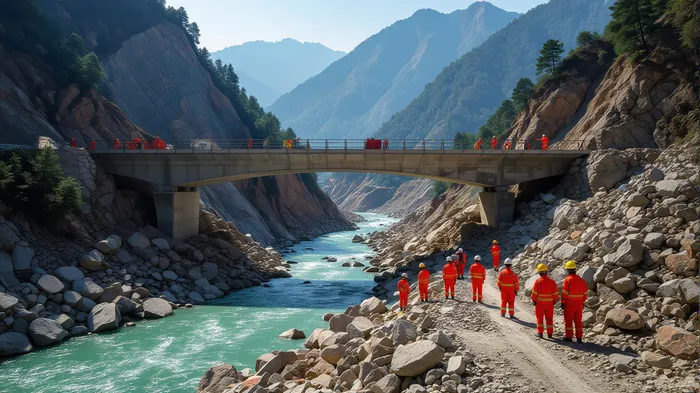
The collapse was attributed to a combination of landslides, unstable terrain, and potential design or construction flaws, as shown in a New York Post report. Heavy rainfall and water accumulation from the nearby Shuangjiangkou reservoir were cited as contributing factors, exacerbating pre-existing geological weaknesses, as detailed in a ZoomBangla video. According to an Economic Times analysis, the bridge's location in a mountainous region with shifting terrain highlighted the challenges of building in geologically unstable zones. This raises critical questions about the adequacy of site-specific risk assessments and the long-term durability of infrastructure in such environments.
Regulatory Responses and Global Trends
While specific regulatory reforms in China post-Hongqi have yet to be detailed, the incident aligns with a global trend toward stricter infrastructure oversight. For instance, the U.S. National Transportation Safety Board's (NTSB) March 2025 report on the Baltimore Key Bridge collapse emphasized the need for proactive vulnerability assessments, as reported by CBS News. This underscores a growing emphasis on preemptive risk management, which could influence China's regulatory framework.
Domestically, the government has already signaled a shift toward increased private sector participation in infrastructure projects. A Bloomberg report notes that policies introduced in late 2024 encourage private capital to hold stakes in energy and cross-regional power transmission systems, with some projects allowing private ownership of up to 20%, as reported in a TradingView article. These measures aim to diversify funding sources but also introduce new risks, as private investors may prioritize cost efficiency over long-term resilience.
Investment Implications: Bonds, Equity, and Risk Mitigation
The Hongqi Bridge collapse has heightened scrutiny on infrastructure quality, potentially affecting investor confidence in China's infrastructure bonds and equity markets. According to Reuters, the incident could lead to increased regulatory scrutiny of public projects, particularly in regions with similar geological challenges, as reported in a Reuters article. This may result in higher compliance costs for developers, which could be passed on to investors through elevated bond yields or reduced equity valuations.
However, the government's push for private investment also presents opportunities. For example, the Ministry of Finance's October 2024 announcement of one-off bond quotas to address local government debt and stimulate property markets, as reported in a Pinebridge analysis, suggests a willingness to innovate in fiscal policy. Investors may find value in projects that integrate nature-based infrastructure-such as wetlands or forests-to mitigate disaster risks, as highlighted in a China Daily analysis. These projects could attract green bonds and ECR (Ecological Conservation Redlines) bonds, which tie returns to measurable environmental outcomes, as noted in the Economic Times analysis.
The Path Forward: Balancing Growth and Resilience
The Hongqi Bridge collapse serves as a cautionary tale for China's infrastructure ambitions. While the government's focus on private investment and fiscal stimulus offers growth potential, it must also address systemic risks through enhanced regulatory frameworks. Investors should prioritize projects with transparent risk assessments and robust geological evaluations, particularly in mountainous regions.
For equity investors, construction firms with strong safety records and advanced geotechnical engineering capabilities may outperform in the post-Hongqi landscape. Meanwhile, bond investors should scrutinize project-specific risk disclosures and consider diversifying into nature-based infrastructure, which aligns with both regulatory trends and long-term resilience goals.
As China navigates this transition, the interplay between regulatory reform, engineering innovation, and market dynamics will shape the future of infrastructure investment. The Hongqi Bridge, though a tragic event, may ultimately catalyze a more resilient and transparent construction sector-one that balances rapid development with the imperatives of safety and sustainability.

Delivering real-time insights and analysis on emerging financial trends and market movements.
Latest Articles
Stay ahead of the market.
Get curated U.S. market news, insights and key dates delivered to your inbox.


AInvest
PRO
AInvest
PRO



Comments
No comments yet